Counting the waves…
Counting the waves…

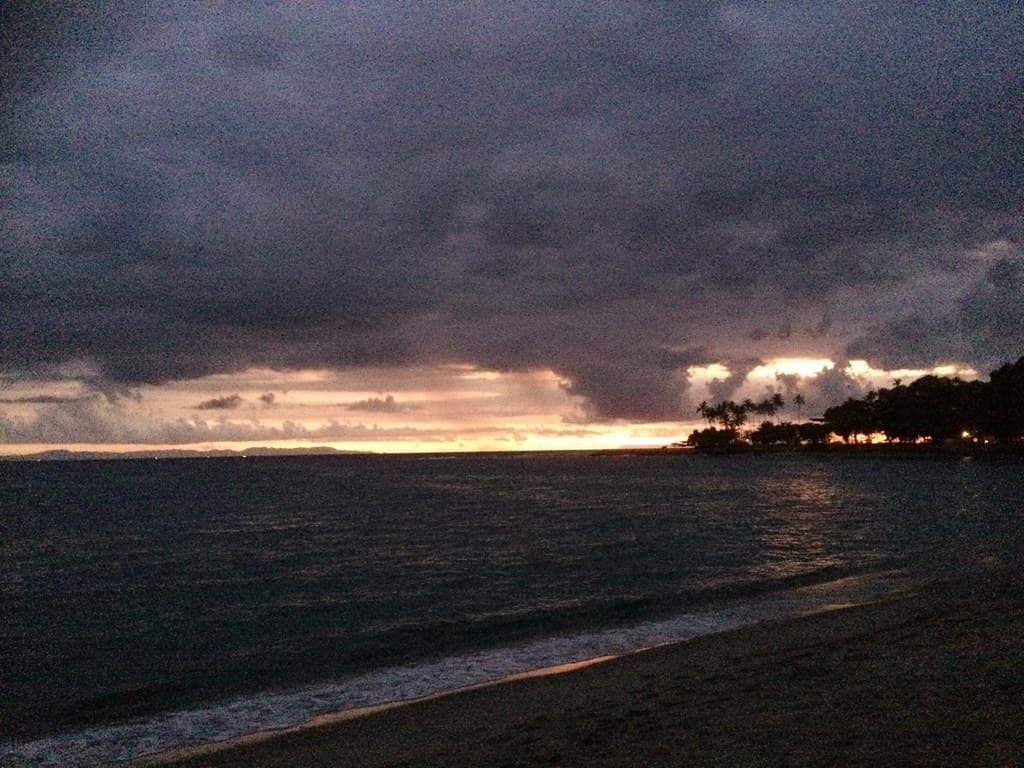
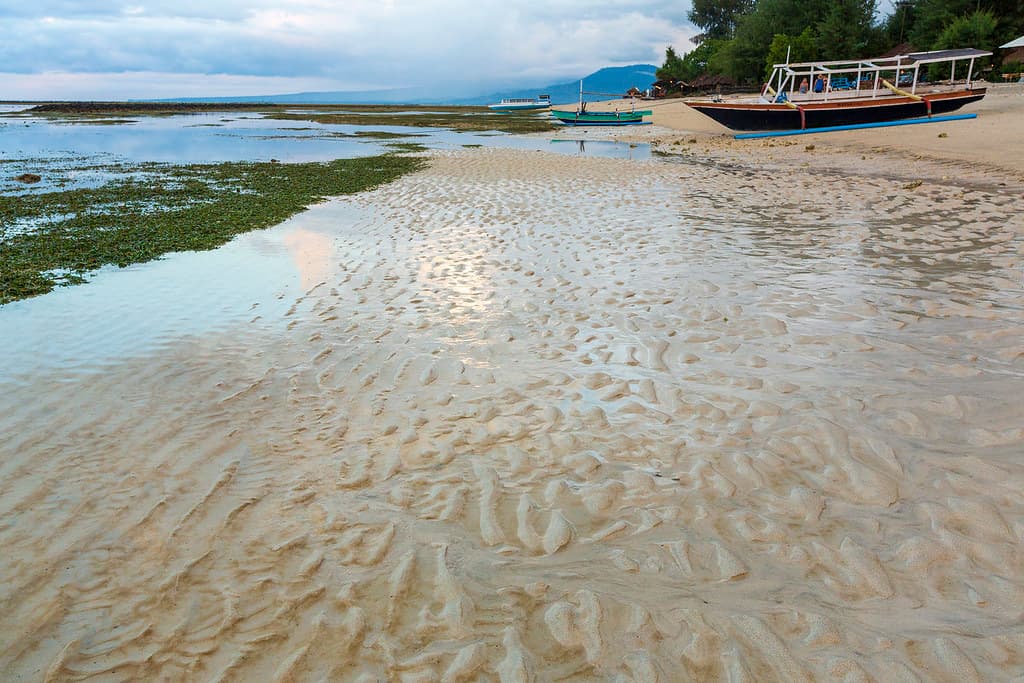
You reach Nipah Beach by following a rutted lane through tobacco fields and cassava plots, past chickens scratching in red dirt yards, until the road simply ends at a fringe of palms. The beach announces itself not with signage or hawkers but with the low hum of diesel engines as fishermen prep their jukung for the evening run. The sand here is gunmetal grey, volcanic grit that heats quickly underfoot and contrasts sharply with the turquoise shallows. Mid-morning, the bay becomes a workroom. Nets spread across the sand in tangles of nylon and cork, men hunched over tears with needles made from bone. A few warungs operate from family front rooms, serving iced tea and nasi campur on wobbly plastic tables, the kind where the proprietor yells your order back to a kitchen you can't see. The swimming is calm, the water shallow for fifty meters before dropping into deeper channel currents that sweep south. By late afternoon, the fishing families have retreated indoors and the beach empties entirely. The light turns amber, then rose, illuminating the silhouette of Bali's Mount Agung across the strait. You'll hear the call to prayer from the village mosque, carried on wind that smells of clove cigarettes and grilled fish. This is Lombok without the gloss, a shore where tourism remains an afterthought and the rhythms belong entirely to the tides.
Places, rentals, tours and events within walking and driving distance of Nipah Beach.
Photos
Nipah Beach generally offers calm, swimmable waters suitable for most visitors. The bay's protected location creates gentle waves, making it safer than many exposed Indonesian beaches. However, always exercise caution as conditions can vary with tides and seasons. There are no lifeguards on duty, so supervise children closely. The beach has a gradual slope into the water, which is ideal for families. Check locally about jellyfish or other marine life before entering the water, and avoid swimming during rough weather or strong currents.
Nipah Beach enjoys favorable weather year-round, though the dry season from April to October offers the most reliable sunshine and calm seas. The wet season (November-March) brings occasional rain but typically in short bursts, not all-day downpours. Weekdays are generally quieter than weekends when local visitors arrive. For the best experience, visit during sunrise or late afternoon when temperatures are cooler and lighting is spectacular for photography. The beach remains relatively uncrowded throughout the year due to its hidden location.
Nipah Beach is located in Tanjung village on Lombok's southwest coast. From Mataram, drive south approximately 1.5-2 hours via the main coastal road. The beach is less developed than popular tourist areas, so signage may be limited—ask locals for 'Pantai Nipah' if needed. A scooter or car is recommended as public transport is infrequent. Informal parking is available near the beach access points, usually free or for a small voluntary fee to local attendants. Roads are generally paved but narrow in the final approach.
Nipah Beach has limited facilities, reflecting its off-the-beaten-path character. You'll find small warungs (local eateries) serving Indonesian dishes and fresh seafood, typically operating during daylight hours. Bring cash as card payments are unlikely. Accommodation options are basic, mainly consisting of simple guesthouses in nearby Tanjung village rather than beachfront resorts. For more dining and lodging choices, consider staying in Sekotong or Lembar, both within reasonable driving distance. Pack snacks and water as amenities are minimal compared to tourist-heavy beaches.
Nipah Beach remains relatively unknown compared to Lombok's popular beaches like Kuta or Senggigi, offering an authentic, uncrowded experience. Its scenic beauty features white sand, turquoise waters, and surrounding hills creating a picturesque bay. The lack of commercial development means you'll encounter more local fishermen than tourists, providing insight into traditional coastal life. This hidden status makes it perfect for travelers seeking tranquility and unspoiled natural beauty. However, this also means fewer amenities, so come prepared for a more rustic beach experience.