Counting the waves…
Counting the waves…
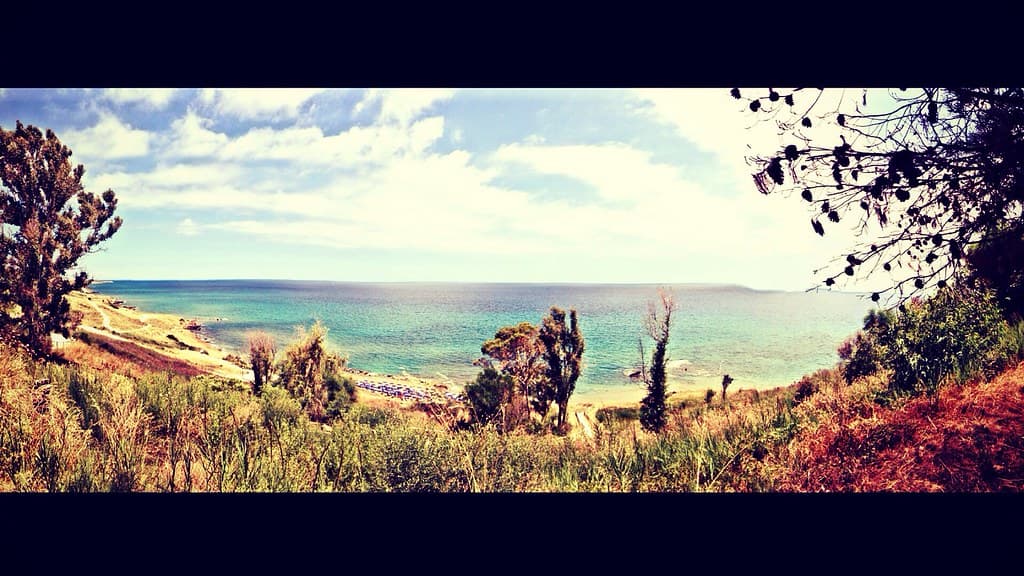
The headland juts into the Ionian like a ship's prow, all horizontal limestone strata and wind-sculpted rock. You reach the beach area by walking past the archaeological site where that lone column stands—six meters of honey-colored stone that's endured twenty-five centuries of storms. The shore here isn't sand but platforms of sedimentary rock, layered like pages in a book, worn smooth in places and sharp-edged in others. Tidal pools collect in depressions, warming in the sun, harboring tiny crabs and dark anemones that pulse with the surge. You enter the water from a flat shelf, lowering yourself into the Ionian where it runs transparent over rocks you can count ten feet down. The bottom is a jumble of boulders and channels, habitat for wrasse and damselfish that flash between crevices. Bring mask and fins—the offshore rocks create structure where marine life congregates. The water shifts from topaz near shore to deeper teal where the headland drops into the gulf. Salt concentration runs high here; you float effortlessly, bobbing like cork, the temple column always visible when you lift your head to orient. The archaeology matters because it saturates everything. You're swimming where Greek sailors made offerings before voyages, where priestesses tended sacred fires. The museum back at the site holds terracotta votives pulled from these waters—miniature ships, bronze fibulae, coins from a dozen Mediterranean cities. At sunset the column glows amber, casting a shadow that stretches across rocks where philosophers once walked, where you now spread your towel among stones that might be temple rubble or just stones.
Places, rentals, tours and events within walking and driving distance of Capo Colonna Beach.
Photos
Capo Colonna's rocky beach presents different conditions than sandy beaches. Swimming is possible but requires caution due to rocks, uneven surfaces, and varying depths. Water shoes are essential for safe entry and exit. The rocky environment attracts marine life, making it interesting for snorkeling, but swimmers should be confident and aware of conditions. Currents can be strong around the headland. Lifeguard services are typically limited. The area is better suited for experienced swimmers and snorkelers than young children. Always check conditions before entering and never snorkel alone.
Visit between May and September for warmest weather, with June and September offering good conditions with fewer crowds. The archaeological site is impressive year-round, so spring and autumn visits can combine beach time with cultural exploration in comfortable temperatures. Summer provides best swimming conditions and clearest water for snorkeling. The headland location makes sunset viewing spectacular, particularly from late spring through summer when days are longer. Early morning and late afternoon offer the best light for photography of the ancient column and coastal scenery. Avoid winter when weather can be rough and facilities limited.
Capo Colonna is located about 10 kilometers south of Crotone city center. A car is the most practical option, following coastal roads toward the promontory. Bicycle rental is possible from Crotone for active visitors, as the route is scenic. During summer, local tour operators may offer transportation or organized visits combining beach and archaeological site. Public bus service may exist but can be limited. Parking is available near the archaeological site and beach area. The drive from Crotone takes roughly 15-20 minutes. Taxis can be arranged from Crotone for those without vehicles.
Capo Colonna itself has limited facilities, reflecting its archaeological and natural character. Seasonal beach establishments may offer basic refreshments during summer. Most accommodation and full dining options are in Crotone, about 10 kilometers away, where you'll find hotels, restaurants serving Calabrian cuisine and seafood, and all necessary services. Visitors typically base themselves in Crotone and make a day trip to Capo Colonna. Bring water, snacks, and sun protection, as amenities at the site are minimal. The archaeological site has basic facilities but plan for a relatively undeveloped beach environment.
Capo Colonna is home to the remains of the Temple of Hera Lacinia, one of Magna Graecia's most important sanctuaries. A single standing column from the 6th-century BC temple creates an iconic, Instagrammable landmark against the Ionian Sea. The archaeological site and marine protected area combine history, natural beauty, and underwater interest. Rocky shores and clear waters attract snorkelers to explore marine life. The headland offers panoramic coastal views and spectacular sunsets. This fusion of ancient Greek heritage, archaeological significance, natural coastal beauty, and marine biodiversity makes Capo Colonna unique among Calabrian beaches.