Counting the waves…
Counting the waves…
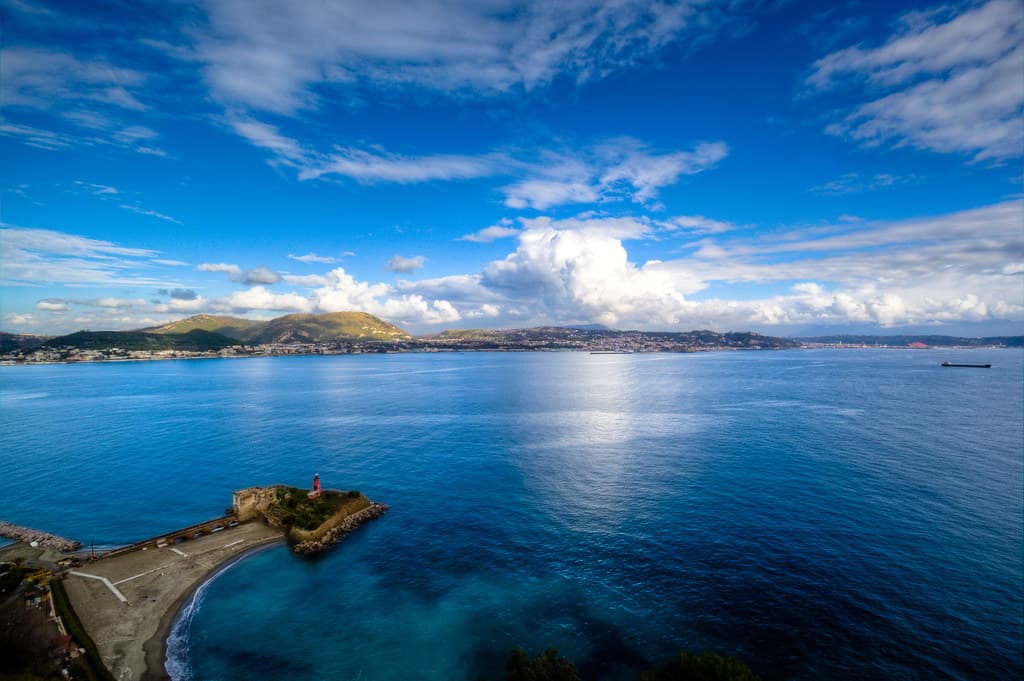
Lucrino functions rather than dazzles, a practical beach strip serving Pozzuoli's working families and Neapolitans seeking uncomplicated sun without Amalfi prices. The sand runs grey-blonde, volcanic in origin and slightly coarser than southern Campania's beaches. Stabilimenti pack in tight along the shore, their umbrellas forming ordered ranks of blue and white stripes. Between the commercial sections, free beach segments offer space to spread towels on warm sand that holds heat like a storage battery through cool spring mornings. The water stays shallow and gentle, protected somewhat by Capo Miseno's bulk to the west. You can walk out thirty meters before needing to swim, making this a favored spot for families with small children who paddle in the shallows while grandmothers watch from beach chairs. Behind the beach, the Via Severiana runs between sand and Lake Lucrino, where flamingos occasionally appear in winter months, incongruous pink against the industrial backdrop. The juxtaposition defines Lucrino—beauty and utility sharing space without pretense. On weekends the beach fills with multi-generational groups who arrive at nine and stay until dark, rotating between swimming, eating at stabilimento restaurants, and afternoon card games under umbrellas. The vibe skews local and unpretentious: mothers in practical swimsuits, teenagers playing racchettoni, fathers grilling sausages at the free beach sections. Solfatara's fumaroles smoke visibly on the hillside beyond Pozzuoli, and you swim knowing the Phlegraean Fields continue their slow breathing beneath your feet, warming the water a few degrees above what the season suggests it should be.
Places, rentals, tours and events within walking and driving distance of Lucrino Beach.
Photos
Lucrino Beach is generally safe for swimming, with calm waters suitable for families. The beach operates with lifeguards during the summer season. However, as an urban beach in the volcanic Phlegraean Fields area, water quality can fluctuate, so it's wise to check local conditions before swimming. The sandy bottom and gradual depth make it accessible for children and less confident swimmers. The beach's location in a sheltered bay typically means gentle waves. Basic safety and first aid facilities are available through beach establishments.
The best time to visit Lucrino Beach is during late spring (May-June) or early autumn (September-October) when weather is pleasant but crowds are manageable. Summer months offer the warmest water and full beach facilities, but weekends can be very crowded with local families. Weekday mornings provide the quietest experience. Budget travelers will find better accommodation rates outside July-August while still enjoying swimming conditions. The beach is operational mainly from May through September, with limited services in other months.
From Naples, take the Cumana railway line toward Torregaveta and exit at Lucrino station, which is a very short walk from the beach. The journey takes approximately 30 minutes. Alternatively, several bus lines connect Naples to Pozzuoli, from where Lucrino is easily accessible. If driving, follow signs from Naples toward Pozzuoli and then Lucrino; parking is available near the beach but fills quickly on summer weekends. The beach's location along the main coastal road makes it easily accessible by various transport options.
Lucrino Beach has several beach clubs (stabilimenti balneari) offering food service, from snacks to full meals, along with umbrella and lounger rentals. The immediate area has pizzerias, seafood restaurants, and cafes within walking distance. Nearby Pozzuoli offers more extensive dining options. Accommodation includes small hotels and B&Bs in the area, though many visitors stay in Pozzuoli or Naples for wider choices. The beach strip is more practical than resort-oriented, catering primarily to day visitors and local families rather than overnight tourists.
Lucrino Beach's distinction lies in its location within the volcanic Phlegraean Fields, near the historic Lucrino Lake and Avernus Lake associated with ancient Roman mythology. It offers a practical, no-frills beach experience favored by locals rather than international tourists, providing an authentic glimpse of Italian beach culture. The beach serves primarily as a convenient sunbathing and swimming spot for Pozzuoli residents and Naples day-trippers. Its proximity to archaeological sites and the unique volcanic landscape of the Campi Flegrei adds cultural and geological interest beyond the beach itself.