Counting the waves…
Counting the waves…
A refined fusion of water purity, environmental stability, and communal vibrancy for Grotte di Nerone Beach.
View MethodologyAnalyzed via live sensors and environmental data.
Wave height, wind, and atmospheric stability.
Live footfall and crowd balance metrics.
Community reviews and curated sentiment.
“You wade through shallow tide pools beneath vaulted chambers where Emperor Nero once hosted banquets. The honeycomb of first-century tunnels opens directly onto a narrow band of volcanic pebbles, their charcoal hue…”
Higher weekend density may affect water purity and crowd scores temporarily.
The scent of seaweed and wet stone fills the air as you pick your way across the shore, each wave pulling smooth obsidian pebbles backward with a rattling hiss. Above you, arched niches and rectangular chambers cut into the cliff face reveal layers of brick and volcanic tufa, their surfaces pocked by two millennia of salt spray. Local fishermen cast lines from the concrete breakwater while families claim patches of sand between the rocks, their umbrellas a patchwork of primary colors against the ruin's ochre walls.
You climb the narrow path into the grottoes themselves, where shadows pool in corners and the temperature drops ten degrees. Through crumbling archways, the sea appears in framed rectangles of turquoise and cobalt, sailboats sliding past like brushstrokes. Graffiti from the 1800s shares wall space with Roman mortar, each era leaving its mark on these chambers that once echoed with imperial feasts.
 Credit: Unsplash
white and brown concrete building near body of water during night time
 Credit: Unsplash
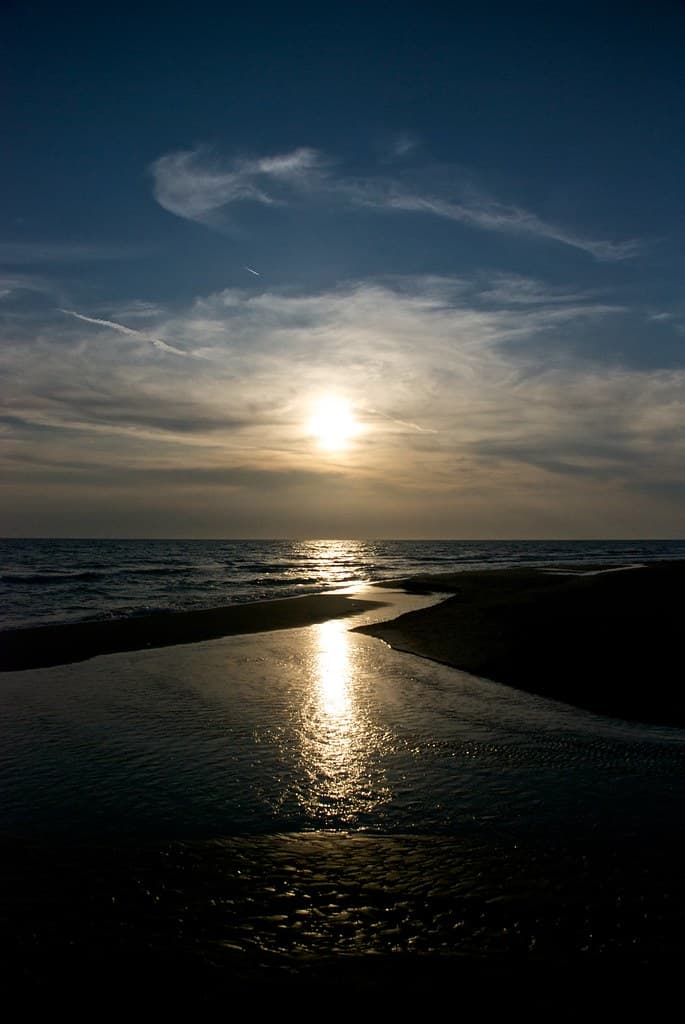
body of water under cloudy sky during sunset
Ancient grottoes meet modern coast
Protected waters near breakwater
First-century vaulted imperial rooms
Prime Visitation
Best Weather
Where it is
Grotte di Nerone Beach
Anzio, Lazio, Italy
41.447600°, 12.632500°
Weather
Loading…
Swell
—
Temp
Warm · Restorative
UV Index
Moderate
Wind
—
Tidal State
Last known
Max Sunlight
—
Ideal Shade
—
May - Sep (Peak)
Jan - Dec (Off-season)
Historical data suggests peak visibility and stable sea temperatures occur during the prime visitation window.
Select a category to load nearby places.
Unlock restaurants, luxury stays and curated maritime experiences within 2km
Swimming at Grotte di Nerone Beach requires caution due to its rocky nature. The coastline features rock formations and caves rather than soft sand, with some areas having sharp rocks and uneven underwater terrain. Water depth can increase quickly in certain spots. During calm weather, swimming and snorkeling are popular activities, but conditions can become dangerous when seas are rough or windy. The rocky environment is better suited for experienced swimmers. Always check weather forecasts before visiting and avoid swimming during adverse conditions. Wear water shoes to protect your feet from rocks.
The best time to visit Grotte di Nerone Beach is during late spring (May-June) or early autumn (September) when weather is pleasant but crowds are smaller. For photography and Instagram shots, golden hour (early morning or late afternoon) provides the most dramatic lighting on the Roman ruins and rock formations. Summer mornings before 10am offer good light and fewer visitors. July and August bring peak crowds and heat. Visit on weekdays rather than weekends for a quieter experience. The site is accessible year-round, though winter swimming is only for the brave.
From Rome, Grotte di Nerone Beach is about 60 kilometers south. Drive via Via Pontina or take a train from Rome Termini to Anzio station (approximately one hour), then walk about 15-20 minutes or take a local bus or taxi to the beach area. If driving, parking is available nearby though spaces can be limited in summer. From central Anzio, the beach is easily walkable along the waterfront promenade heading toward the western edge of town. The site is well-signposted and located near other Anzio attractions, making it convenient to combine with exploring the town.
Being in an urban location within Anzio, Grotte di Nerone Beach has excellent access to restaurants and cafes. Numerous seafood restaurants, pizzerias, and gelaterias are within walking distance along Anzio's waterfront and town center. Local specialties include fresh fish and traditional Lazio cuisine. For accommodation, Anzio offers hotels ranging from budget to mid-range, B&Bs, and vacation apartments, many with sea views. The town has full amenities including supermarkets and beach equipment rental shops. Staying in Anzio provides easy access to the beach and other local historical sites including the war cemetery and ancient port.
The ruins at Grotte di Nerone Beach are remnants of ancient Roman structures, traditionally associated with Emperor Nero's seaside villa complex, though their exact original purpose is debated by historians. These atmospheric stone arches and cave-like formations create a unique blend of natural coastal scenery and ancient history. The site showcases Roman engineering and their appreciation for coastal locations. The ruins provide a dramatic and photogenic backdrop that distinguishes this beach from typical seaside destinations. While swimming and sunbathing happen here, the historical atmosphere makes it as much a cultural site as a beach destination, offering insight into ancient Roman coastal life.
Photos