
Counting the waves…
Counting the waves…
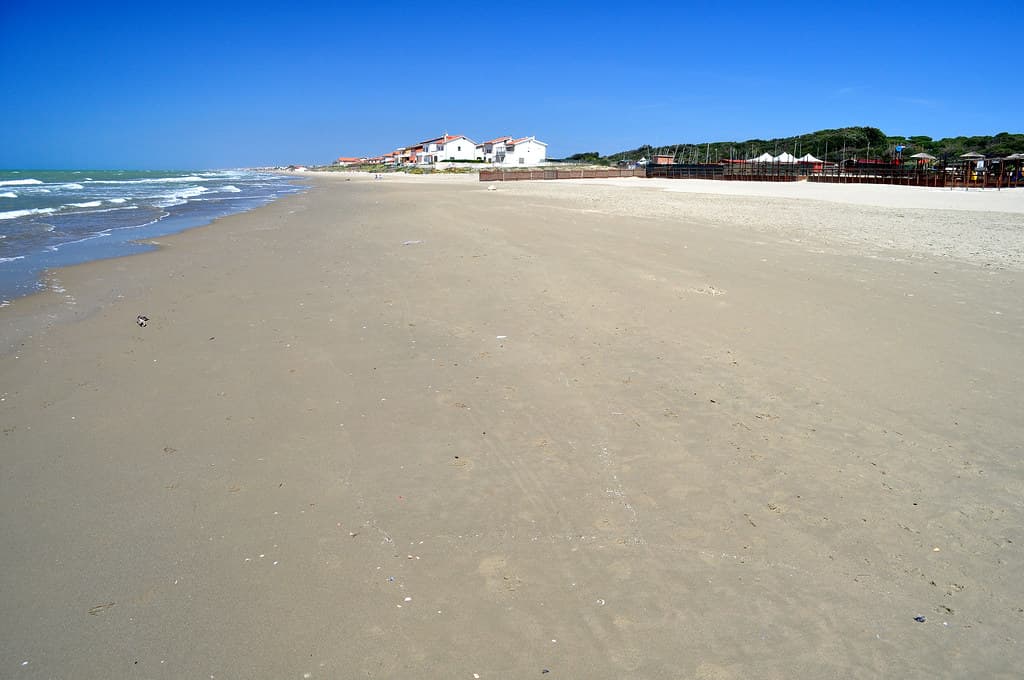
You arrive to find a beach that hasn't dressed itself up for visitors. Marina di Ardea sprawls along the coast south of Rome, its development sparse and utilitarian—simple beach clubs with plastic chairs, snack bars serving panini and granita, rows of cabanas painted in fading primary colors. The sand stretches wide at low tide, hard-packed near the water where joggers leave footprints that the tide erases twice daily. Families stake out the same spots year after year, often in the free beach sections where they bring their own umbrellas and coolers. Children build elaborate sand cities while parents doze under makeshift shade. The water here stays calm most days, its gentle waves suitable for even the smallest swimmers. You wade in over smooth sand, the bottom free of rocks, the water cool against sun-heated skin. The pace remains unhurried. No DJ sets, no aperitivo spectacles, no influencers posing on cabana daybeds. Just the rhythms of an ordinary beach day—the thwack of paddle ball, the call of vendors selling coconut slices, the persistent hum of cicadas in the pines that line the back roads. When hunger hits, you grab suppli and a cold beer from a beach kiosk, eating with sand still dusting your calves.
Places, rentals, tours and events within walking and driving distance of Marina di Ardea Beach.
Photos
Marina di Ardea Beach offers generally safe swimming conditions with sandy shores and gradual depth increases typical of the Lazio coast. The beach is popular with local families during summer, indicating reliable conditions. Lifeguard presence varies by section—stabilimenti (private beach clubs) typically offer supervised areas, while free beaches may not. Water quality is monitored regularly by local authorities. As with any beach, check daily flag warnings, avoid swimming during rough weather, and supervise children closely in the water.
Marina di Ardea is most budget-friendly during shoulder seasons: May-June and September-October, when accommodation rates drop significantly and many beach services offer lower prices. Off-season visits (October-April) provide free beach access without paying for sunbeds or umbrellas, though facilities may be limited or closed. Avoid Italian peak holiday periods, particularly August and weekends in July, when prices increase. Midweek visits always offer better value. The long, low-key character means it's generally more affordable than tourist-heavy beaches year-round.
From Rome, drive south on the SS148 Pontina toward Pomezia, then follow signs toward Ardea and Marina di Ardea—approximately 45 minutes depending on traffic. Public transportation requires taking a train to Pomezia-Santa Palomba or Aprilia station, then a local bus or taxi to Marina di Ardea, making car rental or driving the most practical option. Limited parking is available along the beach road, with some free and some paid zones during summer months. The beach's local character means fewer direct public transport connections.
Marina di Ardea offers casual beachfront restaurants and bars at various stabilimenti, serving typical Italian beach fare including seafood, pizza, and pasta. Several small trattorias and pizzerias operate in the residential areas behind the beach. Accommodation consists mainly of rental apartments, holiday homes, and small B&Bs catering to Italian summer visitors rather than international tourists. For more diverse options, nearby Torvaianica and Anzio offer additional restaurants and hotels. The area emphasizes local, low-key hospitality over resort-style amenities.
Marina di Ardea maintains an authentic local character with less commercial development than neighboring beaches like Torvaianica or Anzio. Its long, straight sandy coastline attracts primarily Italian families for summer holidays rather than day-tripping tourists, creating a genuinely residential seaside atmosphere. The beach lacks major resort infrastructure, offering a glimpse of traditional Italian beach culture. This low-key environment means fewer crowds, more space, and a relaxed pace, ideal for travelers seeking to experience how Romans and locals enjoy their coast without tourist-oriented development.