Counting the waves…
Counting the waves…
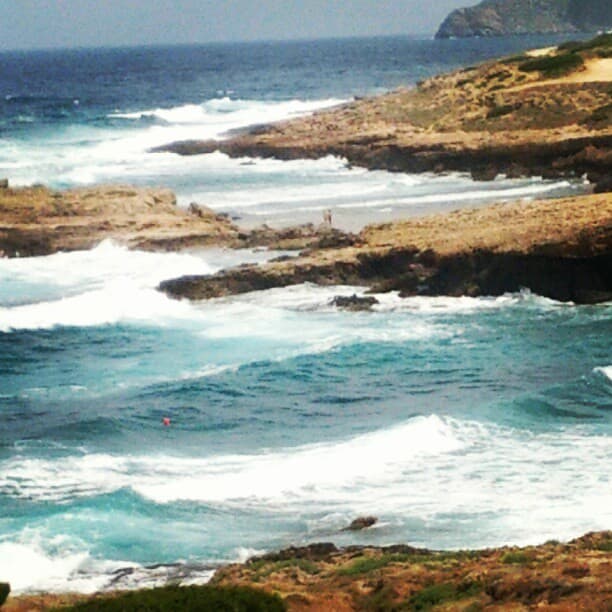
The parking area sits back from the beach, separated by a field of dunes that shift shape with each strong wind. You follow the established paths through sea grass and wild rosemary, the vegetation releasing its scent as you brush past. When you crest the final dune, the beach spreads below—a kilometer and a half of open sand facing west into the Golfo dell'Asinara, no buildings in sight, just the rumpled green hills behind and the cobalt expanse ahead. The sand here is grainy, coarser than Sardinia's famous southeastern beaches, mixed with fragments of rust-colored rock from the hills. You spread your towel near the waterline where the beach firms up, watching the waves—rarely flat, often waist-high, occasionally overhead when autumn storms track across the Balearic. Surfers congregate at the southern end where a rocky outcrop creates a more defined break, but the whole beach catches swell. Between sets, the water shows that particular dense blue of the Sardinian west coast, darker and moodier than the aquamarine of the east. By late afternoon, the wind has usually picked up, sending sand skittering across the beach in visible streams, stinging your ankles. The dunes behind you rustle and shift, their profiles changing day by day, season by season, never quite the same configuration twice.
Places, rentals, tours and events within walking and driving distance of Porto Ferro Beach.
Photos
Porto Ferro can be challenging for swimmers due to strong currents and waves that attract surfers. The beach is exposed to western winds and swells, creating conditions better suited for experienced swimmers and surfers. There are no lifeguards on duty, so caution is essential. Families with young children should stay close to shore and monitor conditions carefully. The wild, unspoiled nature means fewer safety amenities, so always assess wave conditions before entering the water.
Visit during May-June or September-October for fewer crowds while still enjoying pleasant weather. Summer months (July-August) bring more visitors but also the most reliable sunshine. Surfers often prefer autumn and spring when Atlantic swells are stronger. Weekdays are significantly quieter than weekends year-round. Early morning visits offer the most peaceful experience with dramatic lighting across the dunes, regardless of season.
Porto Ferro is approximately 30 kilometers northwest of Alghero, requiring a car as public transport is limited. Drive north on SP127 toward Palmadula, then follow signs to Porto Ferro. The journey takes roughly 35-40 minutes through scenic countryside. A dirt road leads to the beach parking area; it's accessible by regular car but can be dusty. Parking is free but fills quickly on summer weekends. Rental cars are widely available in Alghero.
Porto Ferro has minimal development, with only a seasonal beach bar offering drinks and light snacks during summer months. For proper meals and accommodation, stay in Alghero where you'll find diverse restaurants and hotels for all budgets. Alternatively, the small village of Villanova Monteleone, about 15 minutes inland, has a few local trattorias. Some visitors prefer agriturismos (farm stays) in the surrounding countryside for an authentic Sardinian experience.
Porto Ferro is one of Sardinia's premier surf spots, with consistent waves thanks to its westward exposure to open Mediterranean swells. The beach features both beach breaks and reef breaks suitable for intermediate to advanced surfers. Wind conditions, particularly the Mistral from the northwest, create quality waves especially in autumn and winter. The natural sand dunes and undeveloped coastline preserve the wild atmosphere that surfers appreciate. Local surf schools occasionally operate here during peak season.