Counting the waves…
Counting the waves…
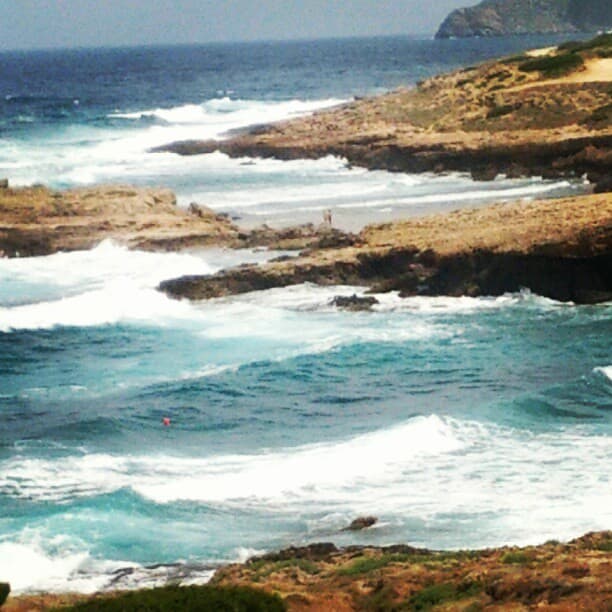
You'll approach through a landscape of juniper and windswept cork oak, the access road crossing a wetland where flamingos sometimes feed in the shallow pools. The beach announces itself first as a sound—the bass note of waves hitting sand—then as a scent: salt, seaweed, the faintly metallic smell of ocean wind. When you crest the final dune, the Mediterranean spreads before you in bands of color that shift with the light and the seafloor's depth. The sand here is coarse and golden, mixed with shell fragments that crunch underfoot. Dunes rise behind the beach to heights of six or seven meters, their faces rippled by wind, their crests furred with marram grass that hisses when the tramontana blows. In summer the sand radiates stored heat until well after sunset; in winter it's cool even at midday, marked by the tracks of the few walkers and their dogs who brave the wind. The beach faces west-northwest, open to the fetch that builds across hundreds of kilometers of open water. When swells arrive, they refract around the northern headland and peel down the beach in lines you can count from the dune tops. A sixteenth-century watchtower stands sentinel on Punta Tramontana at the northern end, its silhouette a landmark visible from anywhere on the beach. You'll find driftwood sculptured by waves into abstract forms, tide pools in the rocks at low water, the occasional strand of purple seaweed dried to paper by the sun. Dogs run unleashed here, chasing balls and each other across the firm sand near the waterline. In late afternoon the setting sun turns the wet sand into a mirror and silhouettes the tower black against orange sky.
Places, rentals, tours and events within walking and driving distance of Porto Ferro Beach.
Photos
Porto Ferro Beach can be challenging for swimming due to waves and currents that make it popular with surfers. When conditions are calm, swimming is possible, but always check wave height and wind before entering. The beach is not ideal for young children or inexperienced swimmers when surf is up. Rip currents can occur, so stay aware of ocean conditions. No lifeguard service is typically available. On calm days, the beach is swimmable, but its wild northwestern exposure means conditions change quickly with weather.
Porto Ferro Beach offers the best surf conditions from autumn through spring (October to April), when Atlantic swells and mistral winds create consistent waves. Winter months bring the largest swells but colder water, requiring wetsuits. Spring and autumn provide a good balance of decent waves and milder temperatures. Summer typically has smaller, less consistent waves, though afternoon winds can create rideable conditions. The beach's northwestern exposure captures swells well. Local surf shops in Alghero or Sassari can provide current forecasts and conditions.
Porto Ferro Beach is located northwest of Sassari, approximately 30 kilometers from Alghero. A car is strongly recommended as public transport options are very limited or nonexistent. From Alghero, follow signs toward Fertilia, then take the SP49 coastal road north. The final approach includes a secondary road leading to the beach. Free parking is available in unpaved areas near the beach. The somewhat remote location contributes to the wild, uncrowded atmosphere but requires self-sufficient transport.
Porto Ferro Beach is dog-friendly, making it popular with pet owners who appreciate the spacious, wild setting. Dogs should be kept under control and owners should clean up after them. The beach has minimal facilities—typically no permanent structures, though a seasonal refreshment stand may operate in summer. No sunbed or umbrella rentals are generally available. Bring your own supplies, including water, shade, and waste bags for pets. The natural dunes and vegetation require respectful behavior to preserve the environment.
Porto Ferro Beach is renowned for spectacular sunsets thanks to its northwestern orientation, which frames the sun setting directly over the sea and dramatic dune landscape. The wild, undeveloped coastline with golden sand dunes, windswept vegetation, and rugged cliffs creates a photogenic backdrop. The interplay of sunset light on waves is particularly striking. The beach's remote character often means fewer people obstructing views. Photographers visit year-round, though autumn and winter offer especially vivid colors and dramatic skies, enhanced by changing weather patterns.