Counting the waves…
Counting the waves…
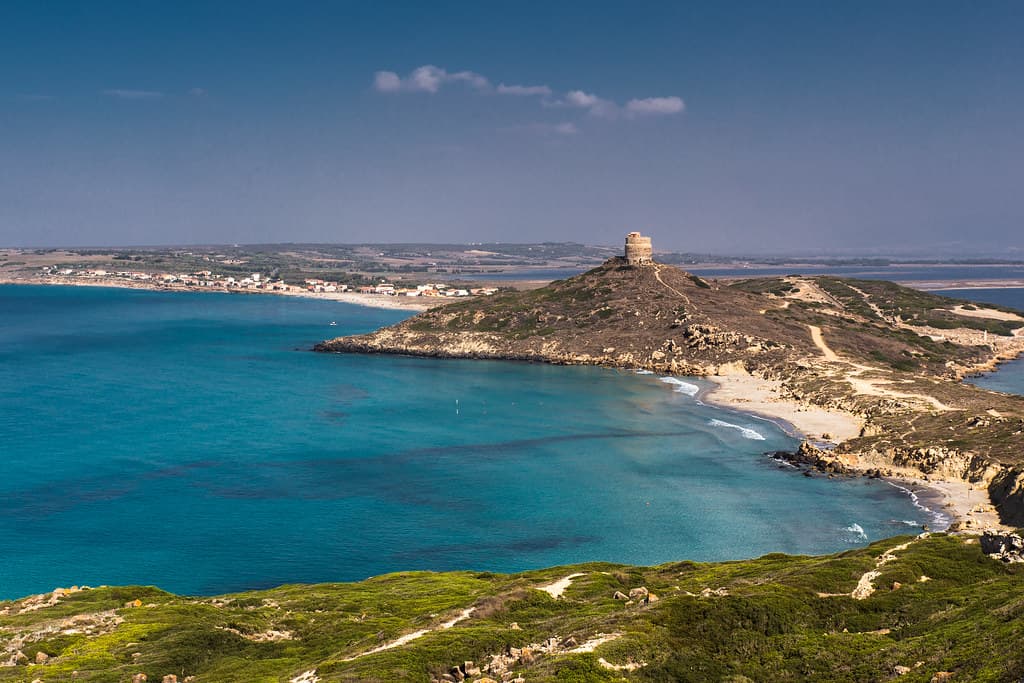
The quartz announces itself the same way: that distinctive crunch, the way the shore seems to shift and breathe beneath your feet. But Mari Ermi wears its geology more casually than Is Arutas, with fewer tourists crouched over the stones taking macro photographs. The beach runs longer here, giving you room to walk north until the handful of umbrellas disappears behind the gentle curve of the coast. Dune systems, held together by sea rocket and marram grass, slope down to the quartz strip. The vegetation matters: it gives the beach a wilder character, less manicured than its southern cousin. When the maestrale blows, and it blows often on this exposed coast, the grasses hiss and the quartz skitters across itself in rivulets. The water shows the same remarkable clarity—that Sinis transparency where you can watch your feet disturb the bottom even when you're swimming. A scattering of fishing huts occupies the southern end, weathered structures of wood and corrugated metal where locals still store nets and tackle. They're part of the landscape now, faded to the same sun-bleached palette as everything else on this coast. Park in the sandy lot, walk over the low dunes, and choose your section of quartz. Bring shade—a single pine grove provides the only natural cover, and it's claimed early on summer weekends.
Places, rentals, tours and events within walking and driving distance of Mari Ermi Beach.
Photos
Mari Ermi generally offers safe swimming conditions with its gently sloping sandy bottom, suitable for most swimmers including families. However, the beach is exposed to westerly winds, which can create waves and currents, particularly during the Mistral. There are no lifeguards on duty, so swimmers must exercise personal judgment and caution. Supervise children closely as conditions can change. The unique quartz sand becomes very hot in summer, so beach shoes are recommended. Facilities are minimal, so bring adequate water, sun protection, and any safety equipment you might need for a day at a relatively undeveloped beach.
Mari Ermi is best visited from May to June or September to early October for pleasant weather with fewer crowds than peak summer. July and August offer the warmest conditions but bring significant visitor numbers despite the beach's length. Early morning visits during summer provide cooler temperatures and spectacular light for photographing the distinctive quartz sand and turquoise water. Avoid days when the Mistral wind is forecast, as it can make conditions uncomfortable and kick up the fine sand. Weekdays are generally quieter than weekends, offering more space to appreciate this beautiful stretch of coastline.
Mari Ermi is located on the Sinis Peninsula, approximately 15 kilometers northwest of Oristano and very close to Is Arutas beach. A car is necessary as public transportation is virtually nonexistent. From Oristano, drive toward Cabras, then follow signs for the Sinis Peninsula beaches. The final approach involves a dirt road that can be rough. Designated parking areas are available near the beach; arrive early during summer as spaces fill quickly despite the beach's length. The nearest airports are Cagliari Elmas (about 100 kilometers south) and Alghero (further north).
Mari Ermi has very limited facilities directly at the beach, sometimes with a seasonal kiosk but often nothing. Visitors should bring their own food, drinks, and beach supplies. The nearby town of Cabras offers restaurants specializing in Bottarga (cured fish roe) and traditional Sardinian cuisine, plus supermarkets for provisions. Accommodation options include hotels, B&Bs, and vacation rentals in Cabras, San Salvatore di Sinis, and Torre Grande. Oristano, about 20 minutes away, provides more extensive services. The area maintains a relatively undeveloped character, so come prepared for a natural beach experience.
Mari Ermi and Is Arutas share similar characteristics as neighboring beaches with distinctive quartz sand, but Mari Ermi is generally less crowded and more tranquil. Both feature the unique rice-grain-like sand in white and pale hues, and taking sand from either beach is strictly prohibited. Mari Ermi offers a longer, more expansive stretch, providing more space even during busy periods. The water color and clarity are comparable at both beaches. Some visitors prefer Mari Ermi for its slightly less developed atmosphere, while others favor Is Arutas's fame. Both require similar access arrangements and preparation.