Counting the waves…
Counting the waves…
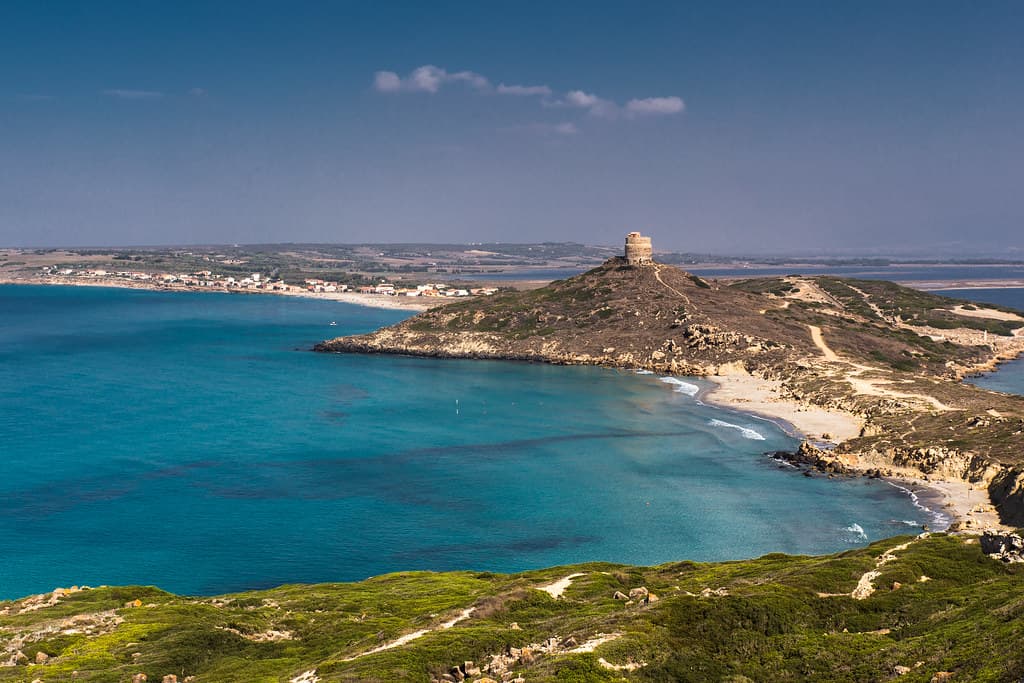
The first step tells you everything. Instead of yielding sand, the shore releases a soft crunch—thousands of quartz pebbles, each no larger than a lentil, shifting beneath your weight. The beach stretches in a ribbon of cream and pale rose, the stones catching afternoon light and throwing it back in muted glimmers. Locals call it "riso," rice, and the nickname fits: bend down and the grains fill your palm like something from a pantry, smooth and cool. Wade into the shallows and the quartz continues underfoot, a natural massage that gives way to sandy patches farther out. The water holds that particular transparency of the Sinis Peninsula, where you can count stones on the seabed even when you're chest-deep. Wind patterns shift the quartz into ridges and valleys along the shore, reshaping the beach with each tide. Pine groves press close to the northern end, offering shade that smells of resin and salt. You'll see handmade signs reminding visitors that removing the quartz is illegal—enforcement added after tourists pocketed handfuls as souvenirs, diminishing the beach grain by grain. What remains is a geological oddity, a shoreline that belongs in a different category entirely from Sardinia's typical sand.
Places, rentals, tours and events within walking and driving distance of Is Arutas Beach.
Photos
Is Arutas generally offers safe swimming conditions during calm weather, with a gently sloping seabed suitable for most swimmers. The beach is relatively exposed to westerly winds, which can create waves and currents, so check conditions before entering the water. There are no lifeguards on duty, so exercise caution and supervise children closely. The unique quartz sand can become extremely hot in summer, so bring beach shoes. Facilities are limited, so bring your own water and first aid supplies for safety.
The best time to visit Is Arutas is from May to June or September to early October, when you'll enjoy pleasant weather with fewer crowds than peak summer. July and August bring the warmest temperatures and calmest seas but also the most visitors, making it harder to appreciate the beach's natural beauty and find parking. Early morning visits during summer offer the best light for photography and cooler temperatures. Avoid windy days when the Mistral can make conditions uncomfortable and stir up the distinctive quartz grains.
Is Arutas is located on Sardinia's Sinis Peninsula, approximately 15 kilometers northwest of Oristano. A car is essential as public transportation is very limited. From Oristano, drive toward Cabras, then follow signs to the Sinis Peninsula beaches. The final approach is via a dirt road that can be rough in places. Parking is available in designated areas near the beach; arrive early during summer as spaces fill quickly. The nearest airport is Cagliari Elmas, about 100 kilometers south, with Alghero airport further north.
Is Arutas has minimal facilities directly at the beach, with perhaps a seasonal snack bar. For restaurants and shops, head to nearby Cabras or San Salvatore di Sinis, both offering traditional Sardinian cuisine including fresh seafood. Accommodation options include hotels, B&Bs, and vacation rentals in Cabras, Putzu Idu, and Torre Grande. The town of Oristano, 20 minutes away, provides more extensive dining and lodging choices. Many visitors bring picnics and beach supplies as on-site services are limited, especially outside peak season.
Is Arutas is famous for its unique sand composed of tiny rounded quartz grains, giving the beach a distinctive white, almost rice-like appearance. This natural phenomenon results from the erosion of quartz-rich rocks over millennia, creating smooth, translucent granules in white, pink, and pale green hues. The composition makes the sand sparkle brilliantly in sunlight and creates stunning color contrasts with the turquoise water. Taking the sand is strictly prohibited and can result in heavy fines, as authorities protect this rare geological feature for future generations.