Counting the waves…
Counting the waves…
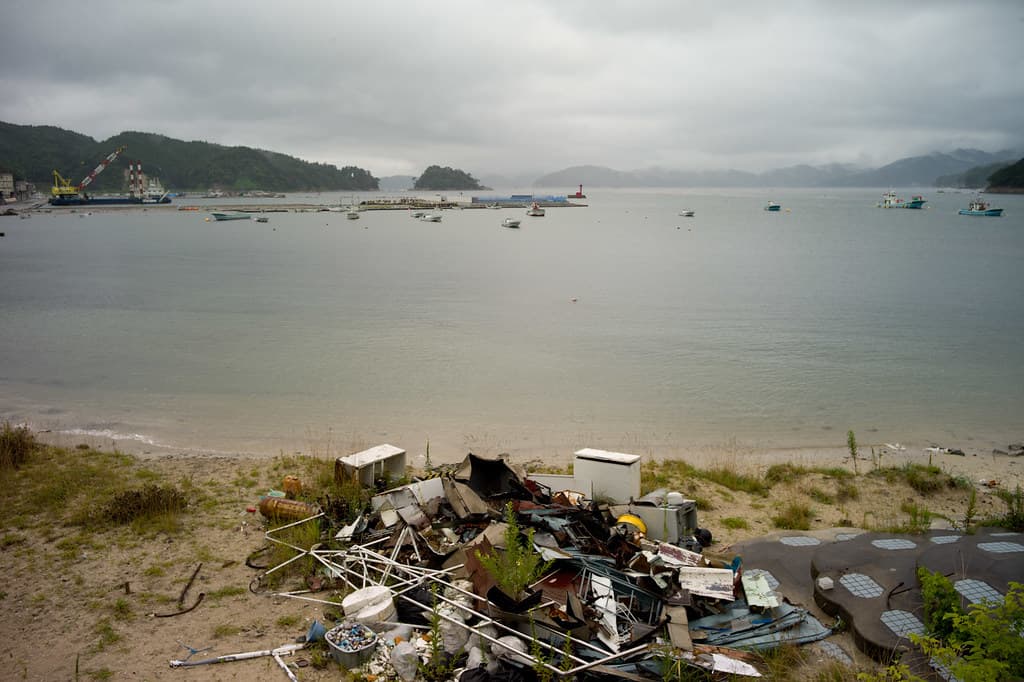
The road south from Funakoshi's main settlement dead-ends at a sliver of shoreline where the Sea of Japan churns against dark basalt. Local fishermen in rubber boots wade into the shallows at dawn, checking nets strung between wooden poles that jut from the surf like forgotten monuments. You can walk the tide line for twenty minutes without encountering a single beach umbrella—just driftwood, kelp ribbons drying in the wind, and the occasional shrine marker tucked into the bluffs. This is not the beach for powdery sand fantasies. The shore here is a mix of coarse grey gravel and tide-smoothed pebbles that click underfoot, backed by grassy slopes where wildflowers cling to the incline. The water stays bracing even in August, fed by currents that sweep down from the Arctic. You'll find your rhythm here in the patient things: watching cormorants dive, tracing the fishing fleet as it rounds the headland, noticing how the light shifts across the pine-cloaked hills inland. Oga's western coast remains mercifully untouched by resort development. The few families who do arrive spread blankets far apart, respecting the unspoken code of space. A weathered vending machine near the gravel parking lot dispenses cold cans of Boss coffee and barley tea—the only concession to convenience on this stretch of shoreline that belongs, first and always, to the wind and the waves.
Places, rentals, tours and events within walking and driving distance of Funakoshi South Beach.
Photos
Funakoshi South Beach is generally calm and suitable for swimming during summer months, though it lacks lifeguard services typical of more developed beaches. The quiet, local nature means fewer safety facilities, so swimmers should exercise caution and assess conditions independently. Water quality is typically good, but always check for posted warnings or ask locals about currents. The beach's sheltered location along Oga Peninsula provides some natural protection from rough seas. Families with children should supervise closely, and it's wise to swim during daylight hours when other beachgoers might be present.
While technically accessible year-round, July through August offers the warmest weather for swimming, with temperatures reaching 25-30°C. However, visiting during shoulder seasons (May-June or September) provides pleasant weather with fewer crowds, ideal for peaceful walks and photography. The beach takes on different character in autumn and winter—dramatic and moody rather than tropical—appealing to those seeking solitude. Spring brings mild temperatures perfect for beachcombing. Being a local spot rather than tourist destination, it never gets overcrowded, making timing less critical than at Japan's popular beaches.
Funakoshi South Beach is best accessed by car, as public transportation to this quiet area is limited. From central Oga, drive along the coastal roads toward Funakoshi area—GPS navigation is recommended as signage may be minimal. Parking availability is typically informal, with space along the roadside near beach access points rather than designated lots. The beach's local, undeveloped nature means infrastructure is basic. Renting a car from Akita City (about 40-60 minutes away) provides the most flexibility. Allow extra time for navigation as this isn't a well-marked tourist destination.
Funakoshi South Beach has minimal on-site amenities, reflecting its status as a hidden local spot. You'll find small restaurants and shops in nearby Funakoshi village or broader Oga area, often serving fresh local seafood. For accommodations, consider staying in central Oga Peninsula or Oga City, where minshuku (guesthouses), ryokan, and hotels offer more options, typically 10-30 minutes away by car. Bring your own food, water, and beach supplies, as there are no beachside vendors or convenience stores immediately adjacent. This preparation suits the beach's appeal for those seeking authentic, uncommercial coastal experiences.
Funakoshi South Beach distinguishes itself as a peaceful extension of the more visited areas, offering authentic local atmosphere without tourist development. Unlike Oga's dramatic rocky coastline attractions, this beach provides a quieter, sandy retreat where locals actually spend time. Its understated character appeals to travellers seeking genuine Japanese coastal life rather than curated tourist experiences. The lack of commercialization means natural beauty remains intact, with views across the Sea of Japan unobstructed by facilities. It's ideal for those who've explored Oga's famous namahage folklore sites and dramatic capes, now seeking tranquil seaside contemplation.