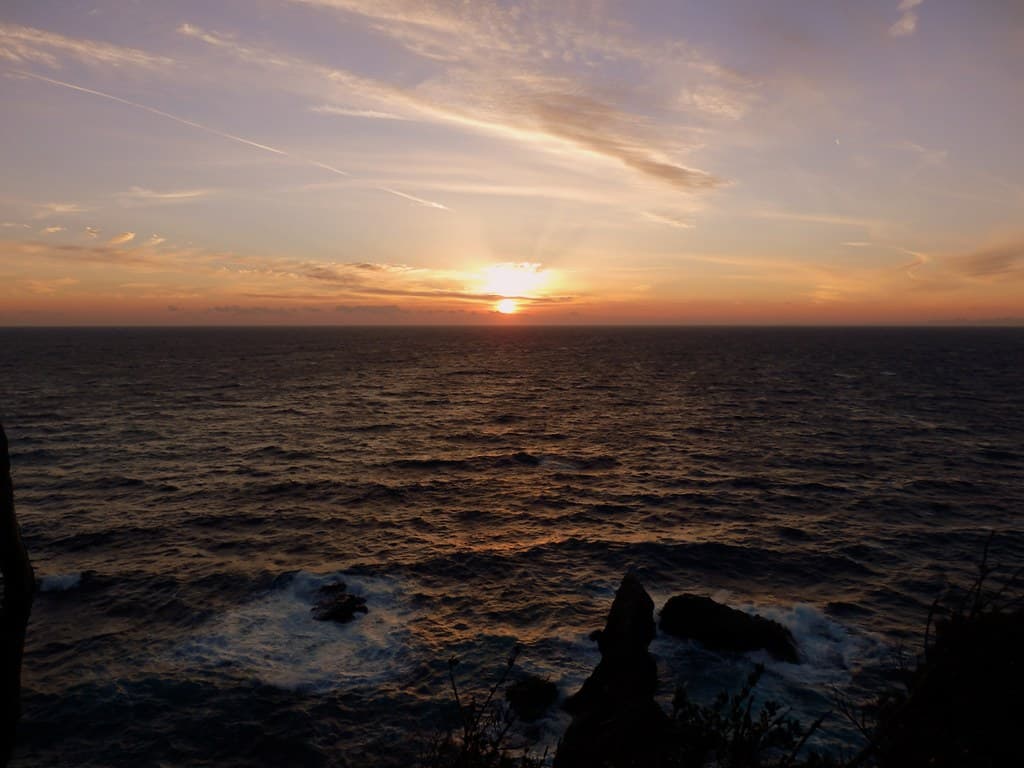
Counting the waves…
Counting the waves…
The drive along Route 101 hugs the Tsugaru coast so tightly that guardrails seem optimistic. When you park at Kitakanegasaki, the first thing you notice isn't the beach—it's the sound. Waves collide with stacked basalt columns, sending up spray that catches the light and leaves a mist on your skin. The shoreline is a ribbon of rounded pebbles, smooth from centuries of tumbling, and the cliffs behind you rise in geometric formations that geologists study and photographers circle with slow reverence. This is not a place for umbrellas or beach chairs. The wind off the Sea of Japan arrives with purpose, carrying the scent of kelp and cold water. In summer, the air softens just enough to make wading possible, though the undertow commands respect. In winter, the beach becomes a theater for storms—locals time their visits to watch swells crash against the rocks, white foam climbing twenty feet up the dark stone. Few tourists venture this far up the Aomori coast, which means you'll share the beach with fishermen checking lines and the occasional hiker following the coastal trail south toward Jusanko Lake. There's a small parking area and nothing else—no showers, no snack bars, just the elemental meeting of land and sea. Bring layers. Bring a thermos. Stay until the light shifts from silver to pewter across the water.
Places, rentals, tours and events within walking and driving distance of Kitakanegasaki Beach.
Photos
Kitakanegasaki Beach features a rugged, rocky coastline with strong currents and waves, making it generally unsuitable for swimming. The beach is primarily appreciated for its dramatic coastal scenery rather than recreational water activities. Visitors should exercise caution near the water's edge, especially during high tide or rough weather. The remote location means lifeguards and emergency services are not readily available. If you're seeking a swimming beach in Aomori, consider more developed coastal areas with designated swimming zones and safety infrastructure.
Kitakanegasaki Beach offers year-round scenic beauty, each season bringing different charms. Summer (June-August) provides the most comfortable weather for exploring the coastline, though it can be windy. Autumn offers stunning coastal views with changing foliage. Winter presents dramatic seascapes with rough seas and possible snow-covered landscapes, though access may be challenging. Spring brings milder temperatures and clearer skies. Since it's primarily a scenic destination rather than a swimming beach, visiting during shoulder seasons (May-June, September-October) can provide pleasant weather while avoiding peak tourist periods in the region.
Kitakanegasaki Beach is located in remote Fukaura town in western Aomori Prefecture. The most practical way to reach it is by car, as public transportation options are extremely limited in this coastal area. From Fukaura Station on the JR Gonō Line, it's approximately a 20-30 minute drive north along coastal roads. Parking facilities are minimal given the beach's remote nature, though roadside parking may be available near access points. The journey involves winding coastal roads with spectacular ocean views. Renting a car from major cities like Hirosaki or Aomori is recommended for flexibility.
Given Kitakanegasaki Beach's remote location, dining and accommodation options directly at the beach are virtually nonexistent. Fukaura town, the nearest settlement, offers basic amenities including small restaurants serving local seafood, convenience stores, and modest guesthouses or minshuku (Japanese-style inns). For more extensive services, visitors may need to travel to larger towns along the coast. It's advisable to bring snacks and drinks when visiting the beach, and plan meals in Fukaura or nearby towns. Accommodation should be arranged in advance, particularly during summer months when availability may be limited.
Kitakanegasaki Beach stands out for its wild, undeveloped character and dramatic rocky coastline, contrasting sharply with developed sandy beaches elsewhere in Japan. This hidden gem offers raw natural beauty with rugged cliffs, rock formations, and powerful ocean waves crashing against the shore. Its remote location in western Aomori means fewer visitors, providing a peaceful atmosphere for photographers and nature lovers. The beach exemplifies the untamed beauty of the Tsugaru region's Sea of Japan coastline, offering authentic coastal scenery without commercial development, making it ideal for those seeking solitude and dramatic seascapes rather than typical beach activities.