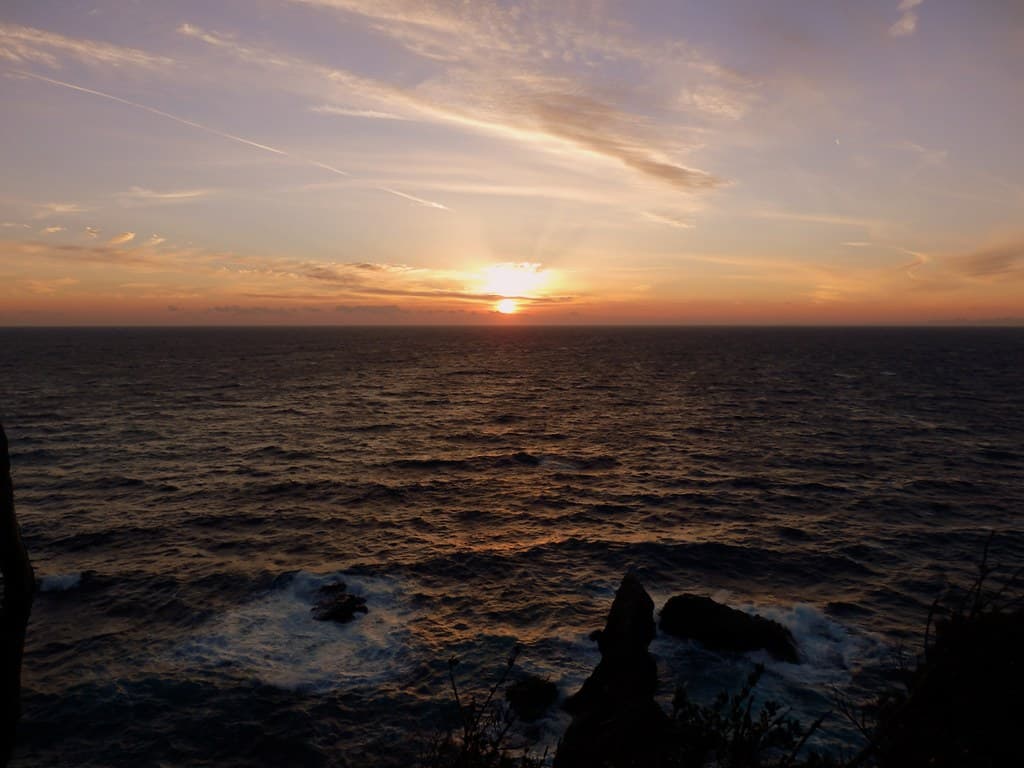
Counting the waves…
Counting the waves…
You won't find beach chairs or swim zones here. Oirase Beach exists for contemplation, not recreation. The shoreline stretches in a chaos of weathered basalt formations, their surfaces smoothed by millennia of winter storms blowing down from Siberia. During gentler months, tide pools glimmer between the stones, but even then the surf maintains its restless conversation with the land. The drama intensifies as you follow the coast north or south. Sea stacks rise offshore, their silhouettes shifting with your perspective, while driftwood—bone-white and sculptural—gathers in the crevices. The beach takes on different personalities throughout the day: pewter and moody under cloud cover, amber-lit when late afternoon sun breaks through the maritime haze. Local fishermen occasionally work the rocks, their fluorescent gear the only bright notes against the muted palette. Visit when the fishing boats return to nearby Fukaura port in the late afternoon. The scent of salt and seaweed hangs thick in the air, and you'll likely have long stretches of shoreline to yourself. Bring layers—the wind off the Sea of Japan doesn't negotiate—and solid footwear for navigating the uneven volcanic rubble that makes up most of the beach. This is Tsugaru's wild edge, unpolished and unapologetic.
Places, rentals, tours and events within walking and driving distance of Oirase Beach.
Photos
Oirase Beach is primarily known for its rugged, scenic shoreline rather than swimming. The rocky coastline and strong currents make it less suitable for casual swimmers. The beach is better appreciated for coastal walks, photography, and enjoying dramatic ocean views. If you're interested in water activities, check local conditions and warnings, as the Sea of Japan can be unpredictable. Most visitors come for the natural beauty and unique rock formations rather than beach recreation. Always exercise caution near the water's edge.
Oirase Beach can be visited year-round, with each season offering different appeal. Summer (June-August) provides the warmest weather for coastal walks, while autumn brings beautiful clear skies ideal for photography. Winter offers dramatic wave action and storm-watching opportunities, though temperatures are cold. Spring features milder conditions as nature awakens. The beach is particularly photogenic during golden hour at sunset. Since it's valued for scenery rather than swimming, weather preferences depend on your tolerance for wind and whether you prefer dramatic or calm seascapes.
Oirase Beach is located in Fukaura, western Aomori Prefecture. By train, take the JR Gonō Line to Fukaura Station, then it's approximately a 15-minute taxi ride to the beach. If driving from Aomori city, take Route 101 along the coast heading south; the journey takes roughly 90 minutes. Parking is typically available near the beach area, though facilities may be basic. Having a rental car provides the most flexibility for exploring this and other coastal attractions along the scenic Tsugaru coastline.
Fukaura town, a short distance from Oirase Beach, offers basic dining options including local seafood restaurants serving fresh catches from the Sea of Japan. The area is known for coastal cuisine rather than extensive tourist facilities. Accommodations include small minshuku (Japanese guesthouses) and business hotels in Fukaura. For more lodging variety, consider staying in nearby larger towns along the coast. The region isn't heavily developed for tourism, so it's advisable to plan meals and accommodation in advance, especially during peak travel seasons.
Oirase Beach stands out for its dramatically rugged shoreline featuring distinctive rock formations sculpted by the Sea of Japan's powerful waves. The coastline showcases the raw, untamed beauty typical of Aomori's western coast, with weathered cliffs and interesting geological features. Unlike sandy swimming beaches, this is a scenic coastal landscape perfect for photography and nature appreciation. The area represents authentic, unspoiled Japanese coastal scenery, offering visitors a chance to experience the natural power of the ocean against Japan's northern shores, away from typical tourist beach destinations.