Counting the waves…
Counting the waves…
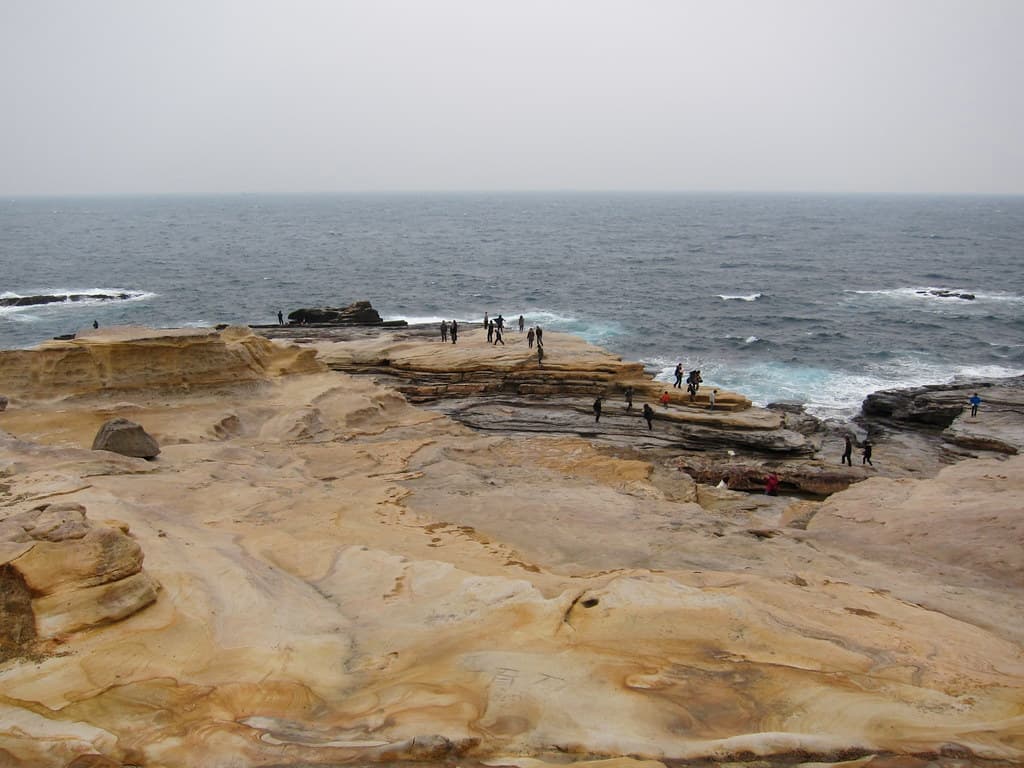
Senjojiki South Beach unfolds like a secret appendix to the tourist-trampled northern headland. While bus groups cluster around the main Senjojiki viewpoint a half-kilometer north, you can have this stretch of black sand and tidal platforms almost entirely to yourself. The beach takes its character from the eroded mudstone benches that extend into the surf—tatami-mat flat and stacked in geological layers that read like a history book written in stone. The Sea of Japan delivers a different mood each season: steel-gray swells in winter, gentler lapping in summer, and spectacular spray during autumn typhoon edges. You'll want to time your visit with the tide charts; low water reveals tide pools caught in the honeycomb rock, while high tide presses right against the pebbled upper beach. The wind here is constant, salt-laced, carrying the mineral smell of exposed seaweed. Bring a windbreaker even in July. The basalt boulders scattered across the sand make natural perches for watching fishing boats trace the horizon, and the lack of facilities means you'll need to pack everything in and out. This isn't a beach for long swims or sunbathing—it's a place to witness coastal geology at work, where erosion and deposition perform their slow dance without an audience.
Places, rentals, tours and events within walking and driving distance of Senjojiki South Beach.
Photos
Swimming conditions at Senjojiki South Beach vary significantly by season and weather. The beach is known more for its dramatic coastal scenery than as a swimming destination. Strong currents and waves can occur, particularly during windy conditions. Always check local conditions before entering the water and exercise caution. The beach lacks lifeguards, so swimming is at your own risk. Many visitors prefer to enjoy the stunning rock formations and coastal views rather than swimming.
Senjojiki South Beach can be visited year-round, with each season offering different appeal. Summer (June-August) provides the warmest weather for beach activities, though it can be humid. Spring and autumn offer milder temperatures ideal for coastal walks and photography. Winter visits reveal dramatic seascapes with powerful waves, though weather can be harsh. Sunset viewing is particularly spectacular during clear evenings throughout the year. The shoulder seasons typically mean fewer crowds at this already less-visited extension.
Senjojiki South Beach is located in Fukaura, Aomori Prefecture. The most practical access is by car, as public transportation options are limited in this rural coastal area. From Fukaura town, follow coastal roads toward the Senjojiki area. Parking availability varies depending on the specific access point, with small informal parking areas near the coast. The beach is less developed than the main Senjojiki rock formations area, so expect minimal infrastructure and signage.
Being a less-visited extension of the main Senjojiki area, South Beach has very limited amenities directly nearby. The town of Fukaura, a short drive away, offers basic restaurants serving local seafood and regional Aomori cuisine, plus small hotels and minshuku (guesthouses). For more dining and lodging options, consider staying in Fukaura or Ajigasawa. Bring your own food and drinks if planning to spend extended time at the beach, as convenience stores and facilities are not immediately accessible.
Senjojiki South Beach offers a quieter, less developed alternative to the popular main Senjojiki rock platform area. While the main site attracts visitors for its distinctive tatami-mat-like rock formations, the South Beach extension provides a more secluded coastal experience with fewer tourists. The beach features similar geological characteristics and dramatic coastal scenery but with greater solitude. It's ideal for travelers seeking to escape crowds while still experiencing the rugged beauty of Aomori's western coastline and unique rock formations.