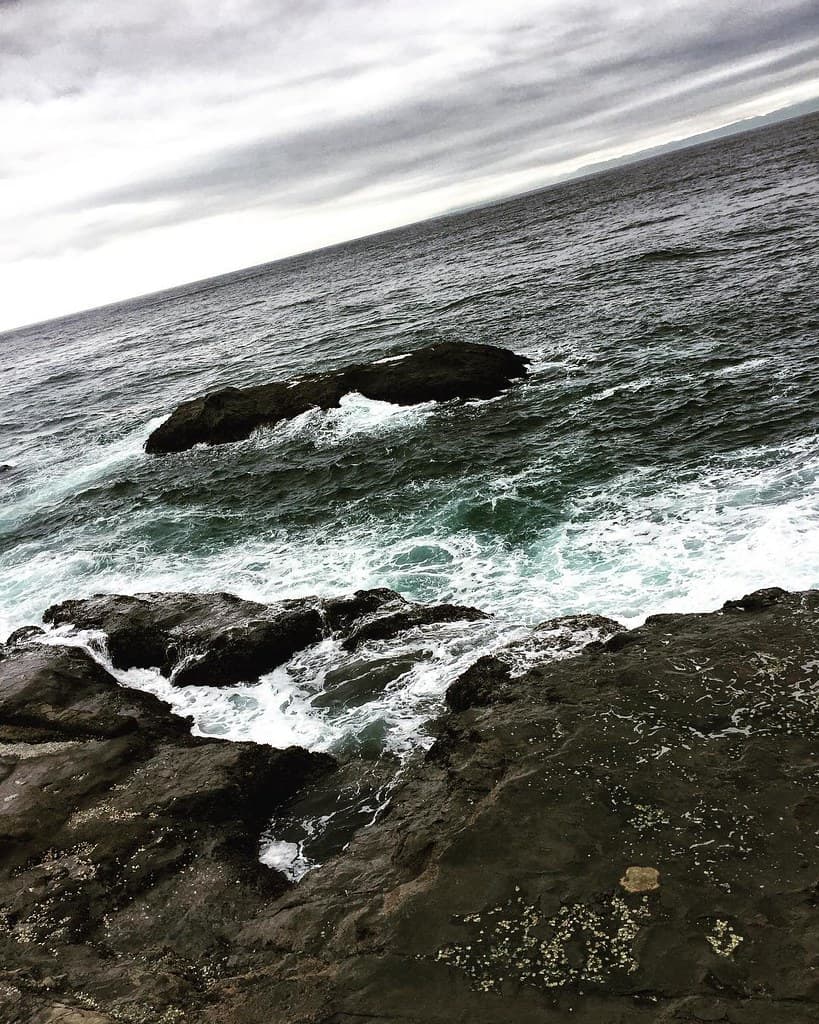
Counting the waves…
Counting the waves…
The drive northeast from Higashidori village traces a coastline that feels forgotten by time. Iwaya North Beach reveals itself gradually—a crescent of charcoal sand pressed between forested bluffs and the restless Pacific. This is not a beach for umbrellas and sunbathers; it's a place where you come to witness the raw dialogue between ocean and land, where spray mists your face and the horizon stretches uninterrupted toward distant fishing grounds. The beach takes its character from the volcanic geology beneath your feet. Rounded stones clatter in the surf's retreat, polished smooth by endless tumbling. Driftwood logs—bleached white and gnarled—lie scattered above the tide line like the bones of ancient vessels. In summer, wildflowers stipple the grassy margins where beach meets forest. Winter brings a different beauty: slate-grey seas, low clouds racing overhead, and the occasional dusting of snow that renders the landscape almost monochromatic. You'll share this beach with locals who know its moods intimately—fishermen checking conditions, couples walking dogs, photographers waiting for the precise angle of afternoon light. The remoteness guarantees tranquility even during Japan's crowded holiday weeks. Pack layers; the northern latitude and Pacific exposure mean temperatures swing unpredictably, and wind is a constant companion along Shimokita's exposed eastern face.
Places, rentals, tours and events within walking and driving distance of Iwaya North Beach.
Photos
Swimming conditions at Iwaya North Beach vary considerably due to its remote northern location on Japan's Pacific coast. The beach experiences strong currents and cold water temperatures, even in summer. There are no lifeguards on duty, and facilities are minimal. Local conditions can change rapidly, so exercise extreme caution. The beach is better suited for scenic walks and photography than swimming. Always check weather forecasts before visiting, and avoid entering the water during rough seas or if you're unfamiliar with ocean swimming safety.
While technically accessible year-round, summer months (July-August) offer the most pleasant conditions with milder temperatures, though it remains cooler than southern Japanese beaches. Spring and autumn provide dramatic coastal scenery with fewer visitors. Winter visits are possible but expect harsh winds, cold temperatures, and potential snow. The remote Aomori location means weather can be unpredictable regardless of season. For photography and scenic appreciation, early morning or late afternoon light creates stunning views. Check local conditions before traveling, as winter access may be limited.
Reaching Iwaya North Beach requires traveling to Higashidori in northeastern Aomori Prefecture. A rental car is strongly recommended, as public transportation is extremely limited in this remote area. From Aomori City, drive north approximately 2-3 hours along coastal roads. Parking availability is basic and informal near the beach access points. Road signage may be minimal, so GPS navigation is essential. The journey itself offers scenic coastal views. Plan for adequate fuel and supplies, as services become sparse in this northern region.
Iwaya North Beach is in a very remote area with extremely limited nearby amenities. Food options and accommodations are sparse in the immediate vicinity. Visitors should plan to stay in larger towns like Mutsu or Noheji, which are some distance away but offer basic hotels and restaurants. It's advisable to bring your own food, water, and supplies for a beach visit. The small fishing communities in Higashidori may have minimal local shops, but don't rely on finding services at the beach itself.
Iwaya North Beach stands out as one of Japan's most remote Pacific-facing beaches, located in sparsely populated northeastern Aomori Prefecture. Its isolation offers a rare sense of untouched natural beauty, far from tourist crowds. The rugged northern coastline provides dramatically different scenery compared to tropical southern beaches, with cooler waters and wild, windswept landscapes. This hidden gem appeals to adventurous travelers seeking solitude and authentic coastal nature. The journey to this remote extension of Japan's coastline is part of the unique experience.