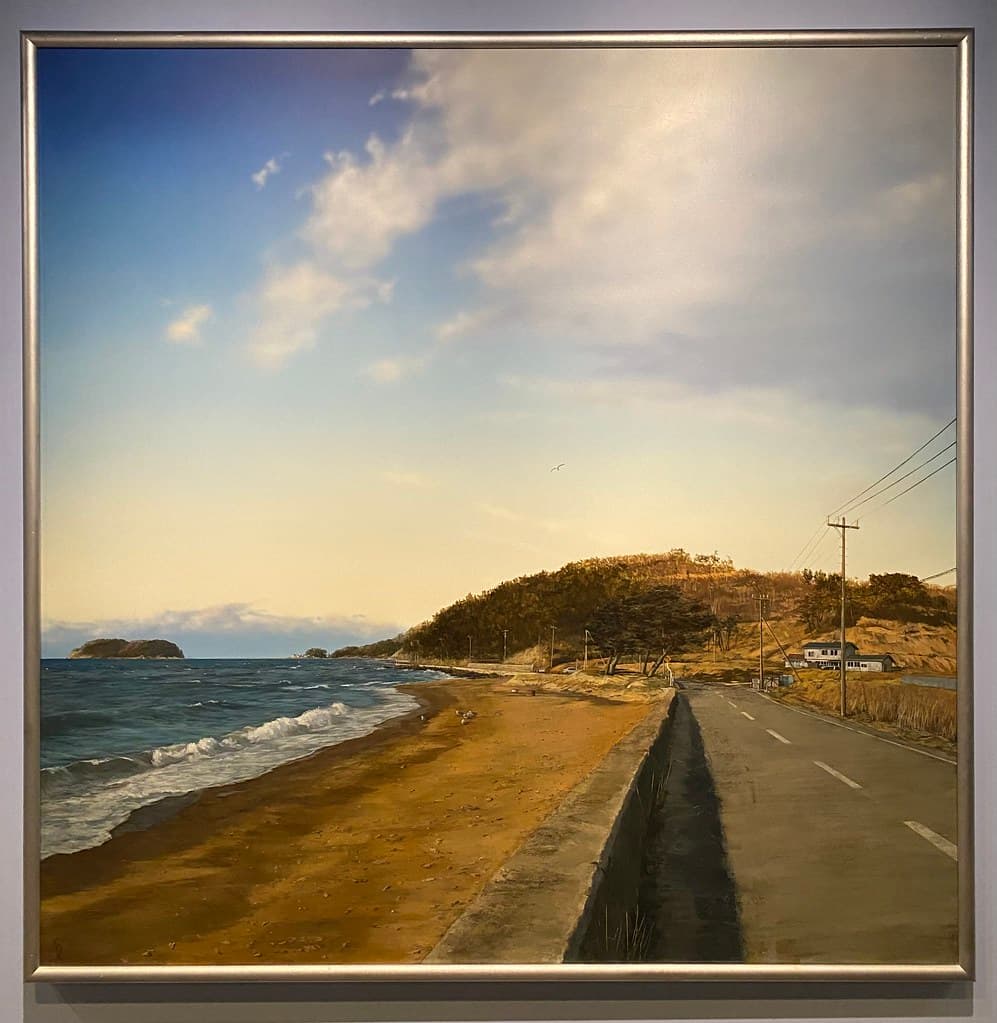
Counting the waves…
Counting the waves…
The drive to Natsudomari North Beach threads through persimmon orchards and past weathered Shinto shrines, the road narrowing as Hiranai's modest fishing harbor fades in your mirror. When you step onto the volcanic sand, the scale surprises—this isn't the cove you imagined but a broad crescent where Mutsu Bay opens toward the strait, rimmed by basalt outcrops that fracture incoming waves into white foam. In winter, snow collects on the beach grass; in August, obon lanterns drift offshore after dusk, their paper bodies bobbing toward the horizon. The peninsula's isolation works in your favor. No boardwalks, no umbrella rentals—just driftwood logs smoothed by decades of tides, scattered shells (scallop, abalone, turban snail), and the smell of salt mixing with pine resin from the stunted trees behind the strand. Locals come at dawn to cast lines for flatfish; by mid-morning, you'll have the place to yourself, save for the crows picking through seaweed wrack. Mutsu Bay's sheltered position means gentler swells than the open Pacific, but the water stays bracing—15°C even in summer—and the undertow near the rocks demands respect. Pack layers: the wind off the strait doesn't quit, and the nearest konbini sits twenty minutes back toward town. What you trade in convenience, you gain in solitude—a beach that asks nothing of you except attention.

Places, rentals, tours and events within walking and driving distance of Natsudomari North Beach.
Photos
Swimming conditions at Natsudomari North Beach vary significantly by season. The beach is relatively remote with limited lifeguard services, so swimmers should exercise caution and assess conditions independently. Waters along this northern Honshu coast can be cold even in summer, and currents may be unpredictable around the peninsula. Check local weather forecasts before visiting, and avoid swimming during rough seas or high winds. The beach's isolated nature means emergency services may take longer to arrive, so it's best suited for experienced swimmers and families should stay close to shore.
While accessible year-round, Natsudomari North Beach offers different experiences by season. Summer (July-August) provides the warmest weather for beach activities, though temperatures remain cooler than southern Japan. Spring and autumn offer dramatic coastal scenery with fewer visitors, ideal for photography and peaceful walks. Winter visits reward hardy travellers with stark, beautiful landscapes and potential snow-covered beach views. The shoulder seasons of May-June and September-October typically offer the best balance of mild weather and solitude, though always check local conditions as northern Aomori weather can be unpredictable.
Natsudomari North Beach is best accessed by car, located on the remote Natsudomari Peninsula in Hiranai. From Aomori city, drive approximately 40-50 minutes via Route 4 and local roads toward the peninsula. Public transportation options are extremely limited to this area. Parking availability exists near the beach, though facilities may be basic given the location's remote nature. The final approach involves narrow coastal roads, so drive carefully. GPS coordinates are recommended as signage may be minimal. Allow extra time for navigation, especially for first-time visitors to this less-touristed region.
Natsudomari North Beach has minimal on-site amenities due to its remote location. Visitors should bring food, water, and supplies from Hiranai town or Aomori city. Basic facilities may exist during summer months, but don't count on restaurants or shops at the beach itself. The nearest accommodations and dining options are in Hiranai town, roughly 15-20 minutes away, offering small guesthouses, minshuku (family-run inns), and local restaurants. For more extensive lodging choices, Aomori city provides hotels and services. Plan as a day trip and pack essentials, including sun protection and waste bags.
Natsudomari Peninsula extends dramatically into Mutsu Bay, creating a distinctive geographical feature where the beach offers panoramic views across the bay toward the Shimokita Peninsula. This narrow land extension provides unique vantage points with water visible on multiple sides, unlike typical coastline beaches. The peninsula's position creates interesting light conditions for photography, especially during sunrise and sunset. The remote, undeveloped nature preserves a wild coastal character increasingly rare in Japan. Visitors experience a sense of being at land's end, surrounded by sea, making it appealing for those seeking solitude and dramatic seascapes away from crowded tourist beaches.