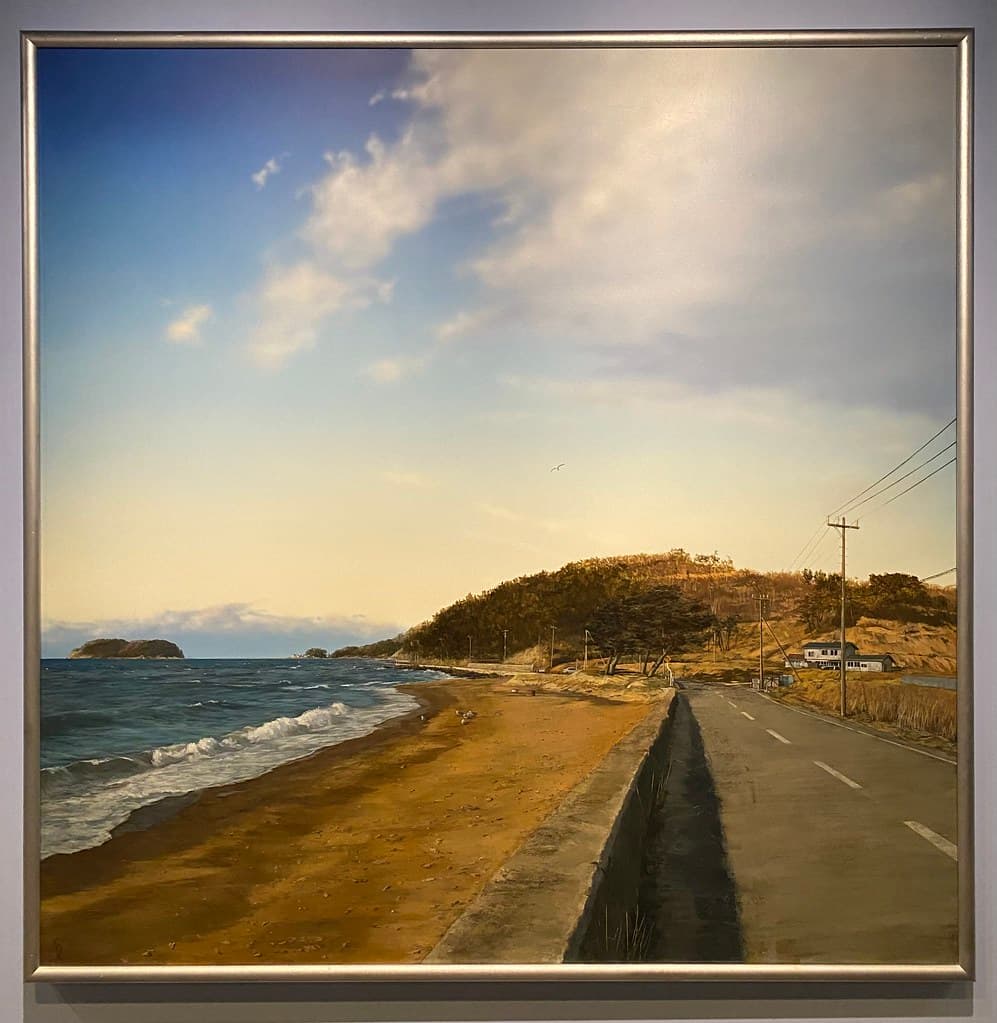
Counting the waves…
Counting the waves…

Arihama Beach sits in that rare category of coastal spaces that exist purely for the people who live within walking distance. You won't find rental umbrellas or beach clubs here, just a shoreline where Noheji residents come to cool off after work, where grandmothers wade knee-deep in their cotton pants, and where the rhythm follows the tide charts pinned inside the local bait shop rather than any tourism calendar. The sand runs gray-brown under your feet, packed firm from Mutsu Bay's mild waves. Mount Iwaki rises across the water to the west, its volcanic cone softening in the afternoon haze. You'll share the beach with egrets stalking the shallows and perhaps a half-dozen families who've claimed their usual spots with the familiarity of decades. The water stays calm most days—this is a bay, after all, protected from the open Pacific by the Shimokita Peninsula. What pulls you back isn't dramatic scenery or bragging rights, but the unhurried pleasure of a place that never needed to become anything other than what it is: a neighborhood beach where people swim, fish, and watch the light change over water they've known their entire lives. You leave with sand in your shoes and the quiet satisfaction of having witnessed daily life rather than staged it.
Places, rentals, tours and events within walking and driving distance of Arihama Beach.
Photos
Arihama Beach is a small, sheltered local beach suitable for calm-water swimming during summer months. As a lesser-known beach without extensive lifeguard services typical of major tourist beaches, swimmers should exercise caution and check local conditions before entering the water. The beach's protected location generally means gentler waves, making it relatively safe for families. However, always supervise children closely, avoid swimming alone, and be mindful of weather conditions. Local signage may be primarily in Japanese, so it's helpful to ask residents about current water conditions.
While Arihama Beach is accessible year-round, July and August offer the warmest weather for swimming, with temperatures reaching 20-25°C. The beach remains quiet even during peak summer months due to its local character. Spring and autumn provide pleasant conditions for beachcombing and coastal walks, though water temperatures are cooler. Winter visits are possible but expect cold temperatures and limited facilities. Aomori's northern location means shorter swimming seasons compared to southern Japan. For the authentic local experience with comfortable weather, visit during the summer weekday mornings when it's least crowded.
Arihama Beach is located in Noheji town, accessible by car from Aomori city (approximately 40-50 minutes). From Noheji Station on the JR Ōminato Line, the beach is roughly 3-4 kilometers away; taxis are available but infrequent, so renting a car is recommended. Limited parking is available near the beach, typically free and uncrowded given its local nature. Public transportation options are minimal, making this beach best suited for visitors with their own transportation. The route is straightforward but signage may be in Japanese only.
As a small local beach, Arihama has minimal on-site facilities. Basic restrooms may be available seasonally, but don't expect beach cafés, rental shops, or extensive amenities found at larger beaches. Noheji town center, a few kilometers away, offers local restaurants, convenience stores, and basic services where you can purchase food and drinks beforehand. Pack your own supplies, including water, snacks, and beach equipment. For accommodation, consider staying in Aomori city or nearby towns, as Noheji has limited lodging options focused primarily on business travelers.
Arihama Beach offers an authentic, uncrowded local experience away from tourist crowds, giving visitors a glimpse of how Aomori residents enjoy the coast. Unlike developed beaches, you'll likely share the sand primarily with local families and fishermen. The beach provides a quiet, peaceful atmosphere perfect for those seeking solitude and a genuine connection with coastal Tohoku life. Its small scale and minimal development mean pristine, uncommercialized surroundings. This is ideal for travelers wanting to experience Japan's rural seaside culture rather than resort-style beach amenities.