Counting the waves…
Counting the waves…
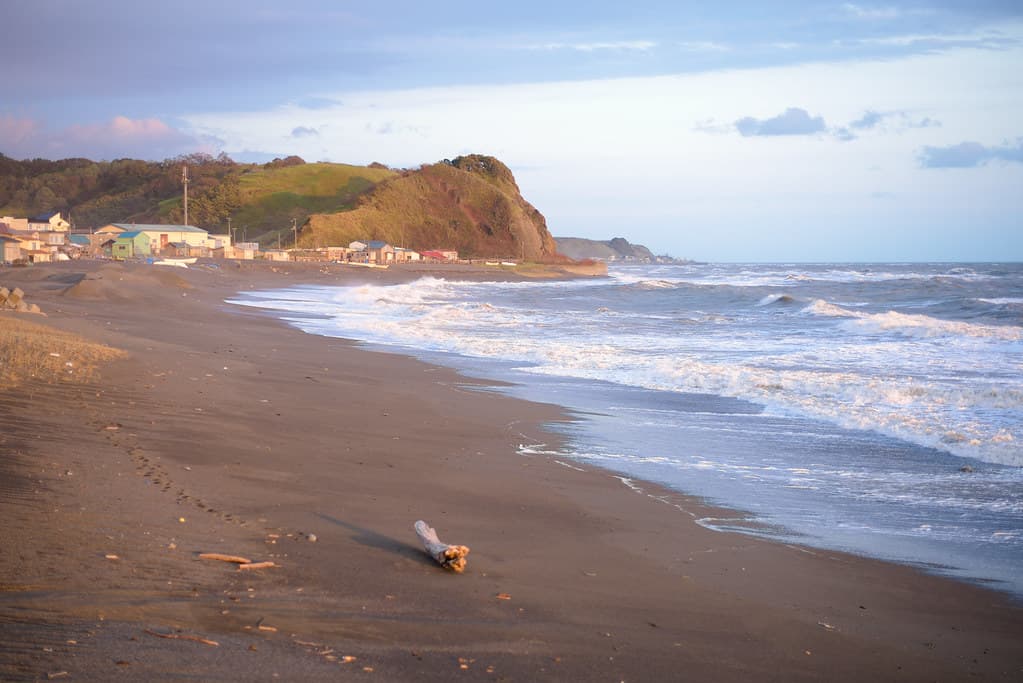
Samani South Beach curves along Hokkaido's southeastern edge, where the Hidaka mountain range slopes into the Pacific and the nearest convenience store sits twenty minutes inland. The sand here holds the dark, iron-rich hue of volcanic basalt, and driftwood from Siberian rivers piles against the tideline in silvered tangles. Kelp farmers work the shallows year-round, their orange buoys bobbing in swells that arrive unimpeded across open ocean. This is horse country—Hidaka breeds some of Japan's finest thoroughbreds—and occasionally you'll spot them grazing the coastal bluffs above the beach, their manes lifting in the same wind that bends the rugosa roses growing wild in the dunes. The beach remains empty most days, save for the occasional surfer checking the break or a fisherman casting for flounder where the Samani River meets the sea. The water stays cold even in August, fed by the Oyashio Current sweeping down from the Kuril Islands. You come here not for swimming but for the raw beauty of it: the way storm light moves across the bay, the rhythmic crash of waves against offshore rocks, the sense that you've driven to the very edge of Japan and found something quietly magnificent waiting there.
Places, rentals, tours and events within walking and driving distance of Samani South Beach.
Photos
Samani South Beach is generally not recommended for swimming due to strong currents and cold water temperatures, even in summer. The beach is primarily visited for its scenic coastal views rather than water activities. There are no lifeguards on duty, and facilities are minimal given its remote location. The rocky shoreline and powerful Pacific waves make conditions challenging. Visitors should enjoy the beach for walking, photography, and nature observation rather than swimming. Always exercise caution near the water's edge.
Summer months (June through August) offer the most comfortable weather for visiting Samani South Beach, with milder temperatures and clearer skies ideal for coastal walks and photography. However, the beach has year-round appeal for dramatic seascapes. Winter brings striking views of rough seas and possible drift ice. Spring and autumn offer fewer crowds and beautiful light. The area experiences Hokkaido's typical cool climate, so bring layers regardless of season. Weather can change quickly along this exposed coastline.
Samani South Beach is remote and best accessed by car. From Sapporo, it's approximately a 3-4 hour drive southeast via Route 336 along the coast. The nearest town is Samani, where you can find basic services. Parking is typically available along the roadside near beach access points, though facilities are minimal. Public transportation to this area is extremely limited. Renting a car in Sapporo or another major Hokkaido city is strongly recommended for visiting this isolated coastline.
Dining and lodging options near Samani South Beach are limited due to its remote location. The small town of Samani, a few kilometers away, has basic restaurants serving local seafood and a handful of minshuku (Japanese guesthouses) and small hotels. Many visitors stay in larger towns like Erimo or Urakawa and make day trips to the beach. It's wise to bring snacks and drinks, as convenience stores are sparse. Plan meals in advance, especially during off-season when some establishments may close.
Samani South Beach stands out for its wild, untouched character along Hokkaido's rugged Pacific coast. Unlike more developed beaches, it remains largely uncommercialized, offering solitude and dramatic natural scenery. The area is known for kelp harvesting, and you might observe traditional coastal industries. The beach provides stunning views of Cape Erimo to the east and is excellent for spotting seabirds. Its isolation means fewer tourists, making it perfect for travelers seeking authentic, off-the-beaten-path coastal experiences in Hokkaido.