Counting the waves…
Counting the waves…
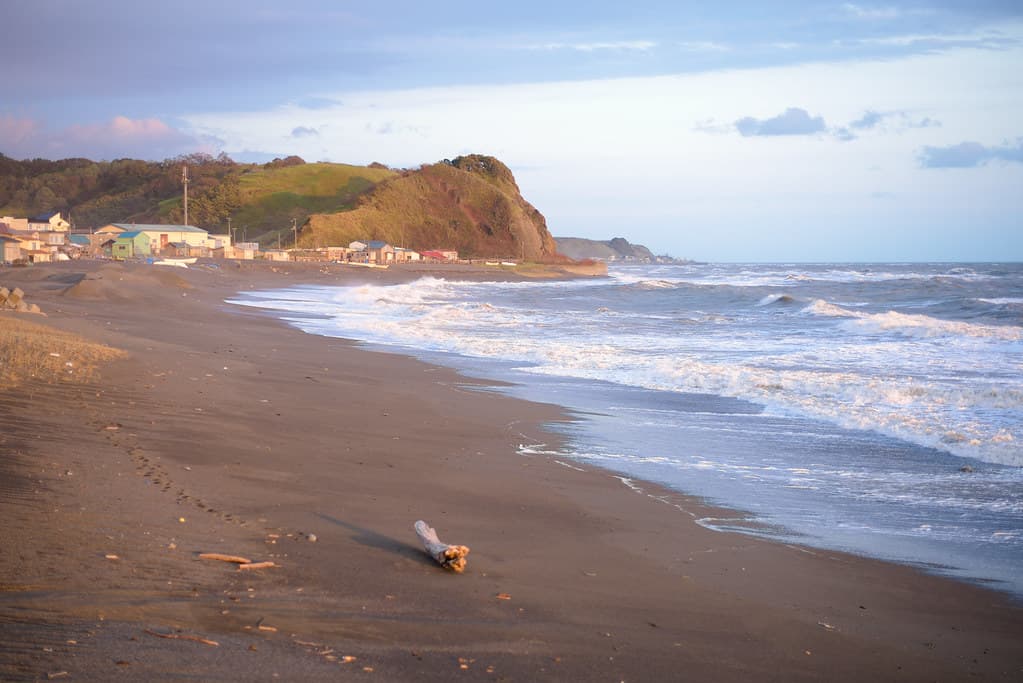
You'll notice Urakawa Beach doesn't trade in postcard clichés. The shoreline curves in a wide arc backed by low hills, its charcoal sand formed from centuries of wave action grinding down volcanic rock. Fishing boats bob in the adjacent harbor, their diesel engines rumbling to life before dawn, and the town's commercial pulse—canning factories, seafood wholesalers, rope-and-net suppliers—runs right up to the water's edge. The beach draws Japanese families year-round, though summer brings the most visitors. Children dig in tidal pools while parents spread blankets on the sand, shielded from Pacific winds by the natural curve of the coastline. Come autumn and winter, the shoreline empties except for dedicated photographers chasing the interplay of storm light and whitecaps. The Hidaka mountain range looms inland, home to the Thoroughbred farms that ship racehorses to tracks across Asia. You're here not for seclusion but for authenticity—a coastal town that happens to have a beach rather than a beach that became a resort. The water stays bracingly cold even in August, fed by the Oyashio Current sweeping down from the Kuril Islands. Locals favor the eastern end near the breakwater, where the swimming is calmer and the rocks shelter occasional visits from harbor seals trailing fish runs.
Places, rentals, tours and events within walking and driving distance of Urakawa Beach.
Photos
Urakawa Beach is primarily known as a working harbor and coastal hub rather than a designated swimming beach. Swimming conditions can be unpredictable due to boat traffic, currents, and cooler water temperatures typical of Hokkaido's Pacific coast. The area lacks lifeguards and designated swimming zones. If you're interested in water activities, check local conditions and prioritize safety. The beach is better suited for scenic walks, photography, and observing the working harbor. For dedicated swimming beaches with facilities, consider other Hokkaido coastal destinations during summer months.
Urakawa Beach can be visited year-round, with each season offering different experiences. Summer (June-August) provides the warmest weather and clearest skies for coastal walks and photography. Spring and autumn offer pleasant temperatures and fewer crowds, ideal for exploring the harbor area. Winter visits reveal dramatic seascapes and potential snow-covered coastal scenery, though temperatures drop significantly. The region experiences cooler temperatures than mainland Japan due to its Hokkaido location. Plan according to your interests—summer for comfortable sightseeing, or off-season for a more rugged, authentic coastal experience.
Urakawa Beach is located in Urakawa Town, accessible via JR Hidaka Main Line to Urakawa Station, though service may be limited or replaced by buses. From Sapporo, the journey typically takes 3-4 hours by car via Route 235 along the coast, or by combination of train and bus. Driving offers the most flexibility for exploring the area. Parking is generally available near the harbor and coastal areas, often free or low-cost. Public transportation within Urakawa Town is limited, so having a car is advantageous for accessing different points along the coastline.
Urakawa Town offers local restaurants serving fresh Hokkaido seafood, including the region's famous konbu (kelp) and coastal catches. You'll find family-run eateries and casual dining spots rather than high-end restaurants. Accommodation options include small hotels, minshuku (Japanese guesthouses), and business hotels in town. Facilities are modest compared to major tourist destinations. For wider dining and lodging choices, larger towns like Tomakomai are within driving distance. The area provides an authentic, local experience rather than resort-style amenities. Book accommodation in advance, especially during peak seasons or local events.
Urakawa is renowned throughout Japan as the country's premier thoroughbred horse breeding region. The town produces many championship racehorses, and visitors can tour breeding farms to see these magnificent animals up close. This unique equestrian heritage distinguishes Urakawa from typical beach destinations. The coastal area also serves as a working fishing harbor, offering authentic glimpses of Hokkaido's maritime industry. The combination of scenic Pacific coastline, horse culture, and fishing heritage creates a distinctive experience. The rugged, less-touristy atmosphere appeals to travelers seeking authentic Hokkaido beyond conventional sightseeing routes.