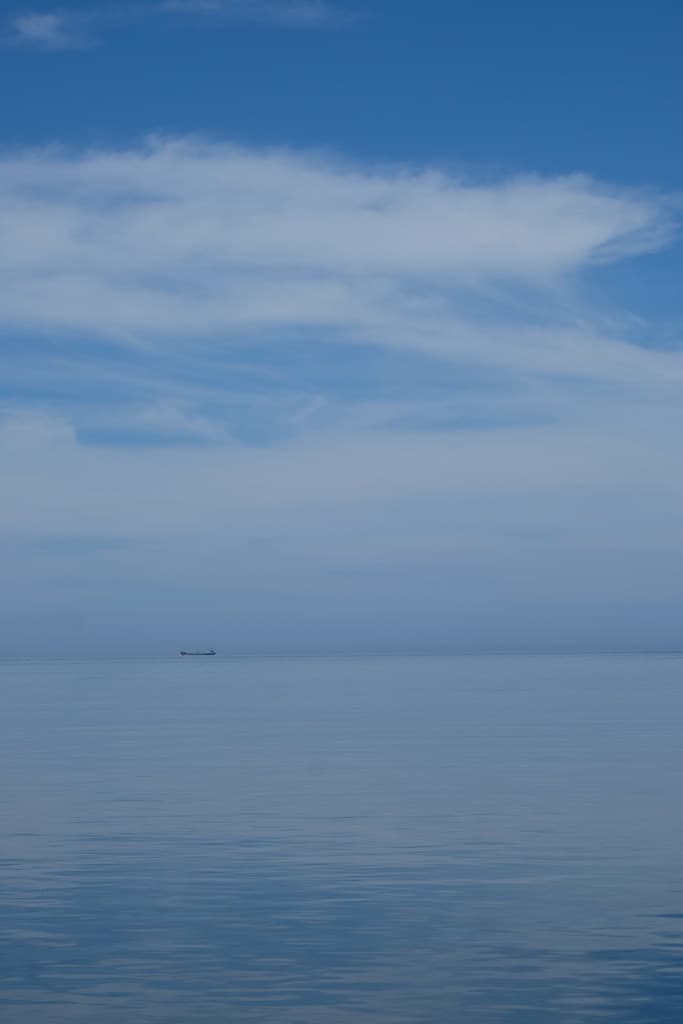
Counting the waves…
Counting the waves…
The drive to Soya Misaki traces the shoulder of Hokkaido's northernmost peninsula, past kelp-drying racks and weathered Shinto shrines, until the road simply runs out at a gravel lot. Beyond it: a monument shaped like a triangular sail marking Japan's northernmost point, and below, a beach less sandy strand than a procession of wave-smoothed stones clicking underfoot with each tide. The wind here is relentless—a horizontal force that bends the grasses flat and makes conversation difficult—but it also polishes the air to such clarity that on exceptional days, you can trace the outline of Sakhalin Island on the northern horizon, forty-three kilometers across the La Pérouse Strait. The light does strange things this far north. Summer brings eighteen-hour days when the sun barely dips, casting amber across the water long past what your internal clock expects. Winter compresses everything into brief, intense hours of illumination—the sky bruising violet by mid-afternoon, the sea turning from slate to ink. Fishermen in insulated coveralls work the small harbor regardless of season, hauling crab pots and urchin baskets while tourists photograph the monument and dash back to idling cars. But stay longer than a snapshot allows. Walk the tideline where driftwood from Siberia tangles with fishing floats stamped in Cyrillic. Watch how the kelp sways in the shallows, how the light bends around the cape's shoulder. This isn't a beach for towels and novels—it's geography as memoir, the place where an entire nation runs out of land.

Places, rentals, tours and events within walking and driving distance of Soya Misaki Beach.
Photos
Swimming at Soya Misaki Beach is generally not recommended due to cold water temperatures year-round and strong currents from the Sea of Okhotsk. Even in summer, water temperatures rarely exceed 15°C (59°F), making it uncomfortable and potentially dangerous for swimming. The beach is primarily visited for its scenic beauty and historic significance as Japan's northernmost point rather than recreational swimming. Visitors should admire the coastline from shore and exercise caution near the water's edge, especially during windy conditions when waves can be unpredictable.
Summer months (June to August) offer the most comfortable weather, with temperatures around 15-20°C and clearer skies for viewing the coastline and nearby Sakhalin Island on clear days. However, Soya Misaki is compelling year-round: autumn brings dramatic coastal scenery, winter offers unique ice formations and potential drift ice viewing (February-March), and spring showcases the area awakening from winter. Sunset visits are particularly popular in summer when daylight extends later. Be prepared for strong winds any season, as this exposed cape experiences harsh weather conditions throughout the year.
Soya Misaki is located about 30km northeast of Wakkanai city center. The most practical option is driving, taking approximately 50 minutes via Route 238. Free parking is available at the cape. Public transportation is limited: Soya Bus operates seasonal services (typically April-October) from Wakkanai Station to Soya Misaki, but schedules are infrequent (2-3 times daily). Many visitors rent cars in Wakkanai or join organized tours. The final approach involves a scenic coastal drive, though winter conditions can be challenging with snow and ice.
Amenities at Soya Misaki itself are minimal. A small rest house near the parking area typically operates seasonally (roughly May-October), offering light refreshments and souvenirs, but full meal options are limited. The nearest accommodations and restaurants are in Wakkanai city, 30km away, where you'll find hotels, guesthouses, and dining featuring local seafood. Some visitors stay in nearby coastal settlements like Soya village, though options are sparse. Plan to bring snacks and water, especially in winter when facilities may be closed. Most visitors make this a day trip from Wakkanai.
Yes, on clear days you can see Sakhalin Island, Russia, from Soya Misaki—it's only 43km away across the La Pérouse Strait. The view is most likely during stable summer weather, though it's never guaranteed due to frequent fog and haze. You'll see the island's mountainous silhouette on the horizon, making this one of the few places where you can view Russian territory from Japan. A monument at the cape marks Japan's northernmost point and includes information about the strait's history and geography, enhancing the experience of standing at this geopolitically significant location.