Counting the waves…
Counting the waves…
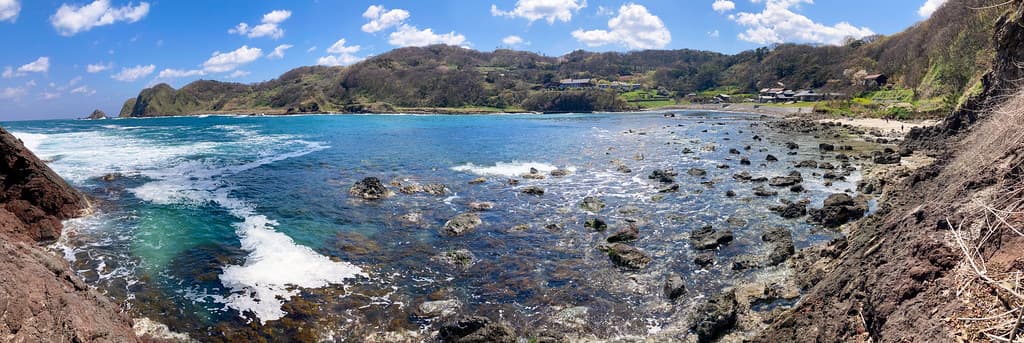
The beach announces itself through the scent of drying kelp and diesel from the nearby harbor. Fishing boats bob in the shallows, their painted hulls—reds and blues weathered by salt—tilting slightly at low tide. The sand feels coarse beneath your feet, darker than you expect, a reminder that the Noto Peninsula's volcanic bones aren't far below. Local families claim the same spots weekend after weekend: a grandmother unfolds a checkered blanket near the concrete tetrapods, children wade where the seafloor drops gently, never dramatically. You won't find beach bars or rental umbrellas. Instead, there's a vending machine humming near the parking area, dispensing cold barley tea, and a single wooden bench facing the water. Gulls wheel overhead, crying out as fishing crews return with the afternoon's catch. The best moments arrive near sunset, when the light turns the sea from slate to amber and the few other visitors begin packing up their coolers. The waves never roar here—they whisper, consistent and unhurried. You can hear conversations drifting from the boats, the clank of metal on metal, the everyday soundtrack of a coast that works for its living. This beach doesn't perform; it simply exists, functional and unadorned, exactly as Suzu's fishermen need it to be.
Places, rentals, tours and events within walking and driving distance of Takojima Beach.
Photos
Takojima Beach is described as family-friendly with calm surroundings, suggesting it may be suitable for families. However, as a small, local beach in remote Suzu, facilities and lifeguard services are likely minimal. The sandy beach type makes it easier for children to play safely on shore. Always supervise children closely near water regardless of conditions. Swimming safety depends on daily weather and sea conditions—always check before allowing children in the water. The quiet, local atmosphere can be appealing for families seeking peaceful beach time away from crowds.
Takojima Beach can be visited anytime according to its profile, offering year-round flexibility. Summer months (June to August) provide warmest weather and best conditions for swimming and beach activities. Spring and autumn offer comfortable temperatures for beach walks and enjoying the coastal scenery with fewer visitors. The calm surroundings suggest the beach is pleasant even during quieter seasons. Winter visits are possible for those interested in peaceful coastal walks and natural beauty, though swimming wouldn't be comfortable. Local weather patterns should guide your specific timing for any visit.
Takojima Beach is located in Suzu, the remote northern area of Noto Peninsula. Renting a car is strongly recommended as public transportation in this rural region is very limited. From major cities like Kanazawa, expect a two to three-hour drive through progressively remote countryside. Use GPS navigation or detailed maps to locate the beach, as local signage may be minimal. Coastal roads in this area can be narrow and winding. Ensure you have adequate fuel and supplies, as services become scarce in northern Noto Peninsula.
Takojima Beach is a small, local beach in a quiet area, so immediate facilities are likely very limited. Suzu town, within reasonable driving distance, offers basic restaurants featuring local seafood and traditional Japanese meals, plus modest accommodation like minshuku and small hotels. Options are far more limited than in larger towns like Wajima. Bringing your own food and drinks for a beach visit is advisable. For more extensive amenities, consider basing yourself in a larger Noto town and visiting Takojima as a day trip to this authentic local beach.
Takojima Beach offers an authentic local beach experience far from tourist crowds, representing how residents of remote Suzu enjoy their coastline. The combination of sandy beach and calm, quiet surroundings makes it relaxing for those seeking peaceful coastal time. Its hidden nature and small scale create an intimate atmosphere distinct from developed beach resorts. The beach showcases local life in rural Noto Peninsula rather than catering to tourists. For travellers wanting to experience genuine, unhurried Japanese coastal culture away from commercial areas, Takojima provides that authentic opportunity.