Counting the waves…
Counting the waves…
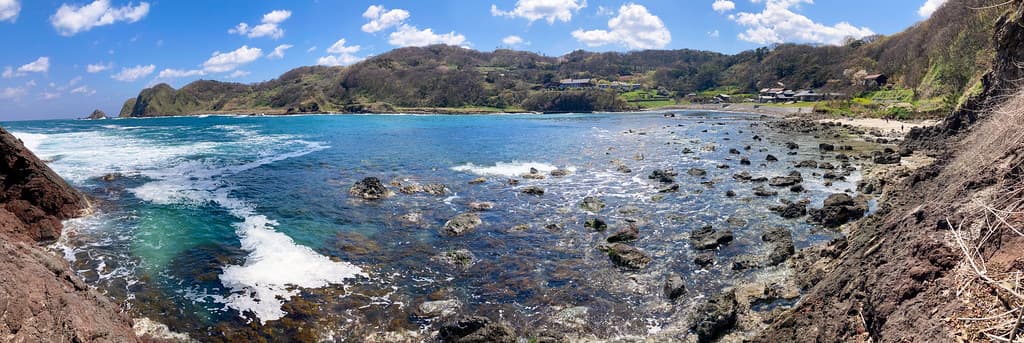
The approach reveals everything: you descend switchbacks carved into the hillside, and with each turn the sound grows louder—waves detonating against ancient volcanic rock, the hiss and draw of water retreating through crevices, the clatter of stones tumbled in the surf. At the bottom, you step onto shelves of basalt that tilt toward the sea in rough terraces, their surfaces pocked with tide pools and draped with kelp that gleams mahogany when wet. This is not a place for casual swimming. The coastline offers no soft entry, no gradual transition from land to sea. Instead, the ocean arrives in powerful sets that surge up the rocks, sending spray high enough to salt the vegetation clinging to the cliff base. Between waves, the tide pools reveal their contents: sea stars in burnt orange and purple, anemones that contract at a shadow's approach, tiny crabs scrambling between fronds of seaweed. The water clarity allows you to peer into pools a meter deep, miniature worlds that refresh with each high tide. The cliffs that frame Uedo rise in fractured columns, their strata recording volcanic episodes from millions of years ago. In certain light, you can trace the layers—darker basalt, lighter ash deposits, intrusions of different mineral composition. Weather moves across this landscape with particular drama: fog that erases the horizon within minutes, sudden squalls that turn the sea from gray to black, and on rare windless mornings, a surface so calm you can hear the sighing of blow holes in the rocks.
Places, rentals, tours and events within walking and driving distance of Uedo Beach.
Photos
Swimming at Uedo Beach is generally not recommended due to its rocky shoreline and dramatic wave conditions. The beach is characterized by rugged terrain and strong currents that can be unpredictable, especially during windy conditions. The rocky coastline makes entry and exit difficult and potentially hazardous. Visitors should exercise extreme caution near the water's edge and supervise children closely. The beach is better suited for scenic viewing, photography, and coastal walks rather than swimming activities.
The best time to visit Uedo Beach is during spring (April-May) and autumn (September-October) when weather conditions are most stable and comfortable for coastal exploration. Summer months offer the warmest temperatures but can be humid. Winter visits showcase dramatic wave action but bring cold winds and rough seas. Clear days provide the best opportunities for photography and appreciating the dramatic coastal scenery. Visiting during early morning or late afternoon offers softer lighting for capturing the rocky cliffs and crashing waves.
Uedo Beach is located in Suzu, at the northern tip of the Noto Peninsula in Ishikawa Prefecture. Access requires a car, as public transportation to this remote area is extremely limited. From Kanazawa, drive approximately 2-3 hours via the Noto Toll Road and Route 249. The beach is accessible via local roads in Suzu. Rental cars are available in Kanazawa or Wajima. The journey involves winding coastal roads with scenic views but limited services, so plan accordingly with fuel and supplies.
Accommodation and dining options near Uedo Beach are limited due to its remote location. The nearest town, Suzu, offers small guesthouses, minshuku (Japanese-style B&Bs), and a few local restaurants serving regional seafood and Japanese cuisine. For more extensive lodging choices, consider staying in Wajima, about 40-50 minutes away, which has hotels, ryokan, and restaurants. It's advisable to book accommodation in advance, especially during peak seasons. Bringing snacks and water is recommended as facilities directly at the beach are minimal.
Uedo Beach stands out for its dramatic rocky shoreline and powerful wave action, creating a rugged coastal landscape unlike the sandy beaches elsewhere on the Noto Peninsula. The combination of jagged cliffs, sea stacks, and crashing waves offers exceptional photographic opportunities and showcases the raw power of the Sea of Japan. This hidden gem remains relatively undiscovered by tourists, providing an authentic experience of Noto's wild northern coastline. The beach exemplifies the peninsula's diverse coastal geography and offers a stark contrast to calmer, more developed beach areas.