Counting the wavesβ¦
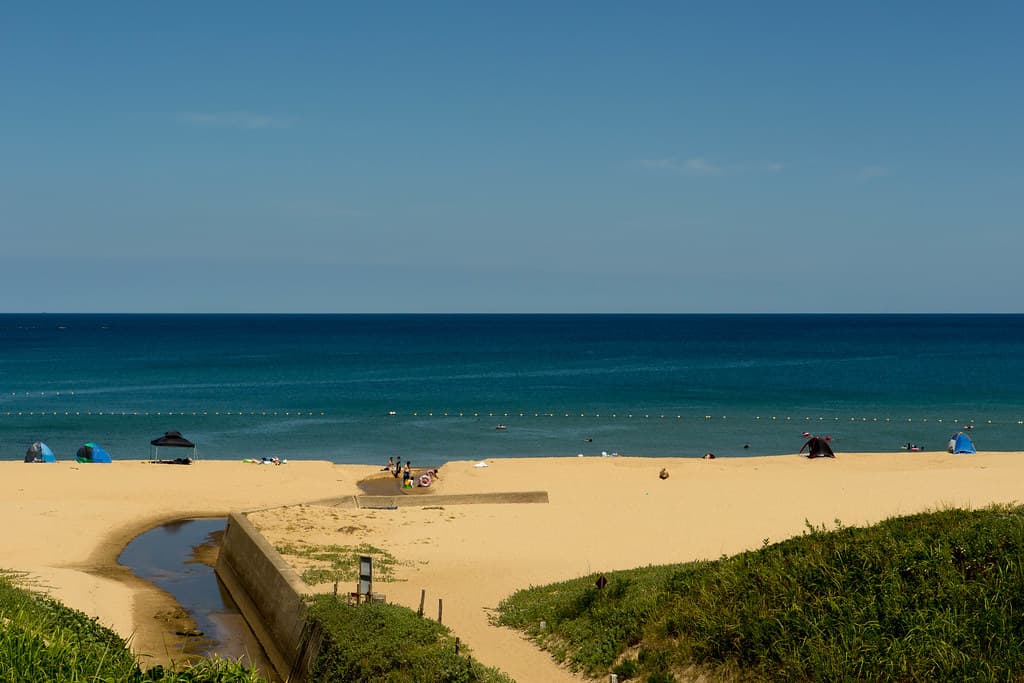
Amino Beach announces itself with beach flags and the smell of grilling yakisoba. The sand here is fine and pale, compacted near the waterline where children have built elaborate castle complexes. Behind the beach, a paved walkway runs the length of the strand, lined with changing rooms, drink machines, and seasonal vendors selling inflatable toys and shaved ice. This is a beach designed for use, not contemplation. You spread your towel among extended families who've claimed their territories with popup tents and coolers. Grandmothers watch from folding chairs while teenagers play beach volleyball using nets permanently installed in the sand. The water stays shallow for twenty meters out, making it ideal for young swimmers. Lifeguards in red caps patrol during summer, whistles ready. It's organized, somewhat crowded, entirely functional. Yet Amino Beach has its charms beyond mere convenience. Morning arrives quietly here, before the families descend, when joggers circle the promenade and the sand still holds the night's coolness. In shoulder seasons, the beach empties to near-solitude while retaining all its facilities. And there's something democratic about a beach that serves its community first, that exists for locals to enjoy the sea without requiring pilgrimage to remote coves.
Places, rentals, tours and events within walking and driving distance of Amino Beach.
Photos
Amino Beach is generally safe for swimming during the summer season when lifeguards are typically on duty. The sandy, gently sloping shoreline makes it family-friendly with shallow waters near the shore. However, always check local conditions and posted warnings before entering the water. The beach's urban location means facilities like restrooms and showers are readily available. During typhoon season or rough weather, swimming should be avoided. The calm waters and accessible facilities make it one of the more family-oriented beaches on the Kyotango Coast.
Amino Beach can be visited year-round, though the traditional beach season runs from July through August when facilities are fully operational and water temperatures are warmest. Spring and autumn offer pleasant weather with fewer crowds, ideal for beachcombing and coastal walks. Winter visits are possible for scenic walks but swimming is not recommended due to cold water temperatures. Weekdays tend to be quieter than weekends during peak summer. The beach's urban accessibility means it's convenient regardless of season, though services may be limited outside summer months.
Amino Beach is accessible by train from Kyoto or Osaka. Take the JR limited express train to Amino Station on the Miyazu Line, which takes approximately 2-3 hours from Kyoto. From Amino Station, the beach is within walking distance or a short taxi ride. If driving, take the expressway north from Kyoto toward the Tango Peninsula. Public transportation is less frequent than in major cities, so check schedules in advance. Renting a car provides more flexibility for exploring multiple beaches along the Kyotango Coast.
As an urban beach, Amino offers various dining options including local restaurants serving fresh seafood, particularly crab and fish caught in the Sea of Japan. You'll find convenience stores and casual eateries in the town center. Accommodation ranges from traditional ryokan inns to modern hotels and guesthouses, many within walking distance of the beach. Some establishments offer meals featuring regional Tango cuisine. During peak season, booking accommodation in advance is recommended. The town's compact size means most facilities are easily accessible on foot or by short taxi ride.
Amino Beach stands out as the most accessible and urban beach option in Kyotango, making it ideal for travelers seeking convenience without sacrificing coastal beauty. Unlike the more remote beaches on the peninsula, Amino offers immediate access to town amenities, shops, and services. The sandy beach and developed facilities cater well to families and those new to the area. Its location near Amino Station makes it the easiest beach to reach by public transportation. While less secluded than other Kyotango beaches, it provides a comfortable introduction to the region's coastline.