Counting the waves…
Counting the waves…
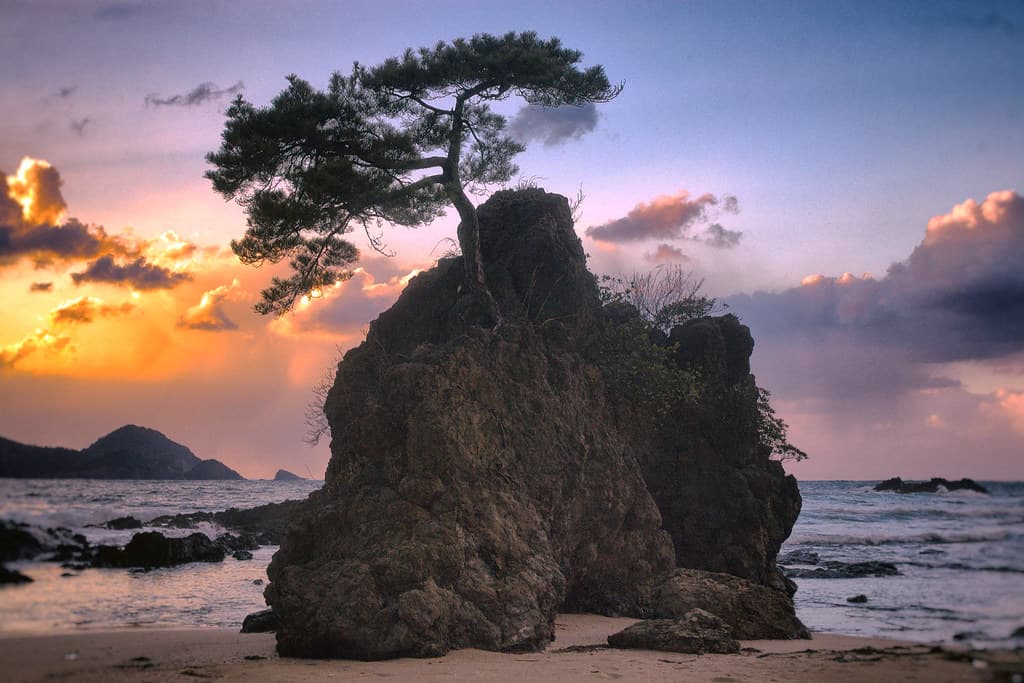
The northern end transitions from sand to smooth cobbles, each stone rounded by centuries of wave action. You'll hear them clatter and shift with each surge, a percussive sound that changes pitch as the stones roll against each other. The sand portion stretches wider, firm enough for walking but soft enough that your feet sink slightly with each step. Tidal patterns create subtle ridges that parallel the shore, temporary sculpture that lasts only until the next high tide. The water here shows gradients of color—pale turquoise where sunlight penetrates the sandy bottom, deepening to navy where offshore channels cut through. On calm days, you can see your shadow on the seafloor even in chest-deep water. Small fish dart away from your approach, momentary flashes of silver. The bay's protection means gentle waves most days, though winter storms from the northwest can transform this into a churning mass of whitecaps and foam. A handful of houses dot the hillside behind the beach, their gardens stepping down the slope in terraced levels. Flowering plants spill over retaining walls—hydrangeas in June, spider lilies in September. A narrow paved path provides access, just wide enough for the occasional utility vehicle. No shops, no facilities, no lifeguards—just the beach and whoever chooses to make the walk down. The remoteness keeps crowds minimal even during Japan's crowded summer holidays, when beaches elsewhere on the peninsula fill shoulder to shoulder.
Places, rentals, tours and events within walking and driving distance of Etomo Beach.
Photos
Etomo Beach offers generally calm conditions suitable for swimming during summer months. As with most Japanese beaches, there are no permanent lifeguards, so swimmers should exercise caution and monitor weather conditions. The sandy bottom and gentle slope make it relatively safe for those comfortable in water. Avoid swimming during rough weather or high waves. Check local advisories before entering the water, and never swim alone. The quiet nature of this beach means fewer people around to assist in emergencies.
The ideal time to visit Etomo Beach is during late spring through early autumn, particularly May to September, when weather conditions are most favorable. Summer months offer the warmest water temperatures for swimming. The beach is tagged for best weather visits, meaning clear, calm days showcase its scenic beauty best. Couples seeking a romantic, quiet atmosphere will find weekdays less crowded than weekends. Early morning or late afternoon visits provide softer lighting perfect for enjoying the coastal views.
Etomo Beach is located on the Matsue Peninsula Coast, accessible by car or local bus from Matsue city center. Driving typically takes 30-45 minutes depending on your starting point. Public transportation options include local buses that service the peninsula, though schedules may be limited. Renting a car provides the most flexibility for exploring this quieter coastal area. Look for signage directing you toward the Shimane Coast beaches. Parking is generally available near the beach, though facilities may be basic given its quiet nature.
Being a quiet coastal stretch, Etomo Beach has limited dining and lodging directly at the beach. You'll find more options in nearby areas along the Matsue Peninsula or back toward Matsue city center. Small local restaurants serving fresh seafood and traditional Japanese cuisine can be found in surrounding communities. For accommodations, consider staying in Matsue city where hotels and ryokan are plentiful, then making a day trip. Some guesthouses and minshuku may exist in nearby fishing villages for those seeking local experiences.
Etomo Beach stands out for its quiet, uncrowded atmosphere, making it particularly appealing for couples seeking a peaceful coastal retreat. Unlike more developed beaches, it maintains a natural, understated character without extensive tourist facilities. The scenic coastal stretch offers beautiful views without the bustle of popular swimming spots. Its location on the Matsue Peninsula provides a sense of seclusion while remaining accessible from the city. Visitors appreciate the tranquil environment perfect for relaxation, romantic walks, and enjoying nature without distractions.