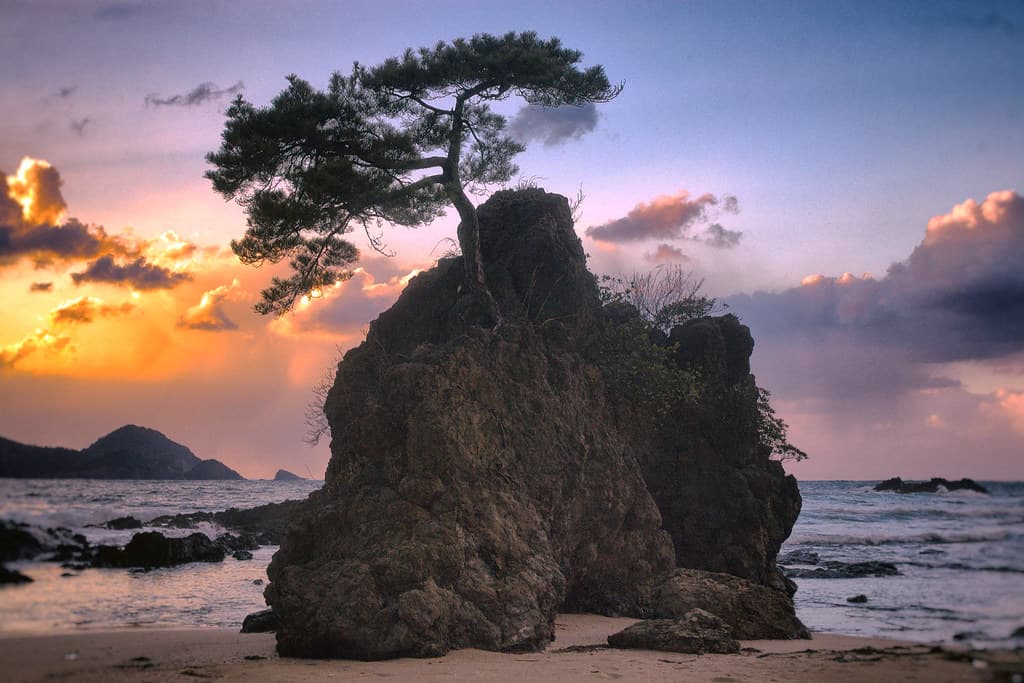
Counting the waves…
Counting the waves…
You arrive as fishermen haul nets filled with mackerel onto weathered wooden boats, their voices competing with gulls that wheel overhead. The sand beneath your feet isn't the pale powder of tropical postcards—it's charcoal-dark volcanic grit that holds the warmth of afternoon sun. Offshore, the rocky profile of the peninsula stretches into mist, its headlands shaped by millennia of winter typhoons. The lighthouse stands white against bruised evening clouds, its beam cutting through the gathering dusk. Local families spread blankets on the upper beach, unwrapping rice balls and thermoses of barley tea while children chase foam up the tideline. The air tastes of brine and diesel from the harbor, grounding and honest. As the sun descends, the entire western horizon ignites—amber melting into crimson, silhouetting the jagged coastline in perfect black relief. You understand why painters hauled easels here for generations. The light show lasts twenty minutes, then fades to violet, leaving only the rhythmic pulse of waves and the lighthouse's steady rotation, a metronome counting the night.
Places, rentals, tours and events within walking and driving distance of Mihonoseki Beach.
Photos
Mihonoseki Beach generally offers safe swimming during calm weather and the official summer season when supervision may be available. The sandy beach provides comfortable access to the water, though conditions vary with weather and tides. As an iconic coastal location, it attracts visitors for scenery as much as swimming, so facilities may be oriented toward sightseeing. Always check local conditions, observe any posted warnings, and exercise caution. The beach's famous setting doesn't guarantee constant lifeguard presence, so swimmers should be self-aware and responsible.
The best weather for Mihonoseki Beach occurs from late June through September, with July and August offering peak swimming conditions. However, its fame for scenery, sunsets, and coastal atmosphere makes it worthwhile year-round. Clear evenings in any season provide spectacular sunset views. Spring (April-May) and autumn (October-November) offer pleasant temperatures for walking and photography without summer crowds. Visit during weekday mornings for quieter experiences, or time your visit for sunset to witness the iconic views that make this location famous.
Mihonoseki Beach is located at the eastern tip of the Shimane Peninsula, accessible from Matsue by car in approximately 45-60 minutes via Route 431 around the peninsula. The scenic coastal drive itself is worthwhile. Limited bus services operate to Mihonoseki area from Matsue, particularly to Miho Shrine nearby, but schedules may be infrequent. Renting a car provides flexibility to explore the peninsula and stop at viewpoints. Parking is available near the beach and surrounding attractions in this iconic coastal area.
The Mihonoseki area offers several accommodation options including traditional ryokan, minshuku, and small hotels, many featuring fresh local seafood and ocean views. The historic port town has restaurants and cafes serving regional dishes, particularly seafood caught in nearby waters. Matsue city, 45-60 minutes away, provides more extensive hotel and dining choices. Some seasonal beach facilities may operate during summer. The area's iconic status means tourism infrastructure exists, though options are more limited than in central Matsue.
Mihonoseki Beach's iconic status derives from its dramatic coastal setting at the Shimane Peninsula's tip, combining scenic beauty, cultural significance, and atmospheric charm. The area features the historic Mihonoseki port, proximity to Miho Shrine, and spectacular sunset views over the Sea of Japan. The beach embodies the essence of Shimane's coastal character with a unique vibe blending natural beauty and traditional fishing village atmosphere. Its famous reputation among Japanese travelers reflects authentic coastal culture, making it a must-visit destination beyond typical beach experiences.