
Counting the waves…
Counting the waves…

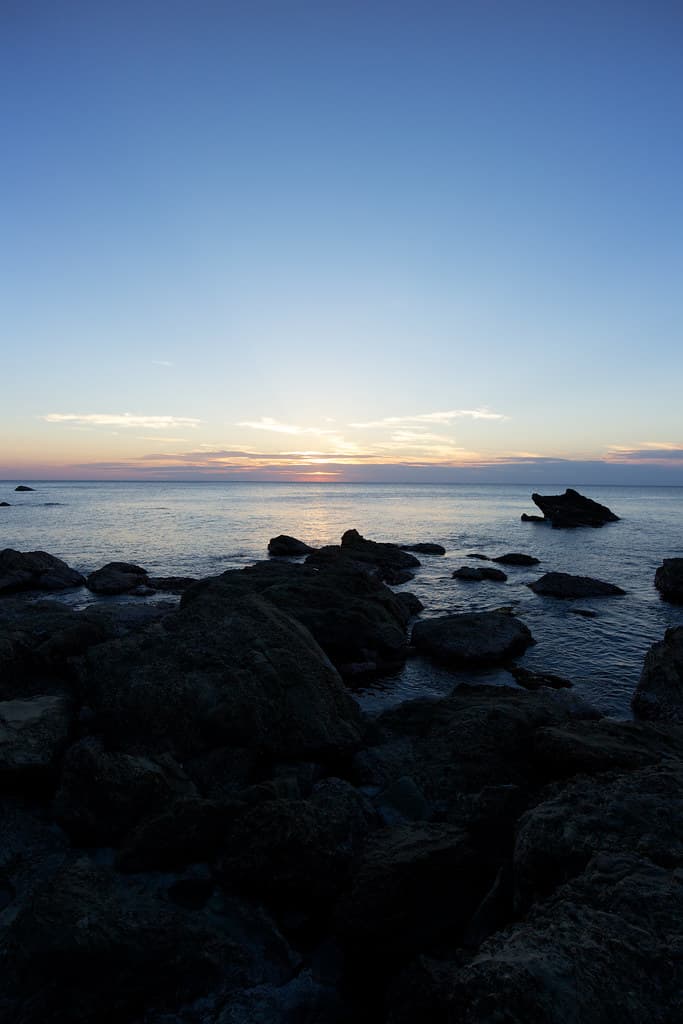
The vermilion torii gate stands offshore like a promise, its lacquered pillars rooted in dark volcanic sand that crunches beneath your feet. You wade toward Bentenjima Shrine as wavelets tug at your ankles, the Sea of Japan stretching gray-green toward the horizon. This is Yura Beach, where the sacred and the everyday collide with each tide cycle—fishermen mending nets in the shadow of a shrine, pilgrims and photographers sharing the same strip of coast. The beach curves gently along Tsuruoka's southern shoreline, backed by weathered wooden houses and the occasional family-run minshuku. You'll hear the clang of shrine bells carried on offshore breezes, watch elderly women gathering seaweed at low tide, their bent figures silhouetted against the water. The sand here isn't white coral but volcanic black mixed with gray, warm underfoot in summer, and studded with smooth stones worn round by centuries of waves. Sunset transforms the ordinary into theater. The torii frame glows burnt orange, then deepest red, while the sky behind it cycles through apricot, violet, and finally indigo. You stand ankle-deep or dry on shore—both vantage points work—as the light fades and the gate becomes a dark cutout against the last pale strip of horizon. By the time stars prick through, you understand why painters and poets have made this pilgrimage for generations.
Places, rentals, tours and events within walking and driving distance of Yura Beach.
Photos
Swimming conditions at Yura Beach vary seasonally. The beach is primarily known for its scenic beauty and iconic torii gate views rather than swimming. During summer months, calm days may allow for wading, but always check local conditions and signage. The Sea of Japan can have strong currents and sudden weather changes. Many visitors focus on photography, walking along the shore, and enjoying sunset views rather than swimming. If you plan to enter the water, stay close to shore and exercise caution, especially outside designated swimming seasons.
Yura Beach offers year-round appeal, with each season providing distinct experiences. Summer (June-August) brings warmer weather ideal for beach walks, though it can be humid. Spring and autumn offer comfortable temperatures and clearer skies, perfect for photography. Winter visits can be dramatic but cold, with powerful waves. The beach is particularly famous for sunset views, so plan your visit for late afternoon regardless of season. Golden hour typically provides the best lighting for photographing the iconic torii gate against the Sea of Japan backdrop.
Yura Beach is located in Tsuruoka city, accessible by car or public transportation. From Tsuruoka Station, take a local bus toward Yura Onsen (approximately 40 minutes). By car, the beach is about 30 minutes from central Tsuruoka via Route 7. Free parking is available near the beach area, though spaces can fill during peak sunset hours and summer weekends. Renting a car provides the most flexibility for exploring this coastal region and nearby attractions at your own pace.
The Yura area offers several dining options specializing in fresh seafood from the Sea of Japan, including local restaurants serving seasonal fish and regional specialties. Basic amenities are available, but options are limited compared to larger tourist areas. The nearby Yura Onsen hot spring resort district features traditional ryokan inns and hotels, providing accommodation with ocean views and natural hot spring baths. For more extensive dining and lodging choices, Tsuruoka city center is approximately 30 minutes away by car.
Yura Beach is famous for its photogenic vermilion torii gate standing in the shallow waters near shore, belonging to a small coastal shrine. This striking gate creates an iconic composition against the Sea of Japan, particularly stunning during sunset when the sky turns orange and pink. The torii appears to float on water during high tide, while at low tide you can walk closer for different perspectives. This sacred Shinto gateway symbolizes the transition between the mundane and sacred, making it a popular spot for photographers and couples seeking romantic coastal scenery.