Counting the waves…
Counting the waves…

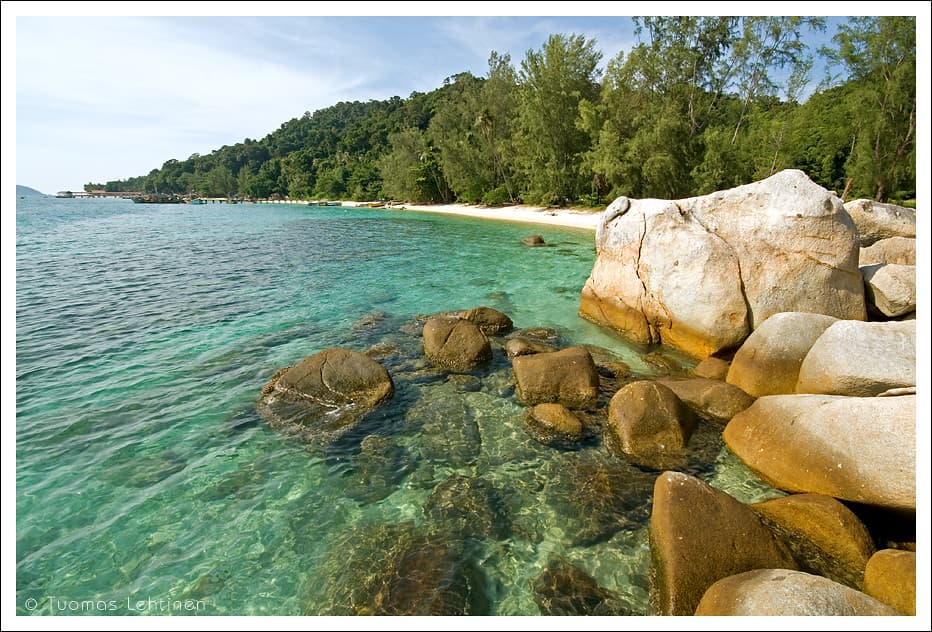
The boat from Mersing cuts through open water, past fishing stakes and smaller islets, before Pulau Sibu's forested ridgeline rises into view. You disembark at weathered wooden piers where resort staff meet arrivals with trolleys for luggage—no roads here, just footpaths connecting a handful of family-run chalets tucked between coconut palms and the tide line. The beach curves gently, its white sand meeting water that shifts from jade near shore to deep turquoise where the reef shelf drops away. Snorkeling here requires nothing more than wading out twenty meters. You'll spot clownfish darting between anemones, blue-spotted rays gliding over turtle grass, and if you're patient, small blacktip reef sharks patrolling the shallows at dawn. The island operates on a slower frequency—no ATMs, limited cell signal, meals served family-style at long tables where yesterday's catch is grilled with sambal and lime. Evenings settle into a rhythm of hammock time and cold Anchor beer on verandas strung with fairy lights. Families claim the calmer southern coves where toddlers can wade safely; couples drift toward the quieter northern stretches where monitor lizards sun themselves on driftwood. By nightfall, bioluminescence sparks in the shallows if you're lucky, tiny green flashes with every movement of your hand through the dark water.
Places, rentals, tours and events within walking and driving distance of Pulau Sibu Beach.
Photos
Pulau Sibu is generally safe for swimming, with calm, clear waters in protected bays, particularly during the dry season. The beach has gentle slopes ideal for families with children. Snorkeling conditions are good around coral areas near the shoreline and small rocky outcrops. Always check weather conditions before water activities, as the South China Sea can experience rough waters during monsoon season (November-February). Life jackets are available at most resorts. Avoid swimming during red flag warnings and stay within designated areas for your safety.
The best time to visit Pulau Sibu is between March and October, when weather conditions are most favorable with calm seas and sunny skies. Peak season runs from June to August, offering the clearest waters for snorkeling but also higher accommodation rates and more visitors. April-May and September-October provide excellent weather with fewer crowds. Avoid November through February due to the northeast monsoon, which brings heavy rainfall, rough seas, and ferry cancellations. Many resorts close during this period.
Pulau Sibu is accessible only by boat from Mersing town or nearby jetties. Travel to Mersing by car (approximately 3.5 hours from Johor Bahru or Singapore) or bus. Most resorts arrange boat transfers from Mersing Jetty or Tanjung Leman Jetty as part of accommodation packages; coordinate timing in advance. The boat ride takes 30-45 minutes depending on departure point and sea conditions. Parking is available near the jetties (paid). Independent speedboat charters are possible but typically more expensive than resort transfers.
Pulau Sibu has several beachfront resorts and chalets ranging from budget to mid-range, most offering meal packages since dining options are limited on the island. Resorts typically provide breakfast, lunch, and dinner as part of stay packages, serving Malaysian and seafood dishes. There are a few small restaurants and beach cafes, but choices are limited compared to mainland destinations. No major supermarkets exist on the island, so bring snacks or special dietary items. Most accommodations include basic amenities; book well ahead during peak season.
Yes, Pulau Sibu features several beaches spread across the island. The main beaches include Sibu Besar (Big Sibu) with longer stretches of white sand, and several smaller coves accessible by walking trails or short boat rides. Each beach has distinct character—some are livelier with resorts, while others remain secluded and pristine. You can explore different beaches during your stay through jungle trekking paths or arrange boat trips with resort operators to discover quieter spots ideal for private snorkeling and relaxation.