
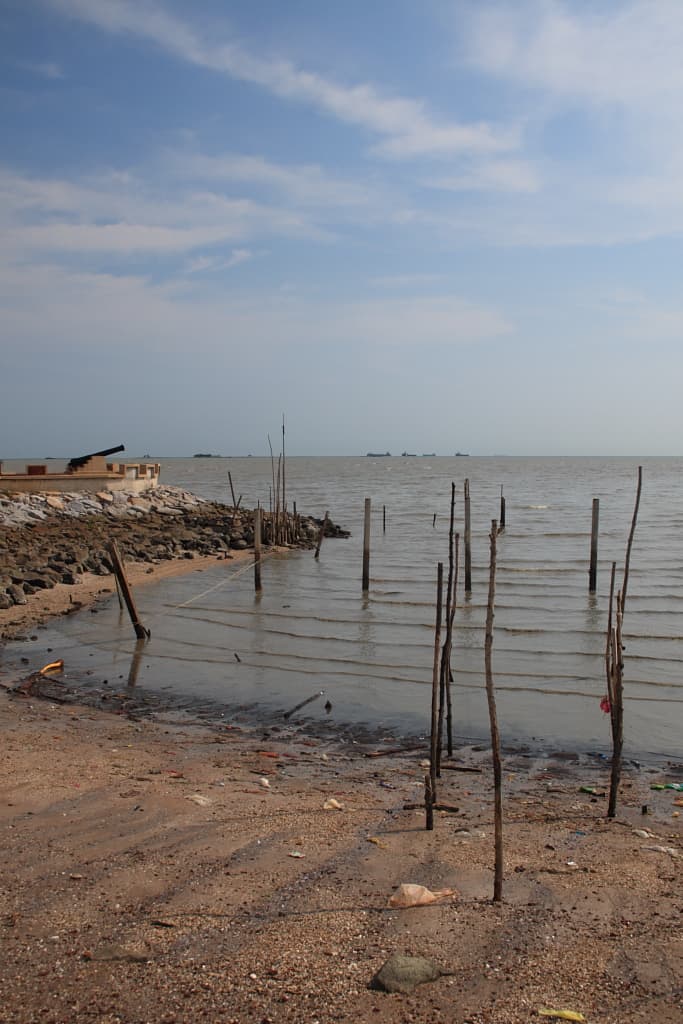
You won't find white sand or beach umbrellas at Portuguese Settlement Beach, but you will find Mrs. Pereira grilling stingray with sambal at her family-run stall, smoke curling into the humid evening air. This narrow strip of reclaimed land belongs to Melaka's Eurasian community, descendants of Portuguese colonizers who've maintained their dialect, Catholic traditions, and seafood recipes for five centuries. The shoreline itself is modest—a concrete walkway edging silty water where small boats bob at anchor—but the atmosphere is intoxicating: children kicking soccer balls near the Santa Casa da Misericórdia chapel, fishermen mending nets, the sing-song lilt of Cristang floating from open-air restaurants.
“Malaysia's only Eurasian settlement where 500-year-old Portuguese Creole culture survives along an urban waterfront.”
 Credit: Flickr
Savage Islands (NASA, International Space Station Science, 10/22/09)
Visit during low tide when the water pulls back to reveal mudflats dotted with periwinkles, and locals emerge for their evening constitutional. The settlement's dozen or so seafood restaurants come alive after 5 p.m., tables spilling onto the sidewalk, ceiling fans churning the briny air. Order baked crab, Portuguese baked fish layered with tomatoes and onions, or sugee cake with your Anchor beer.
This is not a beach for swimming or solitude—it's a living neighborhood that happens to face the sea. The value lies in witnessing a community's stubborn cultural persistence against Melaka's rapid modernization, savoring food cooked to grandmothers' specifications, and watching the sunset stain the strait the color of aged port.


