Counting the waves…
Counting the waves…
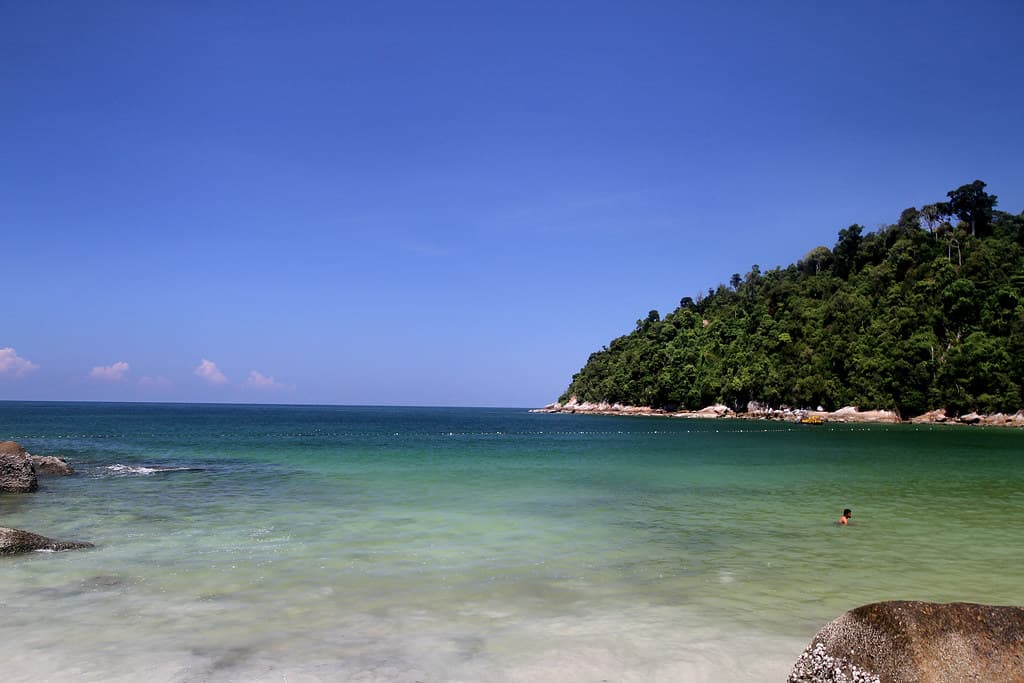
Pantai Puteri Dewi announces itself without fanfare: a roadside pull-off, a narrow gap in the vegetation, then suddenly the Strait of Malacca unfurling in shades of jade and sapphire. The beach itself is modest—perhaps sixty meters of honey-colored sand tucked into a natural amphitheater of weathered granite. Smooth boulders, some the size of compact cars, anchor both headlands, their surfaces warm beneath your palms even in late afternoon. Hermit crabs skitter across tide pools trapped in the rock fissures, and the air carries salt mixed with the green scent of overhanging ketapang trees. The water here stays shallow for fifteen meters out, warm as bathwater and gentle enough that you'll see local families wading fully clothed on weekends. But midweek mornings belong to solitude. You might share the cove with a lone angler casting from the western rocks or a pair of white-bellied sea eagles circling the headland. The sand holds heat from the equatorial sun; you'll feel it radiating through your towel, through the soles of your feet as you pick your way between tide-smoothed stones. This isn't a beach for lounging through lunch. The charm lies in the brevity—twenty minutes to explore the rock pools, another ten to wade and photograph the boulder formations catching the light, then back to your motorbike or car. Pangkor has showier stretches of coastline, but none quite capture this particular equation of stone, sea, and secrecy.
Places, rentals, tours and events within walking and driving distance of Pantai Puteri Dewi.
Photos
Pantai Puteri Dewi is primarily a scenic photo stop rather than a swimming beach. The cove's conditions can vary, and as a hidden beach, it typically lacks lifeguards or safety facilities. The rocky coastline and potential for strong currents make it less suitable for swimming compared to Pangkor's main beaches. Visitors generally come here for photography and enjoying the secluded scenery. If you're looking to swim, consider the more developed beaches on Pangkor Island like Teluk Nipah or Coral Bay, which have better facilities and safer conditions.
The best time to visit Pantai Puteri Dewi is during Malaysia's dry season from November to March, when you'll encounter less rain and calmer seas. For photography, early morning or late afternoon offers the best lighting to capture the cove's scenic beauty. Weekdays are quieter than weekends for this hidden gem. Like most of Pangkor Island, the beach is accessible year-round, but the monsoon season (April to October) can bring rougher seas and intermittent rain, though brief stops are still possible during dry spells.
Pantai Puteri Dewi is located along Pangkor Island's coastal road. After taking the ferry from Lumut to Pangkor, you can reach the beach by rental motorbike, bicycle, or taxi, which are the main transport options on the island. The beach is somewhat hidden and may not be clearly marked, so ask locals or use GPS coordinates to locate it. As a secluded cove, parking infrastructure is limited—you'll likely find roadside parking spots nearby. The narrow access may require a short walk down to reach the actual beach area.
Pantai Puteri Dewi is a hidden, undeveloped beach with no on-site amenities, restaurants, or facilities. As this is primarily a scenic photo stop, there are no food vendors, restrooms, or changing facilities directly at the cove. You'll need to bring your own water and snacks. For meals and amenities, head to Pangkor's main tourist areas like Pasir Bogak or Teluk Nipah, which are a short ride away and offer restaurants, convenience stores, and accommodations. Plan accordingly as this beach is best suited for brief visits rather than extended stays.
Pantai Puteri Dewi earned its reputation as a hidden cove because it's tucked away from Pangkor's main tourist beaches and lacks significant commercial development. Unlike popular spots like Pasir Bogak, this beach doesn't feature prominently on standard tourist maps and typically receives fewer visitors. The secluded location and limited signage mean many tourists pass by without knowing it exists. This hidden quality makes it appealing for photographers and travellers seeking quieter, more intimate coastal scenery away from crowds. The cove's natural, undisturbed setting preserves its tranquil, off-the-beaten-path charm.