Counting the waves…
Counting the waves…
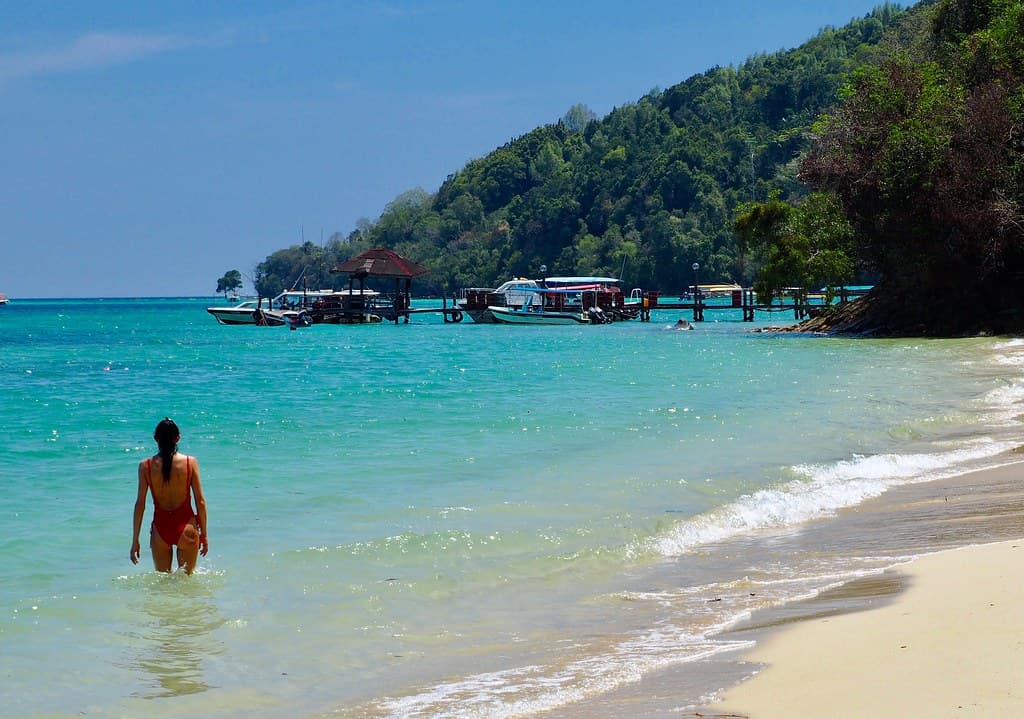
The fifteen-minute speedboat from Jesselton Point Ferry Terminal skims across the Tunku Abdul Rahman Marine Park, and Sapi Island's crescent beach comes into view: a 300-meter stretch of blonde sand bordered by jungle-clad slopes. You'll share the jetty with monitor lizards sunning themselves on weathered planks, utterly unbothered by day-trippers shouldering snorkel bags. Wade in from anywhere along the beach and the reef appears almost immediately—barely ten meters offshore. Brain coral clusters rise like monuments from the sandy floor, and schools of parrotfish graze across them, their grinding teeth audible even through your snorkel's breathing tube. The water here rarely exceeds four meters deep along the swim zone, making it ideal for children and tentative swimmers. Purple sea urchins nestle between rocks; keep your fins high. By mid-afternoon, the macaques descend from the canopy to patrol the beach pavilions, eyeing unattended backpacks with brazen intent. Rangers patrol regularly, but you'll want to secure food inside the lockers near the changing facilities. The last boat back to Kota Kinabalu departs at four-thirty, and as the day-trip crowds thin, you'll catch Sapi in its best light—golden hour washing over Mount Kinabalu's silhouette across the channel, the reef fish still feeding in the shallows.
Places, rentals, tours and events within walking and driving distance of Sapi Island Beach.
Photos
Sapi Island Beach is generally safe for swimming and snorkeling, with calm, clear waters protected by the surrounding bay. The beach has designated swimming areas monitored by lifeguards during operating hours. However, always check weather conditions before visiting, as strong currents can develop during monsoon season. The marine park status means waters are well-preserved with good visibility for snorkeling. Life jackets are available for rent, and it's advisable to use them if you're not a confident swimmer. Stay within marked areas and supervise children closely near the water.
The best time to visit Sapi Island is during the dry season from March to October, when you'll enjoy calmer seas, better visibility for snorkeling, and less rainfall. The island can be visited year-round, but avoid the monsoon months (November to February) when rough seas may cancel boat services. Plan to arrive early in the morning, ideally before 10am, to beat the crowds and enjoy the beach at its most peaceful. Most visitors do day trips, with the last boats typically departing by late afternoon around 4-5pm.
Sapi Island is reached by speedboat from Jesselton Point Ferry Terminal in downtown Kota Kinabalu. The boat journey takes approximately 15-20 minutes. You can purchase tickets directly at the terminal or book through tour operators. Boats run frequently throughout the day, typically from 8am to 4pm. There's no parking at the island itself, but if driving to Jesselton Point, public parking is available nearby in Kota Kinabalu city center. Many hotels offer tour packages that include boat transfers. Note that you'll need to pay a marine park conservation fee.
Sapi Island has basic facilities including restrooms, changing rooms, and freshwater showers. There's a restaurant serving simple Malaysian dishes, seafood, and refreshments, though prices are higher than on the mainland. Several small stalls sell snacks and drinks. Equipment rental is available for snorkeling gear, life jackets, and lockers for storing belongings. There is no accommodation on the island as it's designated for day trips only. It's advisable to bring your own snacks and plenty of drinking water, especially if traveling with children or on a budget.
Yes, Sapi Island is home to proboscis monkeys and macaques that often appear near the beach and forest edges, particularly in early morning or late afternoon. You can spot monitor lizards sunbathing on rocks and various tropical birds throughout the day. Underwater, snorkelers regularly encounter colorful reef fish, clownfish, and sometimes sea turtles in the protected marine park waters. However, do not feed the monkeys as this disrupts their natural behavior and can make them aggressive. Keep food secured and maintain a respectful distance when photographing wildlife.