Counting the waves…
Counting the waves…

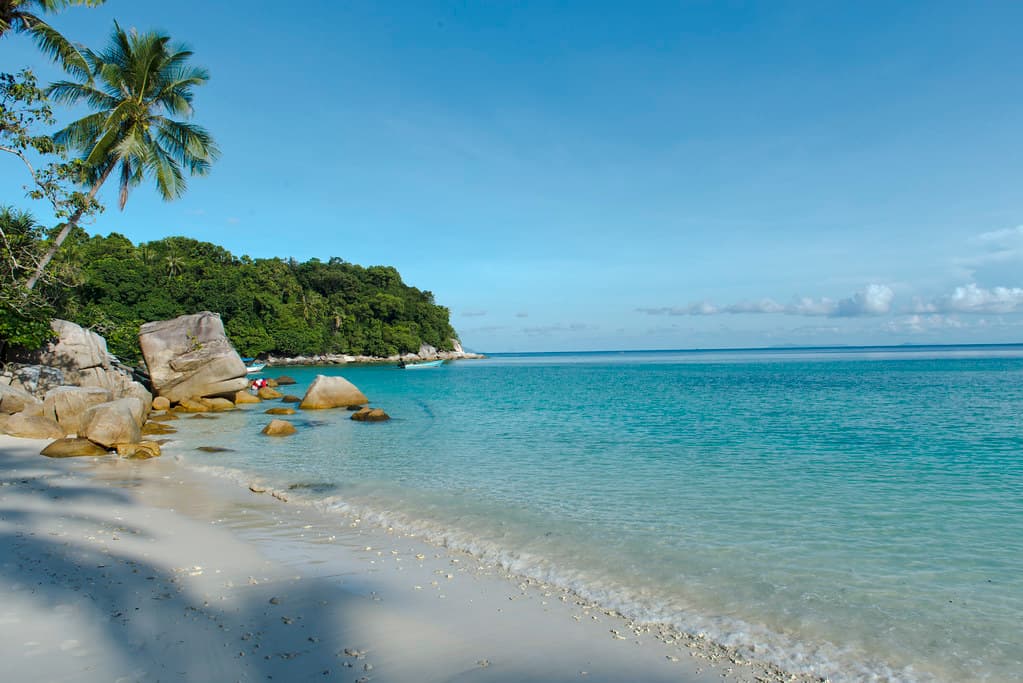
Long Beach earns its status as Perhentian Kecil's flagship stretch not through seclusion but through sheer vivacity. You'll wake to the rumble of boat engines ferrying snorkelers to nearby sites, the aroma of roti canai drifting from beachfront cafés, and children already splashing in shallows so calm they mirror the morning sky. The sand runs pale gold for nearly a kilometer, interrupted by weathered wooden piers and longtail boats beached at odd angles like driftwood. By afternoon, the scene intensifies. You claim a patch of shade beneath a casuarina tree, watching fire dancers rehearse their evening routine while a monitor lizard patrols the jungle fringe behind you. The reef begins just twenty meters offshore—close enough that you can freedive to it between sips of fresh lime juice, finning over brain corals and parrotfish without a guide or boat fee. Guesthouses stack up the hillside in a jumble of corrugated roofs and hand-painted signs, their proximity to the water the island's most coveted currency. As the sun drops, you join the nightly migration to the water's edge. No street lights interrupt the stars here; only tiki torches flicker along the sand, illuminating tables where travelers swap stories over barbecued stingray and Bintang bottles. The vibe remains resolutely unhurried, the kind of place where three-night stays stretch to seven without anyone noticing.
Places, rentals, tours and events within walking and driving distance of Long Beach.
Photos
Long Beach is generally safe for swimming and very family-friendly, with calm, shallow waters during most of the year. The beach is protected from strong currents, making it ideal for children and less confident swimmers. However, conditions can change during monsoon season (November to February) when waves become rougher. Jellyfish occasionally appear, particularly during certain months, so check with your accommodation. Lifeguards are not always present, so supervise children closely. The sandy bottom is gentle, and the beach's gradual slope makes it perfect for families wanting relaxed water activities.
The best time to visit Long Beach is March to October, with peak season from June to August offering the calmest seas and sunniest weather. April, May, and September provide excellent conditions with fewer crowds and better accommodation rates. The island essentially closes during monsoon season (November to mid-February) when most resorts shut down and boat services become unreliable or cease entirely. Sea visibility for snorkeling is typically best from March to May and September to early October. Book accommodations well in advance if visiting during Malaysian school holidays or summer peak season.
Long Beach is accessible only by boat from Kuala Besut jetty on mainland Malaysia. From Kuala Besut, take a speedboat (30-45 minutes, around 70-90 MYR return). Boats typically run 8am-5pm during operational season. There's no parking at the beach itself since it's boat-access only; if driving to Kuala Besut, leave your car in designated parking areas near the jetty (10-15 MYR per day). Most resorts arrange boat transfers. Once on the island, Long Beach is the main arrival point, though some boats stop at other beaches first.
Long Beach offers the widest range of accommodation on Perhentian Kecil, from budget beach huts to comfortable resorts like Perhentian Island Resort and D'Lagoon. Numerous beachfront restaurants serve Malaysian, Western, and seafood dishes at reasonable prices (20-50 MYR per meal). Small shops sell basic supplies, snacks, and beach essentials, though prices are higher than mainland. ATMs are limited and unreliable, so bring sufficient cash. Dive shops, snorkeling equipment rentals, massage services, and tour operators line the beach. While amenities are sufficient, Long Beach is still relatively laid-back compared to urban destinations.
Yes, Long Beach connects to Coral Bay via a jungle trail taking 15-20 minutes, offering a scenic alternative to boat transfers. The path is relatively easy but can be slippery after rain, so wear proper footwear. Many travelers walk this route daily to explore both beaches and compare snorkeling spots or restaurant options. There are also trails to smaller, quieter beaches. However, traveling to Perhentian Besar (the larger neighboring island) requires a boat taxi (10-15 MYR). Walking between beaches is free and gives you flexibility to experience different parts of the island.