

You park beneath the pohutukawa that line Maraetai Coast Road, their trunks leaning seaward from decades of onshore wind. The reserve spreads between road and beach—mown grass, wooden picnic tables darkened by weather, a playground where the chains squeak on the swing set. The sand carries the dark mineral signature of Auckland's west coast, though less volcanic, cut with lighter quartz that softens the overall tone to charcoal-grey.
“This is where Auckland's eastern suburbs meet the Pohutukawa Coast proper, a threshold beach where the city's density dissolves into island views and the unhurried rhythms of seaside settlements.”
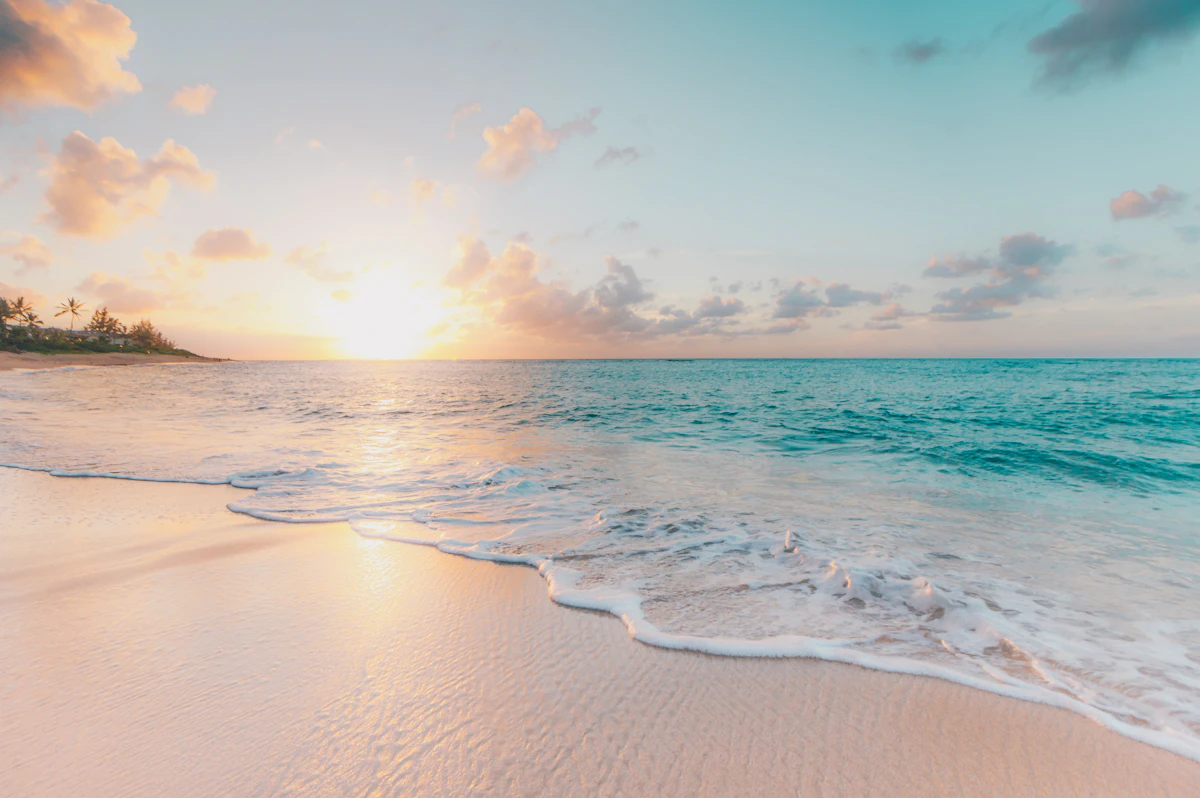 Credit: Unsplash
Aerial view of turquoise tropical bay
The wharf extends 80 meters into the Tamaki Strait, its decking sun-bleached and studded with splinters. Fishermen work the far end, casting for snapper and kahawai while children cannonball from the wharf's edge when the tide rises high enough. The water temperature climbs to 21 degrees by late January, cools to 14 by August. Motutapu and Waiheke islands form a layered backdrop, their ridgelines stacked like stage scenery. At low tide, the beach extends across dark sand to exposed mudflats where oystercatchers probe for cockles.
The swimming area stays relatively shallow for 30 meters out, the bottom a mix of sand and shell fragments that crunches underfoot. Pohutukawa roots grip the low bluffs behind the beach, their branches reaching across the reserve to create dappled shade by late afternoon. The local surf club operates from a modest building at the beach's southern end, its rescue boards stacked against the weatherboard walls.


