Counting the waves…
Counting the waves…

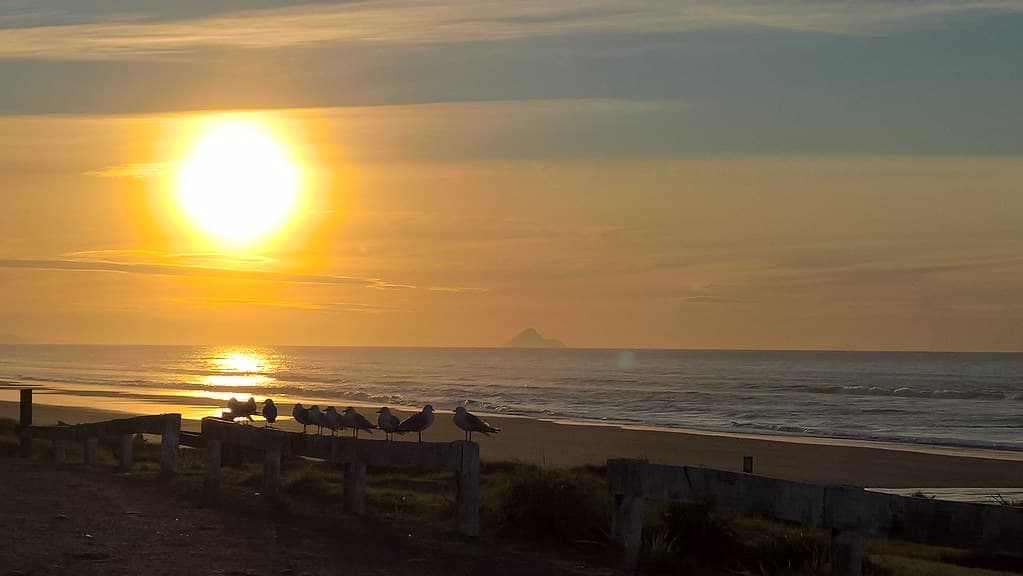
The drive out feels like leaving something behind. State Highway 35 ribbons along the coast, and when you turn toward Opape, the pavement narrows and the pohutukawa lean in close. You park beside weathered fences and walk toward the thud of surf, the kind that travels through sand into your bones. The beach stretches in both directions, wide and dark as wet slate. Children dig moats that fill with tidal water, their voices thin against the wind. Gulls work the wrack line where kelp dries in twisted ropes. To the east, the Raukumara Range stacks ridge upon ridge, blue-green and hazy. The river mouth shifts with every storm, carving new channels through the bar. You spread your towel on sand that's warm two inches down, cool at the surface. The sun here feels earned—you've driven past the signposted stops, past the crowds. When the wind picks up in the afternoon, it carries salt and the faint green smell of coastal scrub. By evening, the beach belongs to dog walkers and the oystercatchers threading the shallows.
Places, rentals, tours and events within walking and driving distance of Opape Beach.
Photos
Opape Beach can be suitable for families in calm conditions, though it's an unpatrolled beach requiring caution and adult supervision. Water conditions vary depending on weather and swell, with the beach being open to the ocean. The sandy beach and generally gentle slope make it accessible for paddling and swimming when calm. However, always check for rips and currents, avoid swimming in rough conditions, and ensure children are closely supervised. The quieter nature of the beach means fewer people around in case of emergencies.
Summer months (December-February) offer the warmest weather and best swimming conditions at Opape Beach, though the area sees fewer crowds year-round due to its remote location. Spring (September-November) and autumn (March-May) provide pleasant temperatures for beach walks and exploring the coast with even more solitude. The eastern Bay of Plenty location means beautiful sunrise opportunities. Since Opape attracts mainly locals and those specifically seeking quieter beaches, you'll rarely encounter crowds even during peak New Zealand holiday periods.
Opape Beach is located approximately 15-20 kilometers east of Ōpōtiki town along State Highway 35 (Pacific Coast Highway). From Ōpōtiki, drive east and watch for signs to Opape settlement. Turn toward the coast and follow local roads to the beach access points. There's basic parking available near the beach. The drive takes about 15-20 minutes from Ōpōtiki center. A private vehicle is essential as public transport doesn't service this small coastal community. The road is sealed and suitable for all vehicles.
Opape is a small coastal settlement with minimal facilities. You'll find basic beach access but limited amenities, no shops, restaurants, or commercial accommodation directly at the beach. The settlement consists mainly of private holiday homes and residential properties. For food, supplies, and accommodation services, you'll need to return to Ōpōtiki (15-20 minutes away), which has supermarkets, cafes, and motels. Bring everything you need for your beach visit, including food, drinks, and sun protection. This simplicity is part of Opape's authentic local character.
Opape Beach offers a genuine small coastal settlement experience that feels authentically local rather than touristy. It's part of the quieter eastern Bay of Plenty coast where development remains minimal and communities retain their traditional character. The beach provides a peaceful alternative to busier destinations, ideal for visitors seeking solitude and connection with New Zealand's coastal heritage. The clear local identity of the Opape community and its position along the scenic Pacific Coast Highway make it a worthwhile stop for those exploring off-the-beaten-path destinations.