Counting the waves…
Counting the waves…
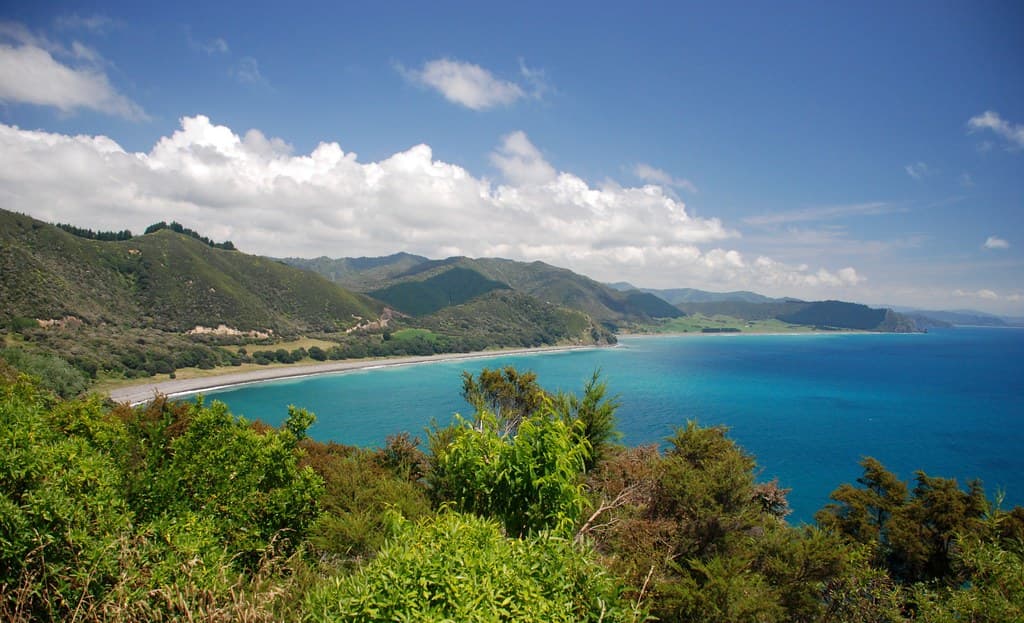
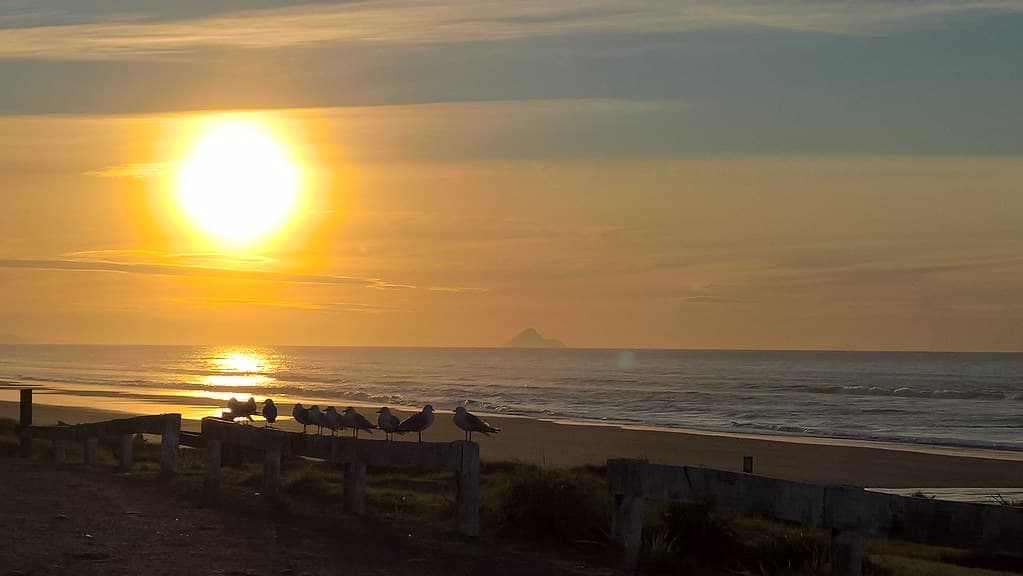
The gravel turnoff arrives without fanfare, leading past a small marae and into a settlement that feels more like a permanent fishing camp than a beach destination. Torere exists on its own terms: dinghies pulled high on trailers, nets drying over fences, the smell of salt and diesel mixing in the onshore breeze. The beach itself runs long and flat, its iron-sand darkness offset by the white churn of breakers that thump down in steady sets. Mornings bring mist that clings to the headlands, softening the ridgeline until the sun burns through. You'll walk this strand alone most days, stepping over bull kelp and scanning the tideline for paua shells worn smooth as river stones. Offshore, Motuhora Island rises like a steep-sided fortress, its profile changing with the light—charcoal at dawn, rust-brown by midday. By late afternoon the western sun slants across the bay, gilding the wet sand and turning the foam amber. Families gather near the boat ramp; children dig for pipi while adults discuss the weekend's catch. There's no café, no surf school—just the rhythm of a place where the ocean provides and the land holds steady, exactly as it has for generations.
Places, rentals, tours and events within walking and driving distance of Torere Beach.
Photos
Torere Beach is generally safe for swimming during calm conditions, but as an east-facing Bay of Plenty beach, it can experience moderate surf and currents. There are no lifeguard patrols, so swimmers should exercise caution and swim only when conditions are favorable. Check local conditions before entering the water, stay within your depth, and supervise children closely. The beach is relatively sheltered compared to more exposed coastal areas, making it suitable for families during settled weather.
The best time to visit Torere Beach is during New Zealand's summer months from December through March when weather is warmest and most settled. However, visiting during shoulder seasons (October-November or April-May) offers fewer crowds while still providing pleasant conditions. The beach faces east, making it ideal for sunrise viewing. Weekdays are quieter than weekends. Winter months can be cooler and wetter, though the beach retains its scenic beauty year-round for those seeking peaceful coastal walks.
Torere Beach is located along State Highway 35 in the remote eastern Bay of Plenty, approximately 90 kilometers east of Opotiki. The beach is accessible by car via the scenic Pacific Coast Highway. The small settlement sits directly off the highway, making access straightforward. There is no public transport to Torere, so a private vehicle is necessary. The drive from major centers takes several hours, but the coastal scenery along the route is spectacular. Parking is available near the beach access points.
Torere is a small settlement with very limited commercial facilities. Accommodation options are minimal and may include private holiday homes or basic camping areas, but travelers should book ahead or plan to stay in nearby larger towns. There are no restaurants or cafes in Torere itself, so visitors should bring their own food and supplies. The nearest shops and dining options are in Opotiki, approximately 90 kilometers west. Self-sufficiency is essential when visiting this remote coastal area.
Torere Beach offers an authentic glimpse of rural Māori coastal life in one of New Zealand's most remote and unspoiled coastal regions. Unlike the developed beaches of western Bay of Plenty, Torere maintains its small settlement character with minimal tourism infrastructure. The beach is part of a string of eastern Bay communities where traditional fishing and local lifestyles prevail. Visitors experience genuine coastal solitude, stunning sunrise views over the Pacific, and the opportunity to explore a less-traveled section of the scenic Pacific Coast Highway.