Counting the waves…
Counting the waves…
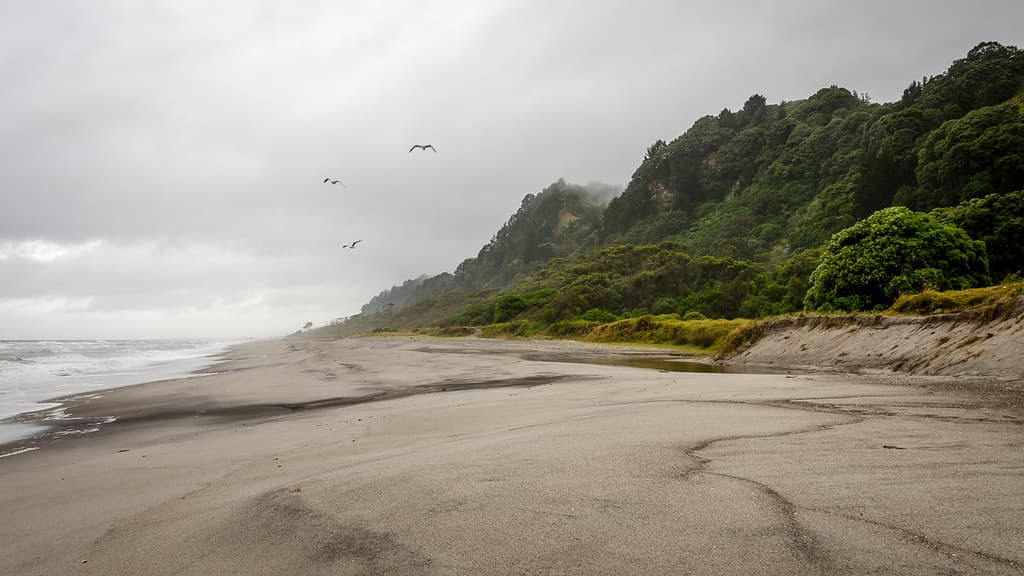
The carpark is gravel and grass, bordered by wind-shaped pohutukawa that lean away from the prevailing westerlies. A track drops through coastal scrub—karo and taupata—before the dunes part and the beach reveals itself: a long, pale crescent pressed between low headlands to the north and south. The sand is firm where the tide has retreated, soft and sugary higher up the beach. Waves arrive in orderly sets, breaking far out when the banks are working, closer in after storms flatten the profile. You can walk for an hour in either direction and encounter a handful of others at most—fishers casting into the gutters, a dog chasing driftwood, someone bent double collecting shells. The openness is the point. No buildings interrupt the sightline, no commercial operations stake claims. Sunset here is theater without an audience. The sky stains orange and pink behind the Kaimai Range inland, while the ocean holds onto the day's blue a little longer. Oystercatchers pipe along the waterline, their reflections sharp in the wet sand. The wind usually drops in the last hour before dark, and the beach goes still enough to hear individual waves collapse. You came for quiet, and Pikowai delivers it in unbroken supply.
Places, rentals, tours and events within walking and driving distance of Pikowai Beach.
Photos
Pikowai Beach is an open-coast surf beach with conditions that can be challenging. There are no lifeguard patrols, so swimmers should be confident and aware of rips and currents. The beach is more suited to experienced swimmers and surfers. Always check surf conditions before entering the water, swim between the flags if any are present, and never swim alone. Families with young children should exercise caution and consider calmer harbour beaches nearby if conditions look rough.
The best time to visit Pikowai Beach is during New Zealand's summer months (December to February) when weather is warmest and most settled. However, the beach is valued for being uncrowded, so shoulder seasons (November, March-April) also offer pleasant conditions with even fewer visitors. Early mornings and weekdays provide the most solitude. For surfing, consistent swells arrive year-round, though winter brings larger waves. Sunset visits are particularly rewarding, as the beach faces northwest and offers scenic evening light.
Pikowai Beach is located on the Bay of Plenty coast between Pukehina and Matatā, approximately 30-40 minutes from Whakatāne. Access is via Pikowai Road off State Highway 2. The beach has limited roadside parking and basic access points. A private vehicle is essential as public transport options are minimal in this rural area. The unsealed access roads can be rough, so drive carefully. Look for informal beach access tracks, and be respectful of private property in this small coastal settlement.
Pikowai is a small rural settlement with no commercial facilities directly at the beach. Visitors should bring all food, water, and supplies. The nearest services are in Matatā (5-10 minutes) or Pukehina, which have limited shops. For wider dining and accommodation options, Whakatāne (30 minutes) offers motels, holiday parks, cafes, and supermarkets. Some private holiday homes are available for rent in the area. Plan ahead and pack a picnic, as this is a remote, low-key beach without nearby amenities.
Pikowai Beach stands out for its sense of space and isolation despite being relatively accessible. Unlike busier Bay of Plenty beaches, it remains largely undiscovered by tourists, offering a genuine off-the-beaten-path experience. The open coastline provides uninterrupted views and a raw, natural character without commercial development. It's ideal for beachcombers, surfers seeking uncrowded waves, and those wanting to escape the crowds found at places like Mount Maunganui or Papamoa. The quiet, windswept character appeals to visitors seeking solitude and connection with nature.