Counting the waves…
Counting the waves…
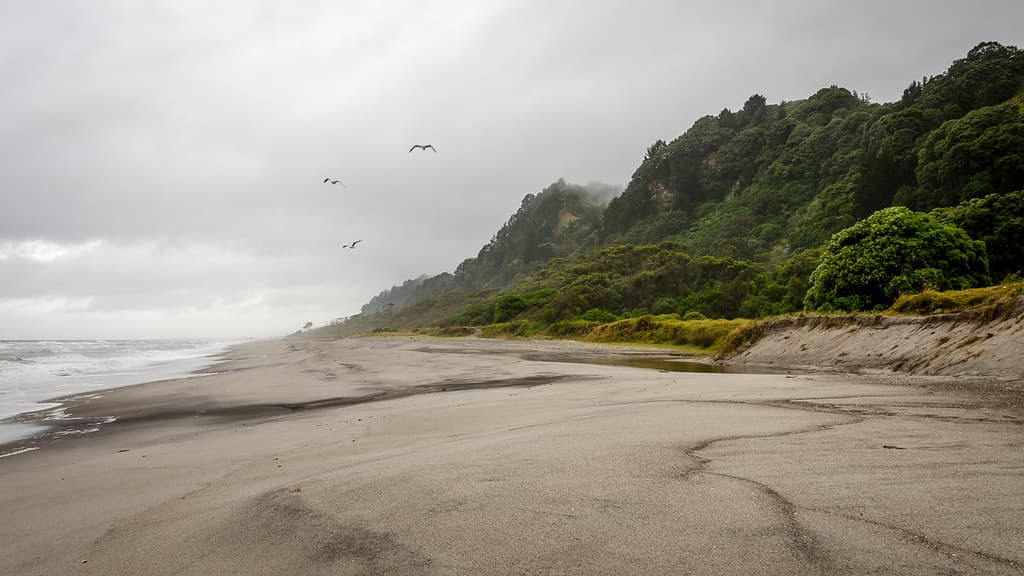
You'll find Thornton Beach where the Rangitāiki River finally meets the Pacific after its long journey from the Kaimanawa Range. The beach spreads wide and flat, sand the color of pale wheat, bordered by low dunes and pockets of coastal scrub. It's a working beach, unpretentious and functional, where fishing rods lean against car tailgates and families set up for the day with chilly bins, shade tents, and lowered expectations of luxury. The surf breaks with workmanlike consistency over sandbars that shift seasonally, offering peaks that suit all levels depending on where you paddle out. Near the river mouth, currents and bars create more complex conditions that locals have mapped through years of observation; farther east, the beach breaks are simpler and more forgiving. The water holds the green-grey tones of open coast, clarifying in settled weather when the river runs low and the swell eases. Behind the beach, the camping ground spreads through the dunes—tents and campers tucked among marram grass and taupata, washing strung between vehicles, kids on bikes tracing loops through the sandy tracks. It's the kind of Kiwi beach holiday that hasn't been polished or packaged, where you bring what you need and the entertainment is whatever the tide and weather deliver. Evenings smell of driftwood smoke and sausages, and the stars emerge thick and bright once the sun drops behind the ranges.
Places, rentals, tours and events within walking and driving distance of Thornton Beach.
Photos
Thornton Beach is an open coastal beach without lifeguard patrols, so swimming involves inherent risks. The beach can experience surf, rips, and currents, especially near the Rangitāiki River mouth where strong currents make swimming dangerous. Stay well away from the river entrance. The sandy beach is generally suitable for swimming in calm conditions for confident swimmers and supervised children. Always check weather forecasts and surf conditions before entering the water. Swim only when conditions are settled, avoid swimming alone, and be aware that conditions can change quickly on open coast beaches.
Summer (December-March) offers the best weather for swimming, surfing, and sunbathing with warm temperatures and generally calmer seas. This period sees more visitors but Thornton remains quieter than major Bay of Plenty beaches. For fewer crowds, visit during autumn (April-May) or spring (October-November) when weather is still pleasant. Weekdays are consistently quieter than weekends. Early mornings provide calm conditions and peaceful beach time. The beach's open aspect makes it excellent for sunbathing throughout the day. Winter offers good surfing conditions but cooler temperatures better suited to short visits.
Thornton Beach is located approximately 18 kilometers west of Whakatāne via State Highway 2. Turn onto Thornton Road, which leads directly to the beach settlement. The roads are sealed and suitable for all vehicles. Parking is available near the beach and camping ground. No regular public transport serves Thornton, making a private vehicle necessary. From Tauranga, the drive takes approximately 75 minutes. From Rotorua, allow about 80 minutes. The beach is well-signposted from the main highway, making it straightforward to find.
Thornton is a small settlement with very limited facilities. There's a camping ground that provides basic accommodation and is popular with families and budget travelers seeking a traditional Kiwi camping experience. Holiday homes and baches are available for rent in the area. For food, bring supplies as there are no shops, cafes, or restaurants at Thornton itself. The nearest services are in Edgecumbe (15 minutes) or Whakatāne (20 minutes), which offer supermarkets, cafes, and diverse dining options. The area suits self-sufficient visitors seeking a quiet, uncommercial beach experience.
Thornton Beach is distinguished by its relaxed, uncommercial character and strong local camping culture. The beach near the Rangitāiki River mouth creates unique coastal geography with river, ocean, and wetland ecosystems meeting. It maintains an authentic, old-style New Zealand beach holiday atmosphere without modern development. The local camping ground attracts generations of returning families, creating a genuine community feel. The open sandy beach stretches for kilometers with few buildings or structures, offering space and solitude. It's ideal for visitors seeking simple beach pleasures away from tourist infrastructure and crowds.