Counting the waves…
Counting the waves…
A refined fusion of water purity, environmental stability, and communal vibrancy for Little River Beach.
View MethodologyAnalyzed via live sensors and environmental data.
Wave height, wind, and atmospheric stability.
Live footfall and crowd balance metrics.
Community reviews and curated sentiment.
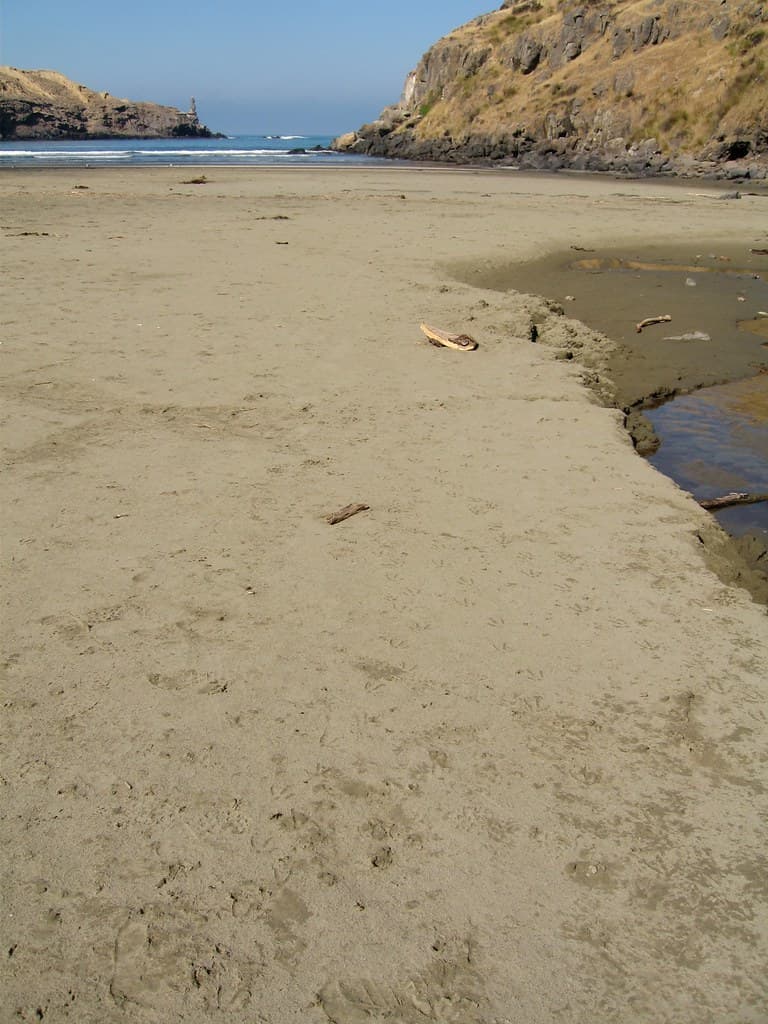
“The beach stretches along the edge of Lake Forsyth, where freshwater meets the occasional tidal surge when the lake mouth breaches. Rounded stones replace sand, and the only footprints belong to godwits and gulls…”
Limited recent visitor reports — live OBI telemetry is your best guide for current conditions.
Little River sits at the transition zone between Banks Peninsula's volcanic hills and the long gravel barrier of Kaitorete Spit. What locals call the beach is actually the lake's edge—a pebbled strand that runs along the southern shore of Te Waihora/Lake Forsyth, New Zealand's largest coastal lagoon. The stones here range from marble-sized to fist-sized, grey and rust-colored basalt polished smooth by decades of wave action. When you walk across them, they shift and rattle, creating a sound like distant thunder that rolls up and down the shore.
The water's character changes with the lake's management: sometimes brackish and brown when the artificial opening to the ocean has been closed for months, occasionally clearer when fresh water from the peninsula's streams dominates. You won't find swimmers here—the lake's ecology and unpredictable depths make it unsuitable for recreation—but the birdlife is exceptional. Godwits probe the shallows during migration, black swans cruise the middle waters, and shags dry their wings on weathered fence posts that march into the lake like a drowned boundary line.
 Credit: Unsplash
a body of water with boats in it
 Credit: Unsplash
aerial photography of grass and trees
Migratory waders and native waterfowl
Converted station serves local fare
Pebble shore extends for kilometers
Prime Visitation
Less Crowds
Where it is
Little River Beach
Akaroa, Canterbury, New Zealand
-43.781800°, 172.780100°
Weather
Loading…
Swell
—
Temp
Warm · Restorative
UV Index
Moderate
Wind
—
Tidal State
Last known
Max Sunlight
—
Ideal Shade
—
Jan - Dec (Peak)
Mar - Nov (Off-season)
Historical data suggests peak visibility and stable sea temperatures occur during the prime visitation window.
Select a category to load nearby places.
Unlock restaurants, luxury stays and curated maritime experiences within 2km
Swimming at Little River Beach requires caution and is generally not recommended for most visitors. The beach sits on the edge of Banks Peninsula with exposure to Canterbury's open coast, bringing unpredictable currents and cold water. The pebble shore and lack of lifeguard services mean swimmers must be experienced and self-reliant. Water quality and conditions vary significantly. Most visitors come for coastal walks, photography, and scenery rather than swimming. If you do enter the water, stay close to shore, never swim alone, and be aware of changing conditions. The beach is better suited for paddling and enjoying coastal solitude than serious swimming.
Little River Beach can be visited year-round, with quiet conditions guaranteed during any season due to its low-profile status. Summer (December–February) offers warmest weather for beachcombing and coastal exploration. Autumn provides stunning light for photography and fewer visitors. Winter and spring can be atmospheric but bring unpredictable weather and wind. Late afternoon is particularly beautiful for sunset viewing. The beach rarely experiences crowds, so timing is more about weather preference than avoiding people. Check weather forecasts before visiting, as conditions on the Banks Peninsula coast change rapidly. Early mornings offer the most peaceful atmosphere for quiet discovery.
Little River Beach is located on the western side of Banks Peninsula, not in Akaroa itself but rather in the Little River township area, approximately 50–60 kilometers from Akaroa by road. From Akaroa, you'll need to drive back toward Christchurch via Summit Road or other peninsula routes to reach Little River on the opposite side. From Christchurch, take State Highway 75 toward Akaroa, stopping at Little River before the final climb over the hills. The beach access is via the small settlement of Little River. A private vehicle is essential as public transport is extremely limited in this rural area.
Little River township has limited but adequate facilities, including a café, general store, and historic pub that serve locals and passing travelers. These provide basic food and refreshments. Accommodation options in Little River itself are sparse, with a few B&Bs and holiday rentals available. For more choices, stay in Akaroa (about 35 kilometers away) or Christchurch (60 kilometers). The beach itself has no facilities, so bring supplies for your visit. The area's rural character means planning ahead is essential. Little River serves as a quiet stopover between Christchurch and Akaroa rather than a developed tourist center.
Little River Beach offers a distinctly different character from Akaroa's popular harbour beaches, sitting on the exposed Kaitorete Spit edge rather than within sheltered bays. Its wild, windswept nature and complete lack of tourist development provide authentic coastal discovery for travelers seeking paths less traveled. The area connects to the historic Little River township, once a railway terminus and now an artistic community. Unlike Akaroa's French-influenced tourist scene, Little River maintains working rural character. The beach rewards visitors with solitude, dramatic coastal landscapes, and opportunities to experience Banks Peninsula's lesser-known western shore, far from conventional tourist itineraries.
Photos