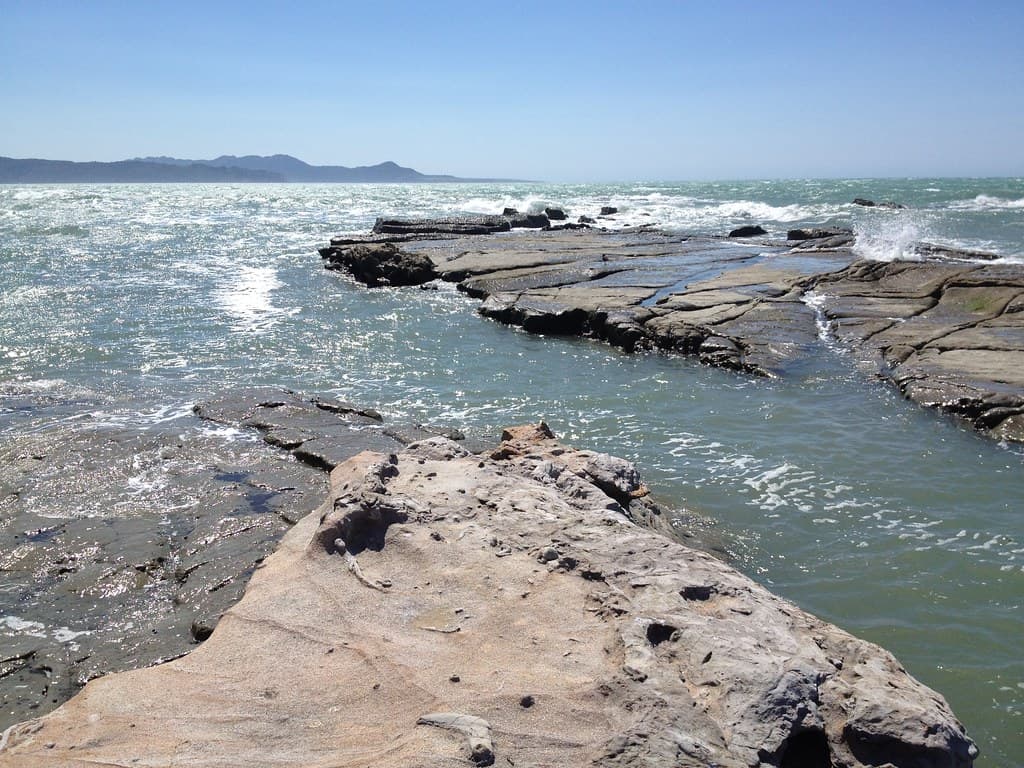
Counting the waves…
Counting the waves…

You'll feel the eastness in your bones—a quality of light that seems newer, less filtered than anywhere else in New Zealand. East Cape Beach curves beneath the lighthouse bluffs where hikoi trails wind up to Hicks Bay, and the sand holds the dark signature of volcanic origins. Mornings, the beach exhales mist that clings to the pohutukawa roots until mid-afternoon, when the sun finally burns through. The geography here does something strange to time. Watch the sunrise at five-thirty in midsummer and you're witnessing something no one else in the country has seen yet—the day arriving, minute by minute, across three time zones to the west. Fishermen know this; they're already waist-deep by the time the first light touches the ranges, casting for trevally in the gutters. Photographers chase this beach for the Instagram credential, but most leave within an hour, missing the way the afternoon light turns the offshore rocks into bronze sculptures. Driftwood accumulates here in archeological layers—whole trees stripped bare by storms, their roots pointing skyward like supplication. The beach is wider than it looks from the road, revealing itself in stages as you walk north. Seabirds work the tide line: red-billed gulls, variable oystercatchers, the occasional royal spoonbill that's wandered from the estuaries further south. When the wind drops, which isn't often, the silence feels ancient.
Places, rentals, tours and events within walking and driving distance of East Cape Beach.
Photos
East Cape Beach requires caution for swimming due to its remote, exposed location. The beach is completely unpatrolled with no lifeguard services or safety facilities. Ocean conditions can be unpredictable with strong currents, waves, and undertows common along this exposed coastline. Swimming is only recommended for experienced, confident swimmers during calm conditions. The extreme isolation means emergency assistance would take considerable time to arrive. Many visitors focus on the beach's scenic and symbolic significance rather than swimming. Always carefully assess water conditions before entering. The beach's primary appeal lies in its position near New Zealand's easternmost mainland point rather than as a swimming destination.
Summer (December to February) offers the best weather for visiting East Cape Beach, with warmer temperatures and calmer seas ideal for beach exploration and photography. This period is particularly special for witnessing some of the world's first sunrises from mainland New Zealand. Autumn (March-May) provides pleasant conditions with fewer visitors and beautiful light for photography. The remote location ensures crowds are minimal year-round. Early morning visits are particularly rewarding for sunrise experiences. Weather can change rapidly on the exposed East Cape, so come prepared for wind and variable conditions regardless of season. Winter visits offer dramatic coastal scenery for hardy travellers.
East Cape Beach is accessed from Te Araroa, the nearest settlement, via a journey toward the East Cape Lighthouse area. Follow State Highway 35 to Te Araroa, then take local roads toward the cape. A private vehicle is absolutely essential as no public transport serves this extremely remote region. Roads become increasingly narrow and may be partly unsealed as you approach the easternmost areas. The drive requires time and careful attention. Ensure adequate fuel before departing as service stations are very scarce. Many visitors combine the beach with a visit to the East Cape Lighthouse, requiring additional walking or four-wheel-drive access.
Food and accommodation near East Cape Beach are extremely limited. Te Araroa offers the nearest services including a general store, basic campground, and limited holiday rental options. Visitors must bring food supplies from larger towns like Gisborne, Opotiki, or Tolaga Bay. There are no restaurants, cafes, or formal dining establishments in the immediate area. Most travellers exploring this remote region come equipped with camping gear or travel in self-contained vehicles. The area's isolation requires thorough advance planning for all meals and overnight stays. Book any available accommodation well ahead, especially during summer when limited options fill quickly.
East Cape Beach holds unique symbolic significance as one of the beaches near New Zealand's easternmost mainland point, making it among the first places on Earth to see each new day's sunrise. This geographic distinction creates a special appeal for travellers seeking meaningful destinations. The extreme remoteness and dramatic coastal scenery provide an authentic sense of being at the edge of the world. The area's strong Māori cultural heritage adds depth to the visit. The combination of geographic significance, exceptional isolation, stunning natural beauty, and Instagram-worthy sunrise opportunities makes it a bucket-list destination for adventurous travellers willing to journey to New Zealand's most remote corners.