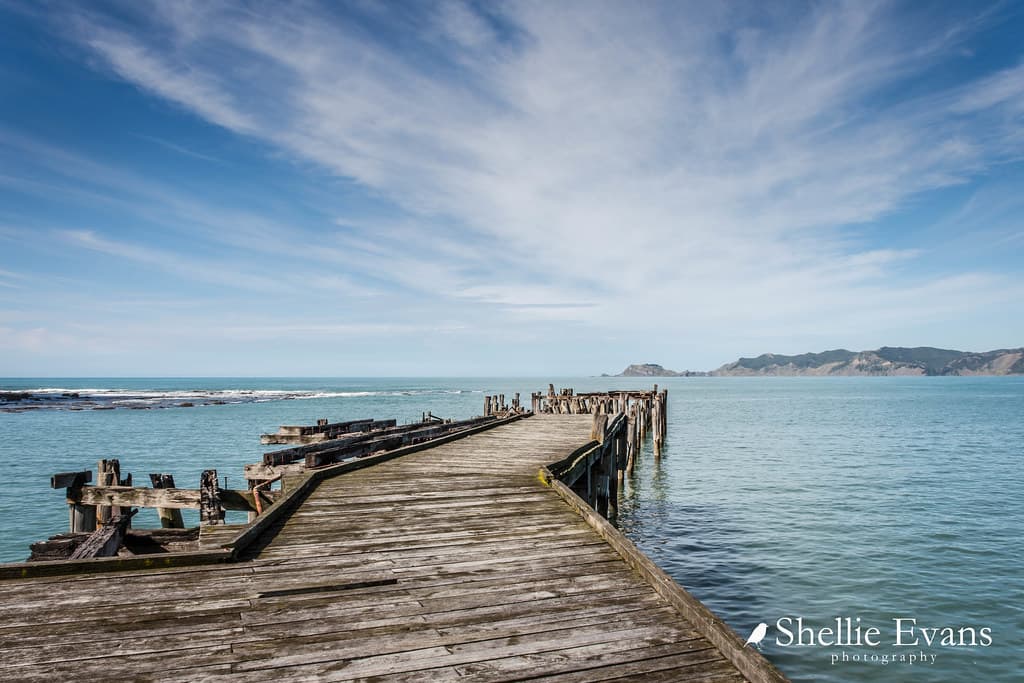
Counting the waves…
Counting the waves…

Waipiro Bay curves in a generous arc between headlands, and its southern beach claims the longer, more secluded portion of that sweep. You'll find the turnoff beyond the tiny settlement, following a rougher road through farmland where cattle graze slopes dropping toward the sea. The beach reveals itself suddenly—a wide band of charcoal sand meeting blue water, driftwood scattered along the high-tide line like discarded timber from some giant's workshop. This coast carries the East Cape's signature remoteness, that sense of being at the edge of something vast. The Raukumara Range shoulders up behind the bay, its forested peaks often trailing cloud. The sand beneath your feet compacts firm when wet, perfect for extended walks where your footprints and those of the occasional horse rider are the only marks. Small waves fold onto shore with metronomic patience; this is protected water compared to beaches directly facing the Pacific's fury. Few facilities exist—a basic access point, nothing commercial—which preserves the rural Māori coastal character that defines much of this region. Local families fish from the beach, setting up for afternoon sessions with eskies and portable chairs. By late afternoon, light angles across the bay, illuminating the Raukumara's green flanks and turning the dark sand almost purple. You might see smoke rising from a beachside fire where someone's cooking the day's catch, the scene unchanged from decades past.
Places, rentals, tours and events within walking and driving distance of Waipiro Bay South Beach.
Photos
Waipiro Bay South Beach is generally suitable for families, but conditions vary with tides and weather. The beach is relatively sheltered, making it calmer than more exposed East Coast beaches. Always supervise children closely, as there are no lifeguards on duty. Check local conditions before swimming, as currents can develop during certain tidal phases. The sandy bottom and gradual entry make it accessible for younger swimmers in calm conditions, but avoid swimming during rough seas or high winds common to the Gisborne region.
The best time to visit is during New Zealand's summer months (December to February) when weather is warmest and most stable. However, shoulder seasons of late spring (November) and early autumn (March) offer fewer crowds while still providing pleasant beach conditions. Mornings typically offer calmer seas and better visibility. The beach is particularly quiet during weekdays year-round. Winter months can be stormy and chilly, though the scenery remains beautiful for beach walks if you don't mind cooler temperatures and brisk coastal winds.
Waipiro Bay South Beach is located along State Highway 35 (the Pacific Coast Highway), approximately 90 kilometres north of Gisborne. From Gisborne, drive north through small coastal communities until reaching Waipiro Bay. The southern beach area is accessible via local roads off the main highway. A rental car or personal vehicle is essential, as public transport is extremely limited in this rural area. The roads are generally well-maintained but can be narrow and winding through coastal hills. Allow about 90 minutes driving time from Gisborne.
Accommodation and dining options are limited in this rural coastal area. Tokomaru Bay, a short drive away, offers basic services including a store and café. Most visitors stay in Gisborne or book holiday homes and farmstays in the surrounding area. It's advisable to bring your own food and supplies, especially if visiting for the day. The nearest full range of restaurants, supermarkets, and hotels is in Gisborne. Some local marae (Māori community centres) occasionally offer cultural experiences and meals by arrangement, providing authentic regional hospitality.
Waipiro Bay South Beach offers a genuinely remote, untouched coastal experience away from Gisborne's more developed beaches. The area maintains strong Māori cultural connections, with traditional marae visible in the surrounding landscape. The beach provides excellent opportunities for solitude and natural scenery, with dramatic coastal cliffs and relatively few visitors. Unlike city beaches, you'll experience authentic rural New Zealand coastal life. The southern section offers distinct character from the main Waipiro Bay area, with different access points and often different sand and sea conditions depending on coastal geography.