Counting the waves…
Counting the waves…
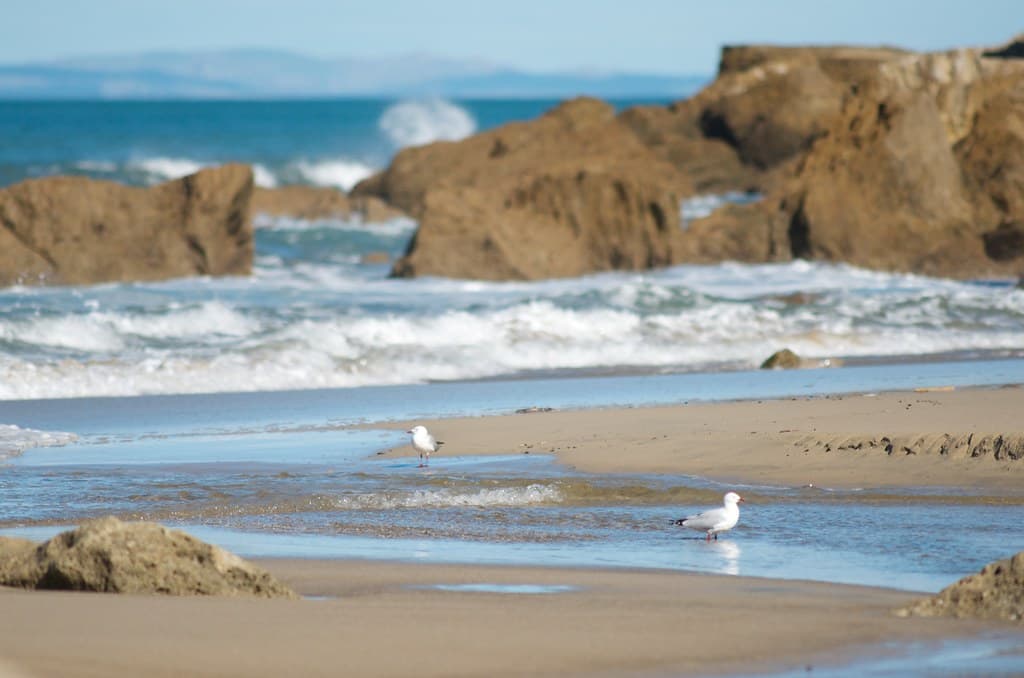
You reach Waikari by driving north until the highway gives way to gravel and the cellphone signal drops to nothing. The beach unfolds at the base of farmland, a sweep of gray pebbles and coarse sand where the Mōhaka River cuts through to the Pacific. A few fishing shacks perch above the tide line; a tractor-width track leads down to the water. This is working coast, functional rather than scenic, though that distinction collapses completely at dusk. The shore crunches under your boots—smooth river stones, driftwood silvered by salt, the occasional float or net fragment. You'll walk upstream along the river mouth, where whitebait nets hang in season and the water runs tea-dark over sand. Gulls and shags work the shallows. Across the river the hills climb into scrub and pine plantation; behind you the beach stretches south toward Wairoa, empty for kilometers. Sunset here is a slow burn. The light catches the river first, turning it amber, then rose, then a molten ribbon threading between the stones. You sit on driftwood still warm from the afternoon and watch the color drain toward the horizon. By the time you walk back to the car, the hills are silhouettes and the first stars are punching through above the coast.
Places, rentals, tours and events within walking and driving distance of Waikari Beach.
Photos
Swimming at Waikari Beach should be approached with caution as it's an unpatrolled, remote beach subject to variable ocean conditions. The beach can experience surf, currents, and changing weather patterns typical of New Zealand's east coast. Only swim during calm conditions and within your ability level, staying close to shore if uncertain. There are no lifeguards or immediate rescue services available. The beach is safest during settled summer weather with light winds. Never swim alone, always supervise children closely, and check weather and surf forecasts before visiting. Local knowledge helps assess conditions.
The optimal time to visit Waikari Beach is during summer (December-February) when weather is warmest and most stable, with temperatures around 20-25°C and longer days. This period offers the best conditions for beach activities and enjoying sunsets, a highlight of this beach. Late afternoon visits are particularly rewarding for sunset photography and viewing. Autumn and spring can provide pleasant conditions with fewer visitors, though weather is less predictable. Winter months are cooler and wetter, better suited to storm watching than swimming. Anytime you visit, weekdays ensure maximum solitude at this quiet northern Hawke's Bay beach.
Waikari Beach is located in northern Hawke's Bay near Raupunga, accessed via State Highway 2 between Wairoa and Napier. From Napier, drive north on SH2 for approximately 90 minutes; from Wairoa, head south for about 20-30 minutes. Look for local road turnoffs signposted toward Raupunga and the coast, which may include unsealed roads in the final stretch. Road conditions can vary, so check locally if travelling after heavy rain. There's no public transport to this remote area, making a private vehicle essential. Fuel and supplies should be arranged in Wairoa or larger centres before arrival.
Waikari Beach has virtually no commercial facilities, reflecting its quiet, rural character. There are no restaurants, cafes, or shops at or near the beach, so bring all necessary food, drinks, and supplies from Wairoa or other larger towns. Accommodation is extremely limited; you might find occasional farm stays or private holiday rentals in the wider Raupunga area through online platforms, but options are scarce. Most visitors day-trip from Wairoa or other northern Hawke's Bay bases. The beach's appeal lies in its undeveloped nature, so come prepared for a self-sufficient visit and pack out all rubbish.
Waikari Beach attracts locals and fishing enthusiasts due to its quiet, uncommercialised setting and coastal fishing opportunities typical of northern Hawke's Bay. The beach provides access to surf fishing, with species varying seasonally, though specific catches depend on conditions and timing. Its remote location means fewer visitors compete for space, creating a peaceful atmosphere appreciated by those who know it. The scenic sunsets over the ocean add to the appeal, particularly during calmer months. The beach's proximity to small rural communities maintains its authentic character, offering a genuine coastal experience far removed from tourist beaches and their crowds.