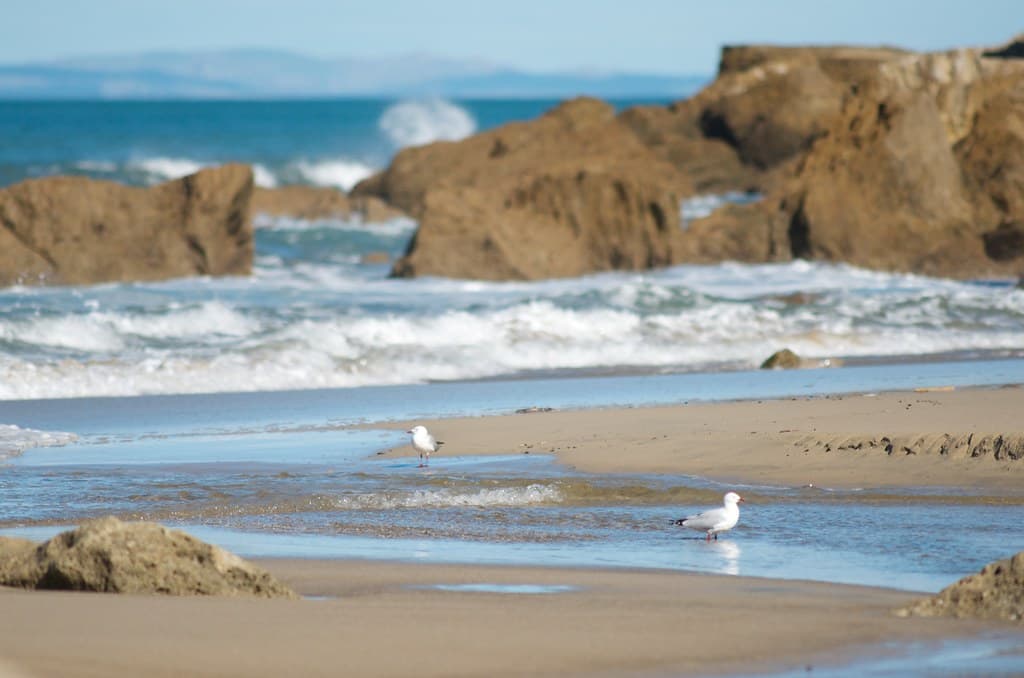
Counting the waves…
Counting the waves…
Waipātiki Beach occupies a narrow coastal valley where the Waipatiki River, brown with tannins from the forested catchment, spreads across sand before merging with the Pacific. The beach curves gently, sheltered by headlands on either side that rise steep and green with a mix of native bush and pine plantations. The sand is darker here than beaches to the south, flecked with black iron minerals, and the tideline accumulates driftwood from storms—entire tree trunks smoothed by salt water and sun. The settlement feels tucked away, almost secretive, despite being only twenty minutes from Napier. Holiday homes nestle into the hillsides, half-hidden by tree ferns and lancewood. A camping ground spreads beneath ancient pines, their needles carpeting the ground and scenting the air with resin. The surf club building, painted in fading colors, anchors the beach access, and you'll often see families launching kayaks into the relatively calm water created by the sheltering headlands. The bush here provides something rare on Hawke's Bay's coast: shade, birdsong, and the humidity of native forest meeting salt air. Walk the track that climbs the southern headland and you'll sweat through rimu and kamahi groves, emerging at viewpoints where the Mahia Peninsula stretches across the northern horizon and gannets wheel below. The water shifts color depending on the river's mood—jade when floods have sent sediment seaward, sapphire when flow subsides and marine currents dominate.
Places, rentals, tours and events within walking and driving distance of Waipātiki Beach.
Photos
Waipātiki Beach's sheltered cove setting generally provides calmer swimming conditions than fully exposed ocean beaches, making it relatively safe for families. However, lifeguards are not present, so swimmers must assess conditions independently and never swim alone. The beach can experience currents and changing conditions, particularly during unsettled weather or high surf. The more protected nature of the cove typically results in gentler waves suitable for children, though supervision is always essential. Checking local weather and sea conditions before swimming is recommended, and swimming during calm, settled periods provides the safest experience.
Waipātiki Beach is most enjoyable during fine weather, typically from November through April, when calm seas and warm temperatures enhance the sheltered cove experience. Summer holidays (December-February) attract more visitors, while shoulder seasons offer pleasant conditions with greater tranquility. The beach's forested surroundings provide some shade, making midday visits more comfortable than fully exposed beaches. Visiting during weekdays or outside peak New Zealand holiday periods ensures a quieter, more secluded atmosphere. The beach's scenic beauty remains attractive year-round for coastal walks and nature appreciation, even during cooler months.
Waipātiki Beach is located approximately 25 kilometres north of Napier via State Highway 2 and Waipātiki Road. Access requires a private vehicle, as public transport does not service this location. The final approach involves a steep, winding road down to the beach, requiring careful driving but not four-wheel drive. Parking is available near the beach but limited, so arriving early during busy periods is advisable. From Napier, allow 30-35 minutes driving time. The relatively remote access contributes to the beach's quieter, more hidden character.
Waipātiki Beach has minimal facilities, with basic public toilets available but no commercial food or drink outlets. Visitors should bring all necessary supplies including food, water, sunscreen, and beach equipment. The nearest shops and cafés are in Napier, approximately 30 minutes away. A holiday park near the beach offers accommodation and may have limited supplies, but self-sufficiency is recommended. The lack of development preserves the beach's natural, secluded character. Plan for a self-contained beach day and pack out all rubbish to help maintain the pristine environment.
Waipātiki Beach stands out for its intimate cove setting nestled beneath native bush-covered hills, creating a more enclosed, sheltered atmosphere than the region's open coastal beaches. The forested backdrop and smaller scale provide a distinctly tranquil, hidden-away character that feels removed from urban influences. The combination of bush meeting beach is relatively uncommon in Hawke's Bay, offering scenic diversity and natural shade. The beach's relative remoteness and limited development preserve an unspoiled quality, appealing to those seeking peaceful, uncrowded coastal experiences. Its photogenic setting makes it particularly popular for those valuing natural beauty.