Counting the waves…
Counting the waves…
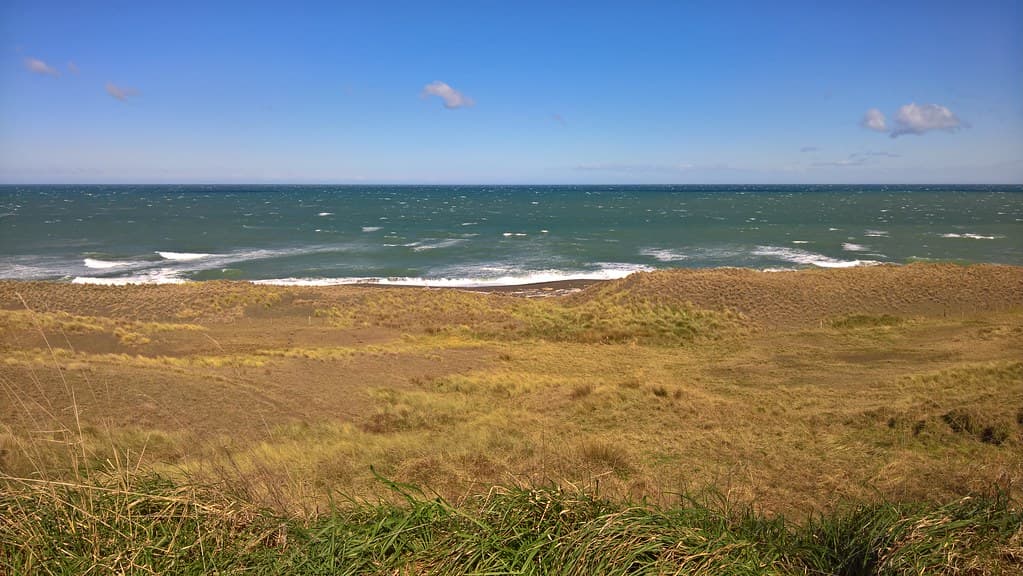
The settlement of Waikokopu carries history in its bones—once a thriving Māori community and later a stop on the coastal track, now a scattering of properties where sheep graze down to the beach and the pace has slowed to tidal rhythms. The beach itself opens wide and sandy, sheltered somewhat by the peninsula's curve, the water rolling in with the kind of gentle persistence that's more soothing than dramatic. At the northern end, a small stream cuts through the sand, creating a lagoon at high tide where kids wade and herons hunt. What sets Waikokopu apart isn't the beach—though it's lovely in an understated way—but the quality of evening light. As the sun arcs westward, the hills inland begin to glow, their green slopes turning golden, then amber, then deep bronze. The sky performs above them: streaks of rose and tangerine, clouds edged in molten copper, the whole western horizon ablaze while the ocean darkens to indigo. Locals time their dinners to this show, gathering on decks or walking the beach with cameras and wine glasses, watching the daily miracle unfold. The settlement retains a connection to its past through place names and family stories, though you'll need to ask rather than expect signage. The beach serves the few who live here and the occasional visitor who's ventured beyond Māhia's main beaches. There's no shop, no facilities, just a boat ramp and the understanding that you're visiting rather than consuming. The quietness feels intentional, earned, as if Waikokopu has decided that peace matters more than promotion.
Places, rentals, tours and events within walking and driving distance of Waikokopu Beach.
Photos
Waikokopu Beach is generally suitable for swimming during calm conditions, but like most east coast New Zealand beaches, it can experience variable surf and currents. Always check conditions before entering the water and swim between the flags if lifeguards are present during summer. The beach is unpatrolled most of the year, so exercise caution. Avoid swimming during rough weather or high winds, which are common on the Hawke's Bay coast. It's best suited for confident swimmers familiar with ocean conditions.
The best time to visit Waikokopu Beach is during summer months (December to February) when weather is warmest and most settled, though it remains relatively uncrowded year-round. Autumn (March to May) also offers pleasant conditions with fewer visitors. The beach is known for beautiful sunsets, so late afternoon visits are particularly rewarding. Winter can be windy and cold. Visit during weekdays or outside school holidays for the quietest experience, as this hidden gem sees minimal tourist traffic even in peak season.
Waikokopu Beach is located on the northern Hawke's Bay coast, accessible by car from State Highway 2. The beach is reached via local roads in the small coastal settlement of Waikokopu. From Napier, it's approximately a 90-minute drive north. Roads are generally sealed but some access points may involve gravel sections. There is no public transport to this remote location, so a private vehicle is essential. The area is signposted, but detailed maps or GPS navigation are recommended for first-time visitors to this quiet coastal settlement.
Waikokopu is a small historic settlement with very limited facilities. There are no commercial food outlets or restaurants directly at the beach, so visitors should bring their own supplies and picnic provisions. Accommodation options are minimal, consisting primarily of private holiday homes and baches. The nearest towns with shops, cafes, and accommodation are Wairoa (approximately 30-40 minutes away) or Māhia Peninsula. Plan ahead and stock up on essentials before arriving, as this is a genuine off-the-beaten-path destination with few visitor services.
Waikokopu Beach stands out for its historic coastal settlement character and authentic local atmosphere, largely untouched by commercial tourism. The beach offers a glimpse into traditional New Zealand bach culture in a remote setting. Its location provides stunning sunset views over the Pacific Ocean, and the area has historical significance as an early coastal settlement. The sense of isolation and unspoiled natural beauty makes it special for visitors seeking genuine off-the-beaten-path experiences. It's ideal for those wanting to escape crowds and experience a more traditional, uncommercialised New Zealand coastal community.