Counting the waves…
Counting the waves…
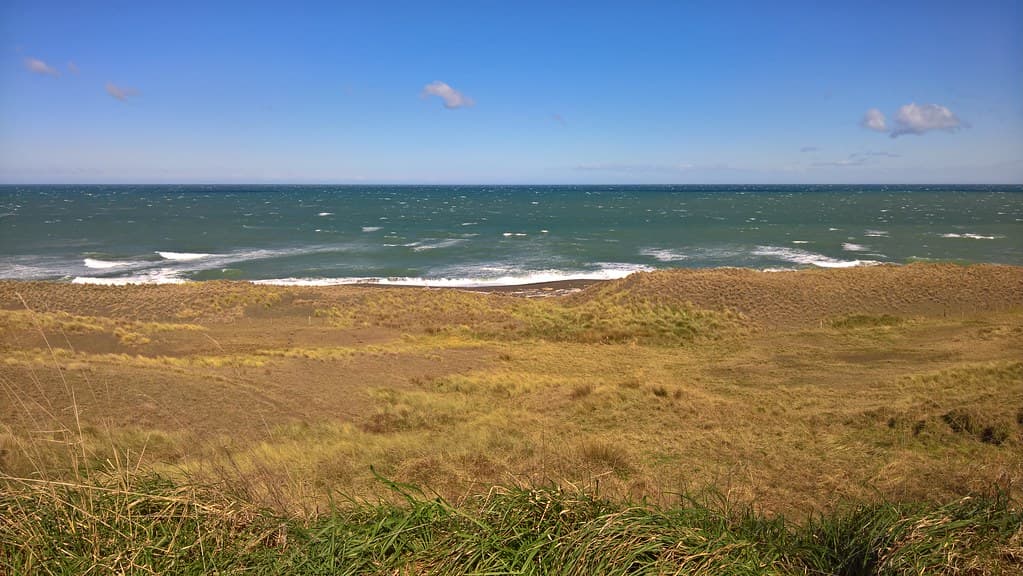
You'll park near the settlement and walk past the boat ramp where aluminum dinghies sit on trailers, paint blistered by salt and sun. The beach opens beyond a low dune system, the sand firm and damp from recent high tide, marked by tire tracks from four-wheel-drives that use this stretch as a corridor between coastal access points. Nūhaka Beach runs straight and featureless for kilometers, the kind of shoreline that makes you walk farther than intended simply because there's no obvious turnaround point. The river mouth shifts position seasonally, carving new channels through the sand and leaving old oxbows to fill with standing water where gulls congregate. After heavy rain, the outflow stains the nearshore ocean brown, carrying sediment from farmland upstream, but on settled days the water clears to that murky green typical of east coast beaches. The driftwood tells stories of inland weather—floods measured in the size of logs deposited, droughts evident in the bleached, salt-cured timber that's been here long enough to grow smooth. Few people venture beyond the access point; the beach's appeal lies in its emptiness rather than amenities or drama. You might walk for an hour seeing only oystercatchers working the tide line and your own footprints trailing behind. The sand holds heat in summer, and shelter can be found in the lee of larger driftwood piles when the wind picks up. It's a beach for those who measure success by solitude rather than scenery.
Places, rentals, tours and events within walking and driving distance of Nūhaka Beach.
Photos
Nūhaka Beach is generally suitable for swimming during calm conditions, but caution is advised. Like most east coast New Zealand beaches, it can experience variable surf and currents. There are no lifeguard patrols, so swim at your own risk and stay close to shore if you're unsure of conditions. Check the weather forecast before visiting, and avoid swimming alone. Always supervise children closely and be aware that conditions can change quickly on this relatively remote stretch of coastline.
The best time to visit Nūhaka Beach is during summer months (December to February) when weather is warmest and most settled, with temperatures typically reaching 20-25°C. This period also offers the longest daylight hours for beach activities. Shoulder seasons of spring and autumn can provide pleasant weather with fewer visitors. The beach is particularly quiet on weekdays year-round. Avoid winter months (June-August) when conditions can be cold, windy, and wet, though some enjoy the dramatic coastal scenery during this time.
Nūhaka Beach is accessed via State Highway 2 along the northern Hawke's Bay coast, approximately 90 minutes north of Napier or south from Gisborne. Turn off SH2 at Nūhaka township and follow local roads toward the coast. The beach access may require driving on unsealed roads in the final approach. A standard vehicle can usually manage the journey in good weather, but check local conditions first. There is no public transport to this remote area, so a private vehicle is essential for visiting.
Nūhaka Beach has very limited facilities, reflecting its low-profile, rural character. Basic supplies may be available in Nūhaka township, but visitors should stock up on food, drinks, and essentials in larger towns like Wairoa (approximately 30 minutes north) or Napier before arriving. Accommodation options are sparse; you may find rural holiday rentals or farms offering stays in the wider area. Most visitors day-trip from larger centres or use Wairoa as a base. There are no restaurants or cafes directly at the beach.
Nūhaka Beach stands out for its genuine remoteness and undeveloped character along the northern Hawke's Bay approach to Māhia Peninsula. Unlike the more popular beaches near Napier or Hastings, it sees very few tourists and maintains an authentic rural coastal atmosphere. The beach offers a true escape from crowds with expansive sandy stretches ideal for peaceful sun bathing and contemplative walks. Its location makes it a natural stopping point for travellers exploring the lesser-known coastline between Wairoa and Māhia, offering scenic beauty without commercial development or facilities.