Counting the waves…
Counting the waves…
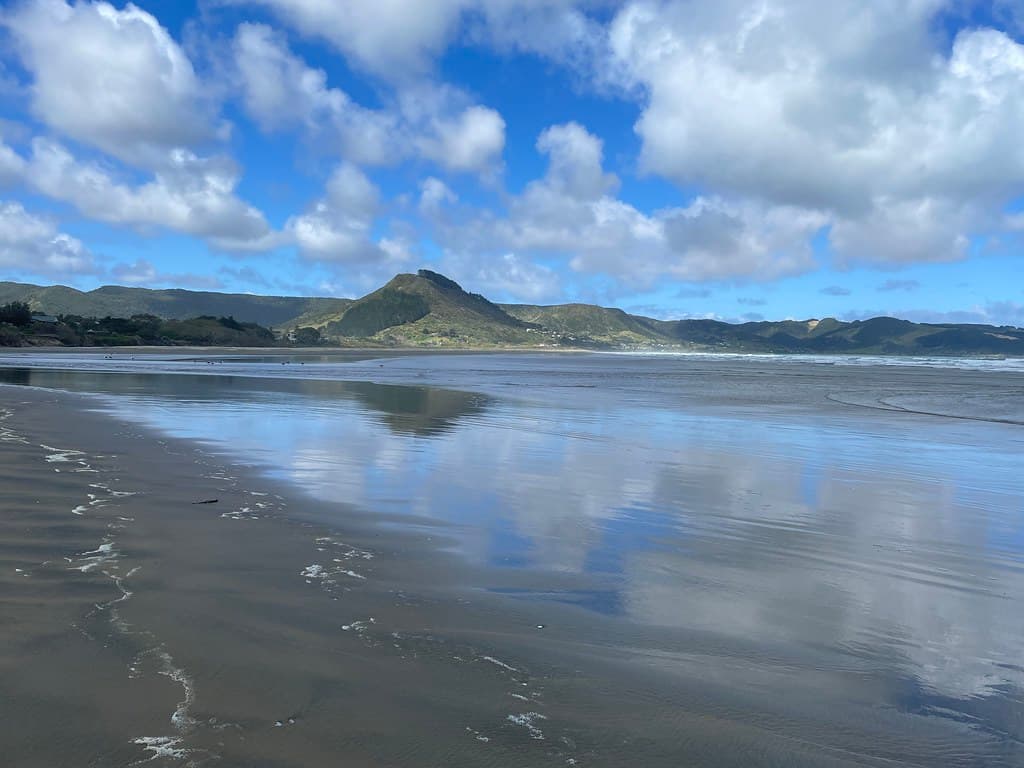
Ninety Mile Beach doesn't curve or shelter—it simply runs. From Ahipara at its southern terminus, the sand extends northward past the settlement at The Bluff, past Te Paki Stream, all the way to Cape Reinga where New Zealand finally runs out of land. The name is a colonial exaggeration—the actual distance is closer to fifty-five miles—but walking even a fraction of it instills the sense that you could keep going forever, the horizon always retreating at the same pace you advance. The sand here is hard enough to drive on at low tide, and locals treat it as an unofficial highway, four-wheel-drives barreling north to surf breaks or fishing spots known only by GPS coordinates and word-of-mouth. You'll see them parked at the water's edge, rods deployed, waiting for snapper or kahawai. The surf is relentless—long-period westerly swells that rear up and collapse in thundering walls of whitewater. Swimming is dicey; rips form and dissolve with tidal shifts, and the undertow has claimed the unwary. Come for sunset when the wet sand mirrors the sky, doubling every shade of amber and crimson. The dunes behind you rise like frozen waves, their flanks rippled by wind, tufted with spinifex. Gulls wheel and cry. The scale of the place rewrites your internal geography—this is coastal New Zealand at its most elemental and unapologetic, a beach that refuses to be anything but itself.
Places, rentals, tours and events within walking and driving distance of Ninety Mile Beach.
Photos
Swimming at Ninety Mile Beach is generally not recommended due to dangerous conditions. The west-facing beach experiences strong surf, powerful rips, and unpredictable currents that can be hazardous even for experienced swimmers. There are no lifeguard patrols along the vast stretch of coastline. The beach is better suited for walking, surfing by experienced riders, and beach driving rather than casual swimming. If you do enter the water, stay close to shore, never swim alone, and be extremely cautious. Fatalities have occurred, so respect the ocean's power.
Ninety Mile Beach can be visited year-round, with each season offering different experiences. Summer (December-February) provides the warmest weather for walking and sightseeing, though it can be busier. For dramatic scenery and fewer visitors, consider autumn or spring. Sunsets are spectacular throughout the year on this west-facing beach. If planning to drive on the beach, visit during the two hours either side of low tide when the sand is firmest. Check tide tables in advance and plan accordingly for the safest and most enjoyable visit.
Despite its name, Ninety Mile Beach is actually about 88 kilometers (55 miles) long, stretching along Northland's west coast. The main access points are at Ahipara in the south and Te Paki Stream in the north near Cape Reinga. From Ahipara, follow local roads to designated beach entry points. The beach serves as an official highway, but 4WD vehicles are essential and driving is only safe at low tide. Many visitors join guided tours from Paihia or Kaitaia rather than driving themselves, especially if rental car insurance excludes beach driving.
Ninety Mile Beach itself has no facilities, towns, or services along its entire length—it's a remote, wild coastline. The small settlement of Ahipara at the southern end offers basic services including accommodation, a shop, and cafes. The nearest substantial town is Kaitaia, about 15 minutes from Ahipara, with supermarkets, fuel, and amenities. At the northern end, there are no settlements, only wilderness. Visitors should carry food, water, and emergency supplies. Mobile phone coverage is limited or absent along most of the beach.
Ninety Mile Beach represents one of the longest uninterrupted sandy beaches in New Zealand, creating an iconic and dramatic coastal landscape. Its immense scale, wild character, and role as part of the Cape Reinga journey make it culturally and scenically significant. The beach forms part of traditional routes and holds importance in Māori culture. Its designation as an official highway is unusual globally. The combination of vast sand, powerful surf, towering dunes at Te Paki, and sense of remoteness creates an unforgettable Far North experience unlike anywhere else in New Zealand.