Counting the waves…
Counting the waves…
A refined fusion of water purity, environmental stability, and communal vibrancy for Long Beach.
View MethodologyAnalyzed via live sensors and environmental data.
Wave height, wind, and atmospheric stability.
Live footfall and crowd balance metrics.
Community reviews and curated sentiment.
“You'll walk beneath fractured bluffs where shearwaters nest in hollows above the tideline, the air thick with salt and kelp. The Otago coast pulls cold currents from Antarctica, so the water bites even in January, but…”
Limited recent visitor reports — live OBI telemetry is your best guide for current conditions.
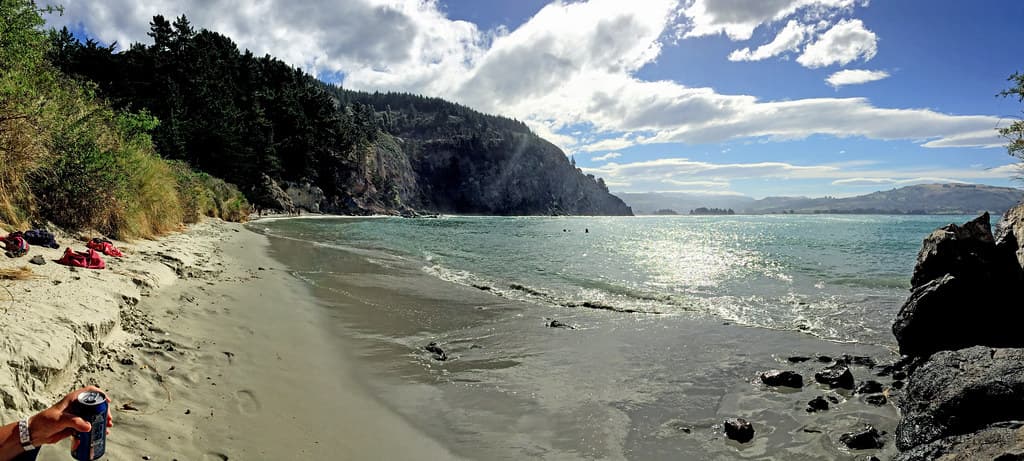
Long Beach unfurls in a two-kilometer arc between Waikouaiti and Karitane, hemmed by ochre cliffs that fracture into sea caves and arches the Pacific has been carving for millennia. At low tide, you can walk into these voids where the stone drips with kelp and the floor glistens with tidal pools studded with purple urchins and marbled chitons. Oystercatchers stab the wet sand for pipi, their orange beaks flashing against the slate-colored surf.
The wind here is honest—steady and westerly most afternoons, combing the marram grass on the dunes and turning the surface of rock pools into hammered pewtin. Families spread blankets near the northern access point where a stream cuts through the sand, shallow enough for toddlers to wade. Couples drift toward the southern end, where driftwood logs rest like whale ribs and the cliffs curve into shadow hours before official sunset, the light turning amber then bruised plum.
 Credit: Unsplash
a rocky beach with a mountain in the background
 Credit: Unsplash
a black and white photo of rocks and water
Low tide reveals walkable arches
Limestone layers with fossil beds
Southern end logs catch warmth
Prime Visitation
Best Weather|Less Crowds
Where it is
Long Beach
Long Beach, Otago, New Zealand
-45.764500°, 170.638900°
Weather
Loading…
Swell
—
Temp
Warm · Restorative
UV Index
Moderate
Wind
—
Tidal State
Last known
Max Sunlight
—
Ideal Shade
—
Jan - Dec (Peak)
Mar - Nov (Off-season)
Best Weather|Less Crowds
Near Long Beach
Explore dining, stays, nightlife, and activities near Long Beach in Long Beach, New Zealand. Every listing below is a real place linked to this beach — open a card for reviews, maps, and booking options.
Stays and lodging options near Long Beach for your beach trip.
Select a category to load nearby places.
Unlock restaurants, luxury stays and curated maritime experiences within 2km
Long Beach can be challenging for swimming due to variable surf conditions and occasional strong currents. The beach is relatively exposed to ocean swells, making it better suited for experienced swimmers. Always check conditions before entering the water and avoid swimming alone. The beach lacks lifeguard patrols, so exercise caution. Families with young children should supervise closely and consider paddling in calmer conditions. The sandy bottom is generally safe underfoot, but be aware of changing tides and wave patterns throughout the day.
Long Beach is best visited during summer months (December to February) when temperatures are warmest and days are longer, ideal for beach activities. However, shoulder seasons (October-November and March-April) offer fewer crowds while maintaining pleasant weather. The beach faces north, making it excellent for sunset viewing year-round. Visit during low tide to explore the caves and rock pools at the beach's edges. Early mornings and weekdays tend to be quieter. Weather can be unpredictable, so check forecasts and bring layers even in summer.
Long Beach is located approximately 25 kilometers north of Dunedin city center along the coastal Waitati Highway. From Dunedin, drive north on State Highway 1, then follow Long Beach Road to reach the beach access point. Limited parking is available near the beach entrance—arrive early during peak season for the best spots. The access involves a short walk down to the beach. Public transport options are limited, so a private vehicle is recommended for visiting this somewhat remote location.
Long Beach has minimal facilities directly at the beach itself, with no cafes or restaurants on-site. The nearby village of Waitati (approximately 5 kilometers south) offers a general store and cafe for basic supplies and refreshments. For more dining options and accommodation, Dunedin city (25 kilometers away) provides extensive choices including hotels, motels, and restaurants. Visitors should bring their own food, drinks, and beach supplies when planning a day trip. The closest proper facilities are in Warrington, several kilometers north along the coast.
Yes, Long Beach features interesting caves and cliff formations along its southern end that can be explored during low tide. These natural sea caves are carved into the dramatic coastal cliffs and add to the beach's scenic appeal. Always check tide times before exploring, as caves can become dangerous during high tide. Wear appropriate footwear as rocks can be slippery. The caves are relatively accessible but require some scrambling. Never venture too deep into caves, and be mindful of incoming tides to ensure safe exploration of this unique coastal feature.
Photos