Counting the waves…
Counting the waves…
A refined fusion of water purity, environmental stability, and communal vibrancy for Purakaunui Beach.
View MethodologyAnalyzed via live sensors and environmental data.
Wave height, wind, and atmospheric stability.
Live footfall and crowd balance metrics.
Community reviews and curated sentiment.
“The settlement at the beach's north end is barely a settlement—a handful of cribs, a boat ramp, a gravel road. The beach itself runs south in a gentle arc, backed by flax and toetoe, fronted by waves that peel with…”
Limited recent visitor reports — live OBI telemetry is your best guide for current conditions.
You turn off the highway onto a narrow road that winds through farmland before descending to the coast. The car park is gravel and grass, room for maybe twenty vehicles, rarely more than half full. Wooden steps drop you onto sand the colour of wet clay, littered with cuttlefish shells and rounded stones that click and rattle in the shore break.
The beach break organizes best on a south swell with light westerlies, forming peaks that offer shoulder-high rights and lefts on good days. The local crew paddles out mid-morning after farm chores or night shifts, reading the tide and wind with the fluency of decades. They'll nod acknowledgment if you show respect, share a wave if you wait your turn, ignore you entirely if you snake or drop in. The water is cold enough to make your temples ache.
 Credit: Unsplash
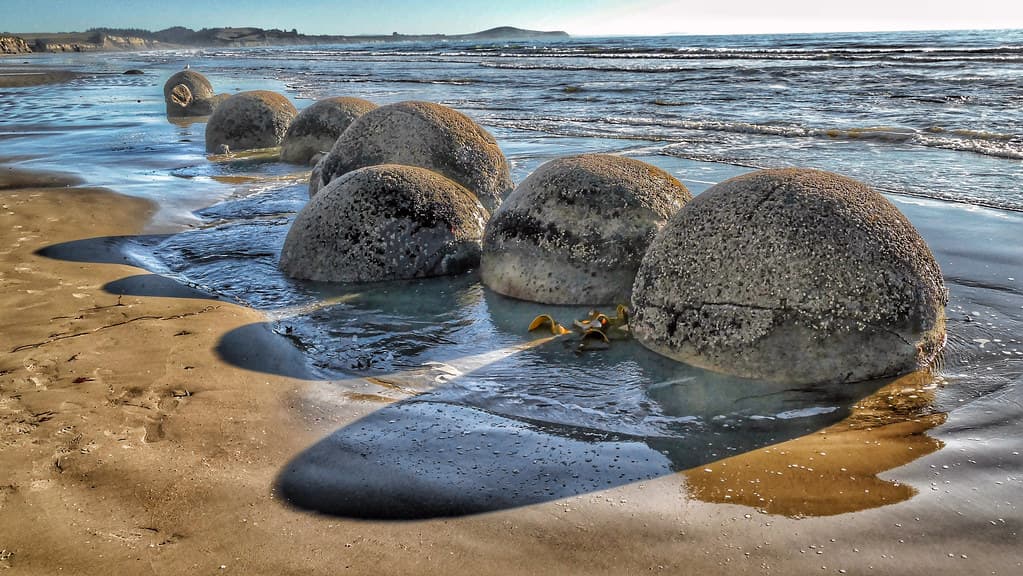
A view of a beach from a hill
 Credit: Unsplash
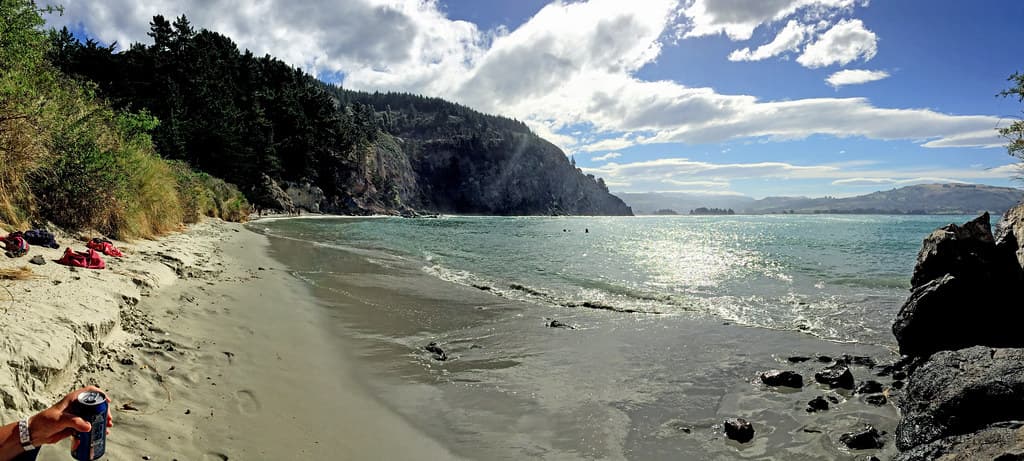
a body of water with mountains in the background
South swell and light winds
Shallow southern creek crossing
Working boat ramp and cribs
Prime Visitation
Best Weather|Less Crowds
Where it is
Purakaunui Beach
Purakaunui, Otago, New Zealand
-45.749100°, 170.640600°
Weather
Loading…
Swell
—
Temp
Warm · Restorative
UV Index
Moderate
Wind
—
Tidal State
Last known
Max Sunlight
—
Ideal Shade
—
Jan - Dec (Peak)
Mar - Nov (Off-season)
Best Weather|Less Crowds
Select a category to load nearby places.
Unlock restaurants, luxury stays and curated maritime experiences within 2km
Purakaunui Beach offers reasonable swimming conditions compared to more exposed Otago beaches, though caution is always necessary. The beach can experience surf and currents, particularly during certain tides and weather conditions. There are no lifeguard services, so swimmers must assess conditions independently. Families often use the beach, but supervision of children is essential. The sandy bottom is generally safe, though wave size varies. Check local conditions before entering the water, avoid swimming alone, and be aware that water temperatures remain cool year-round, even in summer.
Purakaunui Beach is most pleasant during the summer months from December through February when temperatures are warmest and days are longest. The shoulder seasons of late spring and early autumn also offer good conditions with fewer visitors. Being a quieter beach, it rarely feels crowded even during peak holiday periods. Early mornings provide the most peaceful experience and often the calmest conditions. Winter visits can be beautiful for coastal walks but bring warm clothing as winds can be strong and temperatures drop significantly. Check weather forecasts as conditions can change quickly.
Purakaunui Beach is located approximately 50-60 minutes north of Dunedin along the scenic coastal State Highway 1. Turn off the highway at Purakaunui and follow local roads toward the coast. The beach has vehicle access with a small parking area near the sand. The drive itself is beautiful, passing through rolling Otago farmland and coastal forest. The roads are generally well-maintained, though some final approach roads may be unsealed. From Dunedin, simply head north on SH1 and watch for Purakaunui signage. No special vehicle is required.
Purakaunui Beach itself has minimal facilities, so bring your own food and drinks for a beach visit. The nearby Purakaunui Bay Holiday Park offers accommodation including cabins and camping sites, providing the closest overnight options. For more extensive dining and lodging choices, you'll need to travel to Dunedin or smaller towns along the coast. Some holiday homes and baches (beach houses) are available for rent in the area. Basic supplies might be found in small coastal settlements, but it's best to stock up in Dunedin before heading to this quieter beach.
Purakaunui Beach stands out for its local character and relative seclusion while still being reasonably accessible from Dunedin. Unlike more popular beaches, it maintains a quiet, authentic atmosphere without tourist development. The beach offers decent surf conditions for those interested, but remains calm enough for families on good days. The surrounding area features native bush and coastal scenery typical of the Otago region. It's particularly valued by those seeking an alternative to busier Dunedin beaches, offering a genuine slice of New Zealand coastal life without crowds or commercialization.
Photos