Counting the waves…
Counting the waves…

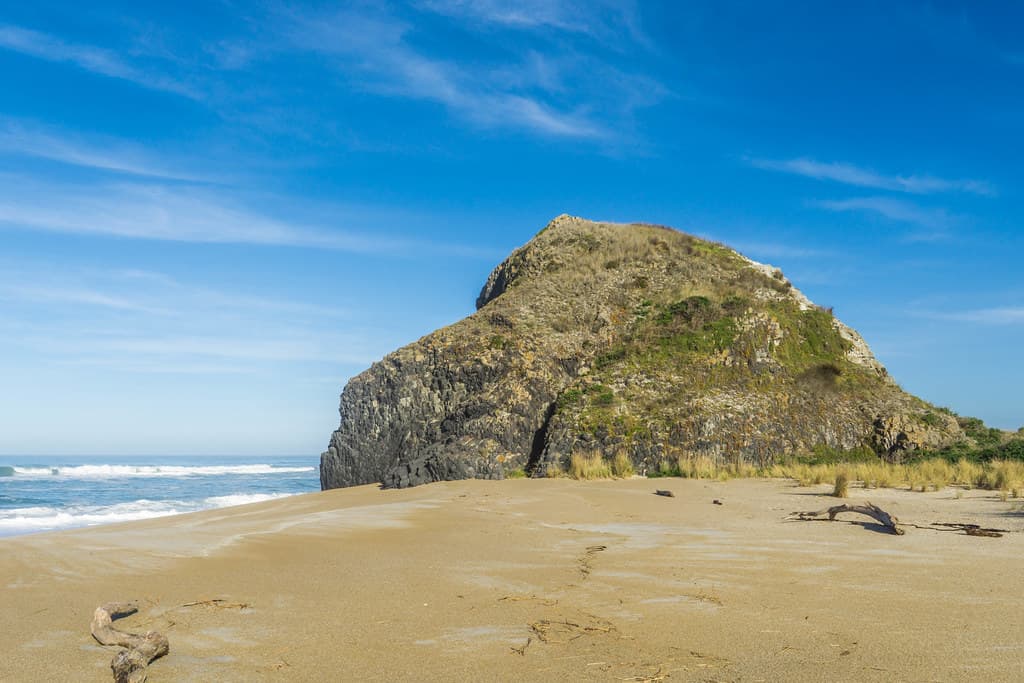
The unsealed road ends at a grassy flat beside the river, where a wooden footbridge spans the Tokomairaro's final meters before it fans across the sand. The estuary is shallow and moody, its color shifting with silt load and tide—sometimes amber, sometimes murky jade. On the ocean side, waves break in ragged lines, their rhythm interrupted by the outflow current that carves a deeper channel through the sand. The beach splits personality depending on which direction you walk. North, it narrows beneath low bluffs streaked with clay and capped with wind-pruned shrubs. South, the sand broadens and flattens, curving toward distant headlands. Shells crunch underfoot—paua fragments, scallop halves, the occasional whole cockle. Driftwood tangles mark the high-tide line, bleached white and riddled with bore-holes. Overhead, gulls and shags trade airspace, their calls weaving through the steady wash of surf. Families spread picnics near the river mouth, where the water is calmer and kids can wade without battling breakers. Fishermen cast into the channel at dawn, targeting kahawai and occasional snapper. The few visitors who make the drive tend to linger, unhurried, as if the beach's remoteness demands a slower pace. By dusk, the hills behind catch the last light, and the river mouth becomes a ribbon of silver threading through darkening sand.
Places, rentals, tours and events within walking and driving distance of Toko Mouth Beach.
Photos
Toko Mouth Beach, being a river-mouth location, presents varying conditions for swimming. River mouths can have unpredictable currents where fresh water meets the ocean, requiring extra caution. The sandy beach is suitable for families for activities like beach walks, picnics, and playing on the sand, but swimming should be approached carefully. There are no lifeguard services at this rural beach. Adult supervision is essential for children near the water. The calmer river areas may seem safer but can still have currents. Always assess conditions on the day and prioritize safety over swimming if conditions appear challenging.
Toko Mouth Beach is best visited during New Zealand's summer months (December through February) for optimal weather and comfortable temperatures. The beach offers beautiful sunset viewing opportunities, making late afternoon visits particularly rewarding. Spring and autumn provide fewer visitors while maintaining pleasant conditions for beach walks and photography. The rural location means the beach remains relatively quiet throughout the year. Winter can be harsh with strong coastal winds, though some visitors enjoy the dramatic coastal scenery. Weekdays are typically quieter than weekends, ideal for those seeking a peaceful rural beach experience.
Toko Mouth Beach is located along the Clutha coastline, accessible from Milton which serves as the nearest service town. From Milton, follow local roads toward the coast and Toko Mouth settlement. The drive typically takes 15-25 minutes depending on exact routes and road conditions. Some roads may be unsealed or gravel, so drive with care. Clear signage can be limited in rural areas, so GPS navigation or detailed maps are helpful. The beach is accessible by standard vehicles under normal conditions, though roads may be affected by weather. Parking is available near beach access points.
Toko Mouth is a small rural settlement with very limited commercial facilities. Accommodation options are scarce directly at the beach, though some holiday rentals or farm stays may be available in the wider area through booking platforms. Milton township, approximately 15-25 minutes away, offers more comprehensive services including motels, cafes, and restaurants. Most visitors treat Toko Mouth as a day-trip destination, bringing their own food and supplies. There are no restaurants or cafes at the beach itself. For extended stays, consider basing yourself in Milton or larger towns and visiting the beach for day excursions.
Toko Mouth Beach's distinctive feature is its river-mouth setting where the Toko Stream meets the Pacific Ocean, creating unique coastal geography and ecosystems. The combination of river and ocean environments attracts varied birdlife and creates interesting natural features. Being part of the less-mapped Clutha coastline, it offers an authentic, undeveloped coastal experience away from tourist crowds. The rural character and agricultural backdrop provide a genuine glimpse of coastal New Zealand life. The beach serves as an access point for exploring the wider Clutha coast, which remains one of Otago's quieter coastal regions, appealing to travelers seeking off-the-beaten-path destinations.