Counting the waves…
Counting the waves…
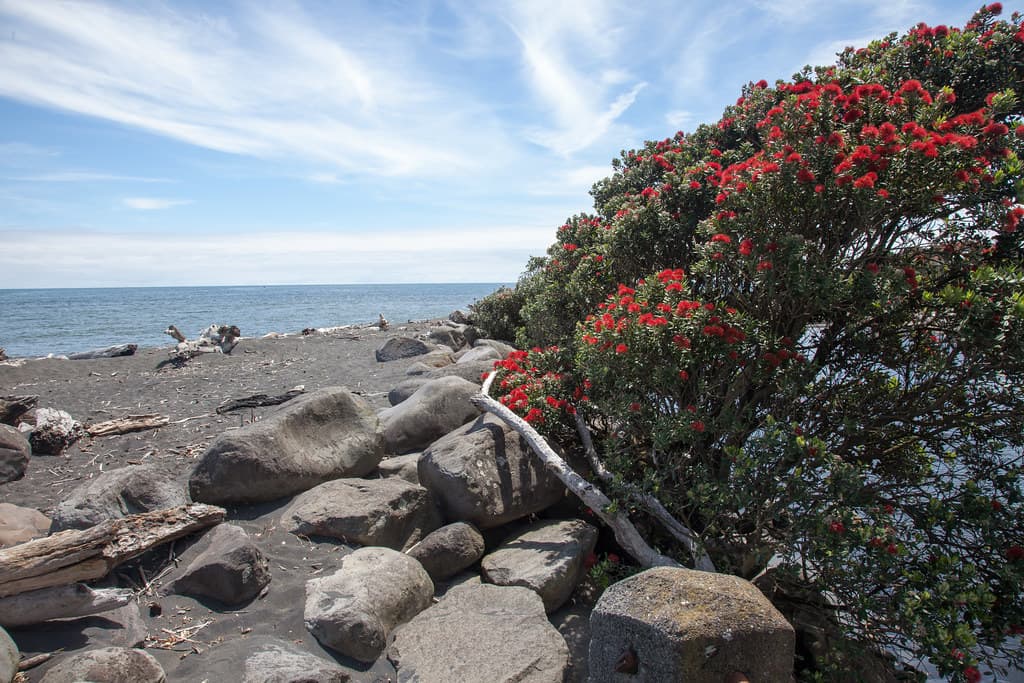
The sand stretches dark and vast, a mineral gleam when wet, the black iron oxide legacy of Taranaki's volcanic bones. You'll stand at the carpark edge and scan the lineup: surfers rising and dropping on waves that stack up offshore, their shoulders feathering white, their faces steep enough to demand commitment. Paritutu's plug rises to your right, its cliffs hosting a scatter of seabirds, the Sugar Loaf Islands punctuating the seascape beyond like ancient sentinels. Every photograph here looks cinematic—the drama inherent in the geology, the light, the way weather sweeps across the scene in visible bands. This isn't a swimming beach in the conventional sense. Rips carve channels through the surf zone, currents muscle sideways with authority, and the shore-break can slam the unprepared into the sand with humbling force. You'll see experienced surfers only, their board control evident in how they navigate the paddle-out, how they position in the impact zone. Lifeguards don't patrol; the expectation is that you know your limits before you enter. Walkers claim this beach instead—photographers chasing light, fitness enthusiasts doing sand runs, couples who want windswept drama for their engagement shots. You'll watch the sunset from the rock platforms, the sky igniting in layers of crimson and gold, Mount Taranaki's silhouette commanding the inland view. The Sugar Loafs darken to shadow-shapes. Waves keep detonating in rhythmic percussion, indifferent to your presence, and you'll feel wonderfully insignificant—a speck witnessing forces that predate your species, forces that will outlast your grandchildren's grandchildren.
Places, rentals, tours and events within walking and driving distance of Back Beach.
Photos
Back Beach is known for strong surf conditions and is generally not recommended for casual swimming, especially for inexperienced swimmers or families with young children. The beach has powerful waves, currents, and undertows that can be dangerous. It's primarily a surf beach attracting experienced surfers. There are no regular lifeguard patrols, so extra caution is essential. Visitors often come for the dramatic scenery, walking, and photography rather than swimming. If you do enter the water, only do so if you're a strong swimmer or experienced surfer, and never swim alone.
Back Beach can be visited year-round, with each season offering different appeal. For dramatic scenery and photography, including the iconic black sand and views of Paritutu rock and Sugar Loaf Islands, any time works well. Sunsets are particularly spectacular throughout the year. Surfers visit when conditions are suitable, often during larger swells. For walking and sightseeing, calmer weather in summer and autumn provides the most comfortable experience. Visiting during less crowded times, such as weekdays or off-peak seasons, allows you to better appreciate the beach's wild, dramatic character without competing for photo spots.
Back Beach is located on the western side of New Plymouth, accessed via Henui Road or through the Breakwater Road route near Paritutu Rock. From central New Plymouth, it's approximately a 5-10 minute drive. There is parking available near the beach access points, though spaces can be limited during busy periods. The beach is accessible on foot or by bike via connecting paths from other parts of the coastal area. The distinctive Paritutu rock formation serves as a landmark for finding the beach. Be prepared for a short walk from parking areas to the beach itself.
Back Beach is more remote than other New Plymouth beaches, with limited immediate facilities. You'll need to head back toward central New Plymouth, approximately 10 minutes away, for cafes, restaurants, and most dining options. There are no beachfront cafes directly at Back Beach. Accommodation is similarly located in the main city areas rather than immediately adjacent to this beach. It's advisable to bring your own refreshments if planning an extended visit. The beach's character is more wild and undeveloped, which is part of its appeal for those seeking dramatic natural scenery rather than resort-style amenities.
Back Beach offers some of Taranaki's most dramatic coastal scenery, featuring striking black volcanic sand that contrasts beautifully with white surf and blue skies. The iconic Paritutu rock formation and Sugar Loaf Islands create a distinctive backdrop found nowhere else. The rugged, wild character of the beach, combined with powerful waves crashing against dark sand, provides naturally photogenic conditions. Sunset shots are particularly spectacular with western exposure across the Tasman Sea. The beach's raw, untamed beauty and unique geological features make it stand out on social media and in travel photography, representing New Zealand's wild coastal character.