Counting the waves…
Counting the waves…
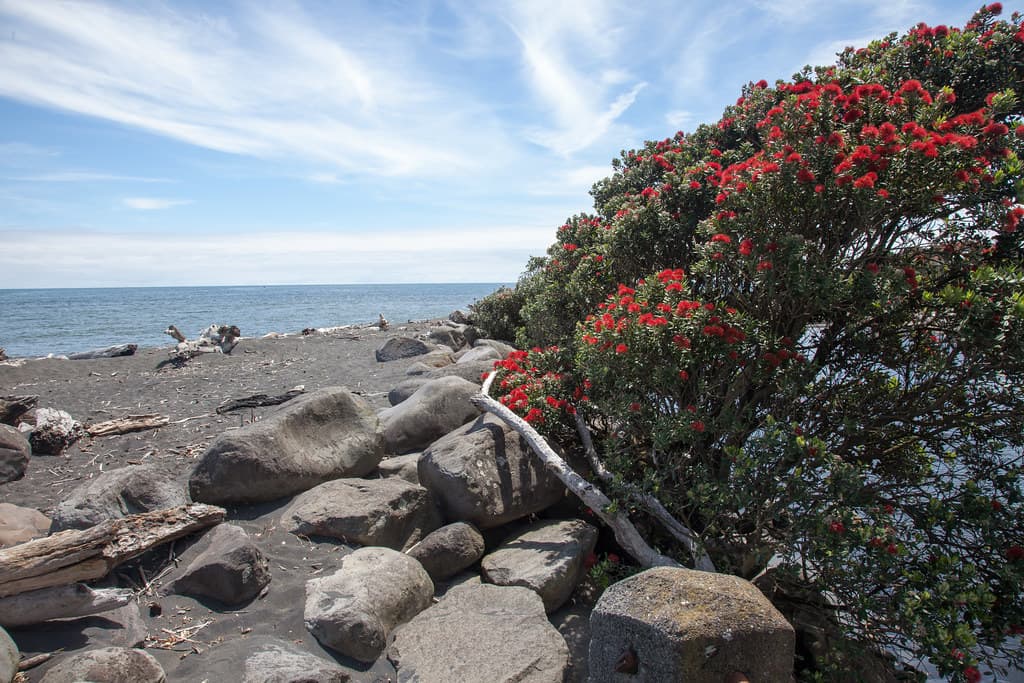
Motuotamatea sits in the shadow of the Sugar Loaf Islands, those volcanic remnants jutting from the sea like broken teeth. The beach itself barely qualifies—more a collection of rock platforms, tide pools, and small sand pockets than a continuous shore. At high tide, the sea claims most of it, waves surging against basalt shelves and throwing spray high enough to taste salt twenty meters inland. At low tide, the pools reveal miniature ecosystems: anemones, periwinkles, small fish darting between fronds of brown kelp. You reach it via a nondescript path from the residential streets above, the kind of access point that locals know and visitors rarely discover. The descent takes you through coastal scrub—flax, taupata, the occasional windblown pohutukawa—until you emerge onto the rocks. New Plymouth's port is visible to the east, the white wind turbine spinning on the breakwater. But here, geology dominates. The volcanic stone beneath your feet is the same material that built Taranaki, now being slowly reclaimed by the ocean. This isn't a beach for laying out towels or playing frisbee. It's for watching weather move across the Tasman, for exploring tide pools, for sitting on sun-warmed rock while waves detonate nearby. The Sugar Loaf islands provide habitat for seabirds; you'll see shags and gulls, occasionally a penguin if you're patient and quiet. It's a reminder that even in an urban setting, the volcanic coast maintains its essential character—rugged, dynamic, beautiful in ways that resist commodification.
Places, rentals, tours and events within walking and driving distance of Motuotamatea Beach.
Photos
Motuotamatea Beach is a small rocky coastal area near the Sugar Loaf Islands and is not ideal for traditional swimming. The beach features rocky shoreline and can have strong currents and waves, making it more suitable for exploring and viewing rather than water activities. It's an unpatrolled beach with variable ocean conditions typical of the exposed Taranaki coast. Visitors should exercise caution near the water's edge as waves can be unpredictable. The area is better suited for rock pool exploration at low tide, coastal walks, and photography rather than swimming or surfing.
Motuotamatea Beach can be visited year-round as it's primarily a scenic and exploration destination rather than a swimming beach. Summer months offer the most comfortable weather for coastal walks and photography. Low tide is the best time for exploring rock pools and the shoreline. The beach is particularly attractive during golden hour for photography, with views of the Sugar Loaf Islands. Weekdays and early mornings typically see fewer visitors if you prefer solitude. As it's close to New Plymouth, it's easily accessible for a quick visit regardless of season.
Motuotamatea Beach is located near the Sugar Loaf Islands Marine Protected Area, just north of central New Plymouth. From New Plymouth, head north along the coastal road (Centennial Drive/Ocean View Parade) and follow signs toward the Sugar Loaf area. Beach access may be via short walking tracks from nearby parking areas. The location is within easy reach of the city, making it accessible by car, bicycle, or on foot as part of exploring the coastal walkway system. Local maps or GPS will help locate specific access points to this smaller, less-developed beach area.
Being located within or very close to New Plymouth, Motuotamatea Beach has excellent access to all urban amenities. Central New Plymouth, just a short distance away, offers a full range of accommodation from hotels and motels to backpackers and holiday parks. Numerous cafes, restaurants, and takeaway options are available throughout the city. Some waterfront dining venues offer ocean views and are a short drive from the beach. Supermarkets and convenience stores provide supplies for picnics or self-catering. The urban location ensures visitors have easy access to all necessary facilities and services.
Motuotamatea Beach offers a more secluded coastal experience despite being close to New Plymouth's urban area. Its proximity to the distinctive Sugar Loaf Islands provides excellent photographic opportunities and a unique coastal landscape. The rocky shoreline features interesting geological formations and rock pools to explore at low tide. It's less crowded than New Plymouth's main beaches, appealing to those seeking a quieter local discovery. The area is part of the beautiful Taranaki coastline with views of volcanic rock formations and, on clear days, glimpses of Mount Taranaki, offering natural beauty without traveling far from the city.