Counting the waves…
Counting the waves…
A refined fusion of water purity, environmental stability, and communal vibrancy for Waiharakeke Bay.
View MethodologyAnalyzed via live sensors and environmental data.
Wave height, wind, and atmospheric stability.
Live footfall and crowd balance metrics.
Community reviews and curated sentiment.
“Waiharakeke Bay requires commitment—an hour of coastal tramping, a pack that rides comfortably, and the willingness to turn around if weather closes in. What you get in exchange is a sliver of beach so quiet you'll hear…”
Limited recent visitor reports — live OBI telemetry is your best guide for current conditions.
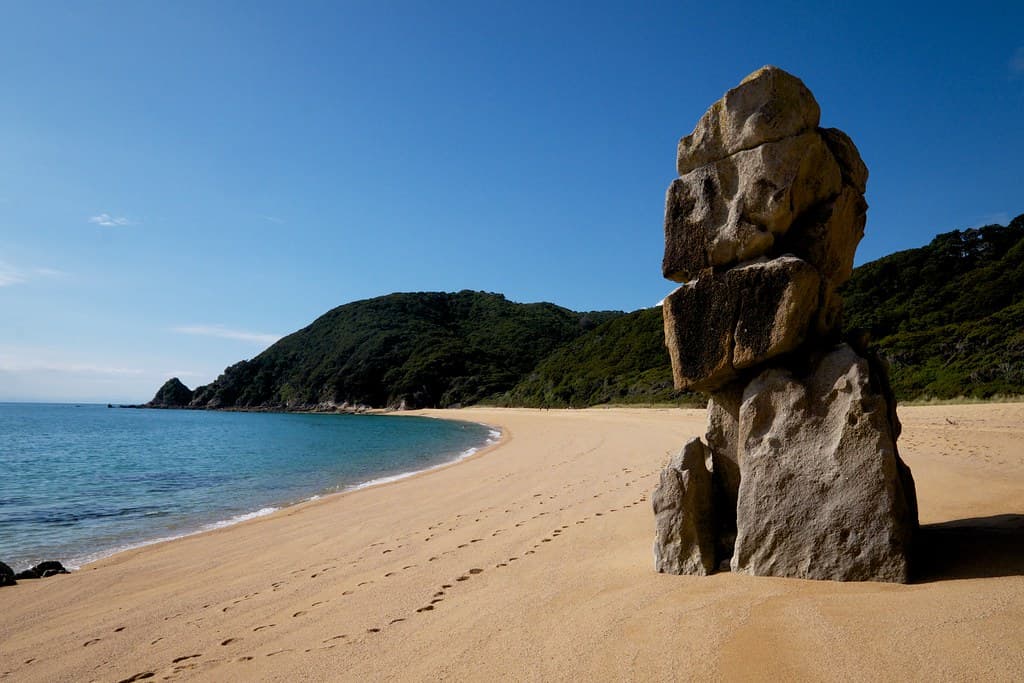
The track drops you onto a narrow crescent hemmed by kanuka scrub and boulders dark with lichen. The sand runs gold-brown, littered with shell fragments and the occasional cuttlefish bone. At low tide, the bay stretches maybe seventy meters across; at high tide, the water laps against the treeline. There's no room for crowds, which is exactly the point.
A boardwalk section crosses a boggy patch behind the beach, planks silvered by weather and slick with morning dew. You'll see fern fronds curling up through gaps in the boards, and if you're quiet, weka fossicking in the undergrowth for insects. The water is cool—seventeen degrees even in January—but swimmable once you commit. The bottom is rocky close to shore, then transitions to sand as you stroke deeper.
 Credit: Unsplash
aerial photography of lake during daytime
 Credit: Unsplash
people on beach during daytime
One hour from nearest trailhead
Rocky entry, sand beyond
Weathered planks over coastal wetland
Prime Visitation
Best Weather|Less Crowds
Where it is
Waiharakeke Bay
Abel Tasman National Park, Tasman, New Zealand
-40.794700°, 173.010500°
Weather
Loading…
Swell
—
Temp
Warm · Restorative
UV Index
Moderate
Wind
—
Tidal State
Last known
Max Sunlight
—
Ideal Shade
—
Jan - Dec (Peak)
Mar - Nov (Off-season)
Best Weather|Less Crowds
Select a category to load nearby places.
Unlock restaurants, luxury stays and curated maritime experiences within 2km
Waiharakeke Bay generally provides safe swimming within the sheltered waters of Abel Tasman's eastern coast. The bay's protected position offers calmer conditions than exposed coastlines, though you should always assess current weather and sea conditions. No lifeguard patrols operate in this wilderness area, so swim within your abilities and supervise children closely. Be aware of tidal changes, submerged rocks, and occasional boat traffic. The remote location means help would take considerable time to arrive in emergencies, so exercise caution and never swim alone in this backcountry setting.
Summer (December to February) offers the best weather and warmest water temperatures, making it ideal for swimming and relaxing on the beach. However, shoulder seasons in November and March through April provide excellent conditions with notably fewer visitors on the track. Early mornings deliver the calmest sea conditions before afternoon breezes develop. For true solitude, consider autumn visits when walkers are scarce but weather often remains settled. Winter visits are possible for hardy trampers but expect cooler temperatures and less predictable weather, though you'll likely have the bay entirely to yourself.
Waiharakeke Bay is reached by walking the Abel Tasman Coast Track, which requires planning based on your starting point and fitness level. Most walkers access it as part of multi-day tramps or longer day hikes from trailheads at Marahau, Totaranui, or other points along the track. The walk involves well-maintained but undulating coastal paths. Water taxi services can reduce walking distances by dropping you at nearby bays. No road access exists, and the track-only approach means you need appropriate footwear, supplies, and time to reach this rewarding destination.
Waiharakeke Bay offers no facilities, services, or infrastructure as it's a wilderness bay within Abel Tasman National Park. Walkers must carry all food, drinking water, and equipment needed for their visit. No toilets, shelters, or rubbish bins exist, so pack out everything you bring in following Leave No Trace principles. The nearest Department of Conservation huts and campsites are located at other points along the Coast Track and require advance booking. For resupply, accommodation, and dining, you'll need to exit the park to towns like Marahau, Kaiteriteri, or Takaka.
Waiharakeke Bay's track-access-only approach and lack of facilities mean only committed walkers discover it, filtering out casual visitors who arrive by water taxi at more accessible bays. Its position away from major campsites and huts means fewer people include it in their itineraries compared to bays with overnight facilities. The effort required to reach it creates a natural selection for those seeking genuine wilderness experiences rather than quick beach visits. This combination of remoteness and limited promotion preserves the bay's peaceful character, offering walkers a tranquil reward for their hiking efforts.
Photos