Counting the waves…
Counting the waves…
A refined fusion of water purity, environmental stability, and communal vibrancy for Goat Bay.
View MethodologyAnalyzed via live sensors and environmental data.
Wave height, wind, and atmospheric stability.
Live footfall and crowd balance metrics.
Community reviews and curated sentiment.
“You'll hear the crunch of your footsteps on the golden shell-flecked sand before you spot another soul. Goat Bay rewards the effort with a horseshoe of calm water backed by dense kanuka scrub.”
Limited recent visitor reports — live OBI telemetry is your best guide for current conditions.
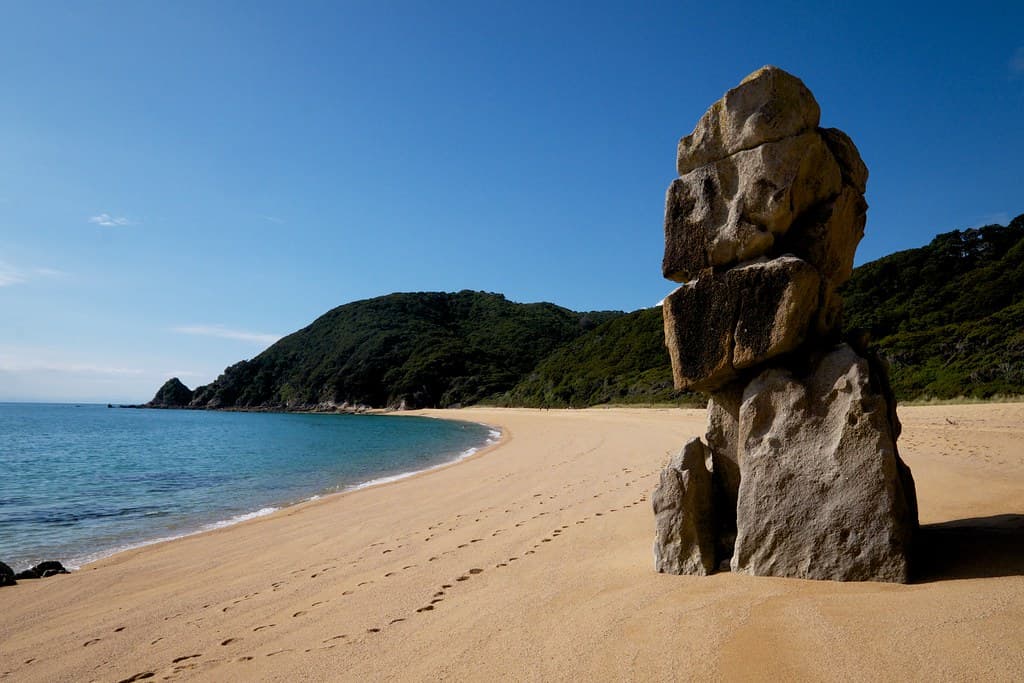
The final descent to Goat Bay threads between gnarled roots and granite boulders, opening onto a narrow beach where the sand holds a faint pink blush from crushed shells. Most kayakers paddle past without noticing the small entrance, leaving this pocket of shore to trampers who've clocked the extra kilometer from Totaranui. The water sits still on windless mornings, reflecting the dark green hillsides that rise steeply behind the tide line.
You'll spread your lunch on driftwood logs worn smooth by winter storms, watching the tide creep across ridged sand patterns left by the morning ebb. Fantails dart through the coastal shrubs, and if you wade in past the initial shallows, the bay floor drops away into channels where blue moki cruise the kelp beds. The absence of facilities means everything you need arrives in your pack and leaves with you.
 Credit: Unsplash
aerial photography of lake during daytime
 Credit: Unsplash
people on beach during daytime
One-hour walk through coastal bush
Calm bay with gradual entry
Fantails and bellbirds in scrub
Prime Visitation
Best Weather|Less Crowds
Where it is
Goat Bay
Abel Tasman National Park, Tasman, New Zealand
-40.805000°, 173.002000°
Weather
Loading…
Swell
—
Temp
Warm · Restorative
UV Index
Moderate
Wind
—
Tidal State
Last known
Max Sunlight
—
Ideal Shade
—
Jan - Dec (Peak)
Mar - Nov (Off-season)
Best Weather|Less Crowds
Select a category to load nearby places.
Unlock restaurants, luxury stays and curated maritime experiences within 2km
Goat Bay generally offers safe swimming conditions typical of Abel Tasman's sheltered eastern coast. The bay is protected from prevailing westerly winds, creating calmer waters than the open coast. However, there are no lifeguards, so always swim within your abilities and supervise children closely. Be mindful of boat traffic, particularly during peak season when kayakers and water taxis frequent the area. Check tides and weather before swimming, and watch for submerged rocks near the shoreline.
Summer (December to February) offers the warmest weather and calmest seas, though this is also the busiest period. For fewer crowds while maintaining good weather, visit during shoulder seasons: November or March through April. Early summer often provides settled weather before peak tourist numbers arrive. Morning visits offer the calmest conditions before afternoon sea breezes develop. Winter visits are possible but expect cooler temperatures, though the bay remains scenic year-round with fewer visitors.
Goat Bay is accessed either by walking the Abel Tasman Coast Track from Totaranui or nearby sections, or by kayak from various launch points in the park. Water taxis can drop visitors nearby, though the bay's tucked-away position means it's not a standard stop. The coastal track offers well-maintained paths with moderate difficulty. Plan for several hours of walking depending on your starting point. Kayakers should have appropriate experience and check conditions. No vehicle access exists directly to the bay.
Goat Bay itself has no facilities; it's a wilderness bay within Abel Tasman National Park. The nearest campground with basic facilities is at Totaranui, a reasonable walk away. Visitors must carry in all food and water, and pack out all rubbish following Leave No Trace principles. The nearest towns with shops and restaurants are Marahau, Kaiteriteri, or Takaka, all requiring boat or track travel plus road access. Many visitors base themselves outside the park and make day trips in.
Goat Bay's position along the Abel Tasman Coast Track means trampers naturally discover it while hiking between more famous bays, whereas water taxi passengers typically request popular stops like Anchorage or Bark Bay. The bay lacks prominent signage or developed facilities that attract casual visitors, maintaining its quieter character. Its tucked-away geography means it's less visible from the water, so boaters often pass without noticing. This creates a rewarding sense of discovery for walkers who take time to explore beyond the main destinations.
Photos